By Victoria Evans, Searchroom Archivist
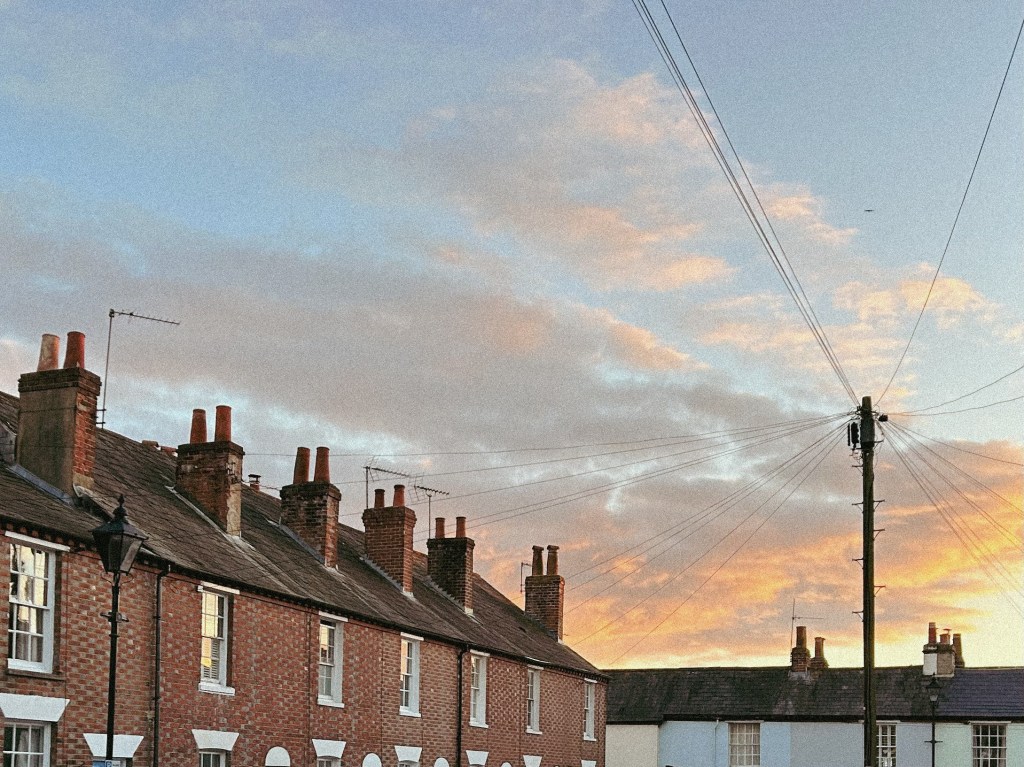
Having moved to Chichester recently to take up the role of Searchroom Archivist at the West Sussex Record Office, I have been developing my different branches of research that our researchers utilise. Although doing such exercises enables me to provide a better service, it also satisfies my own curiosities. I have come to know Cavendish Street on my journey to work and wanted to know more about the history. This blog will briefly take you through the research I completed into this street through the use of maps.
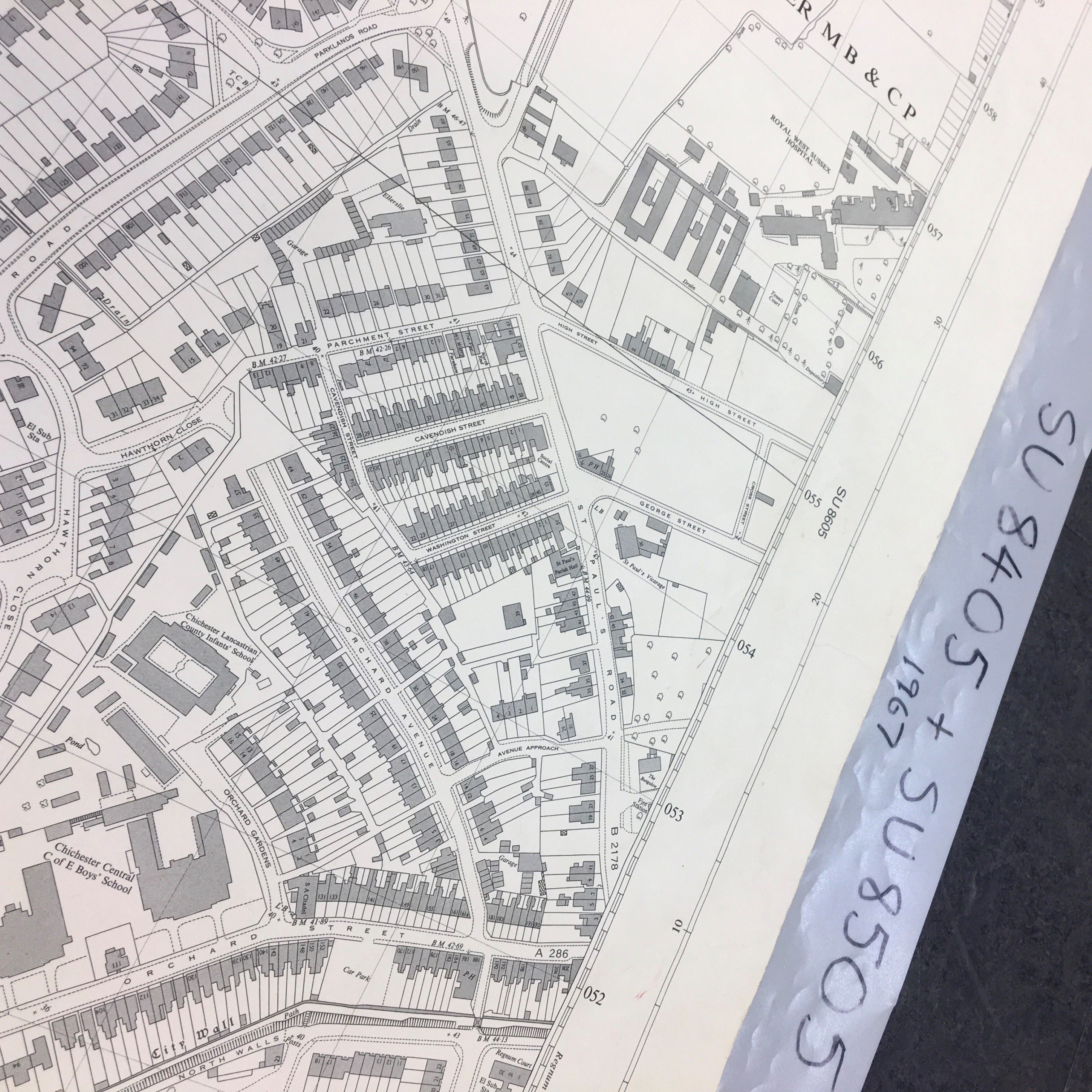
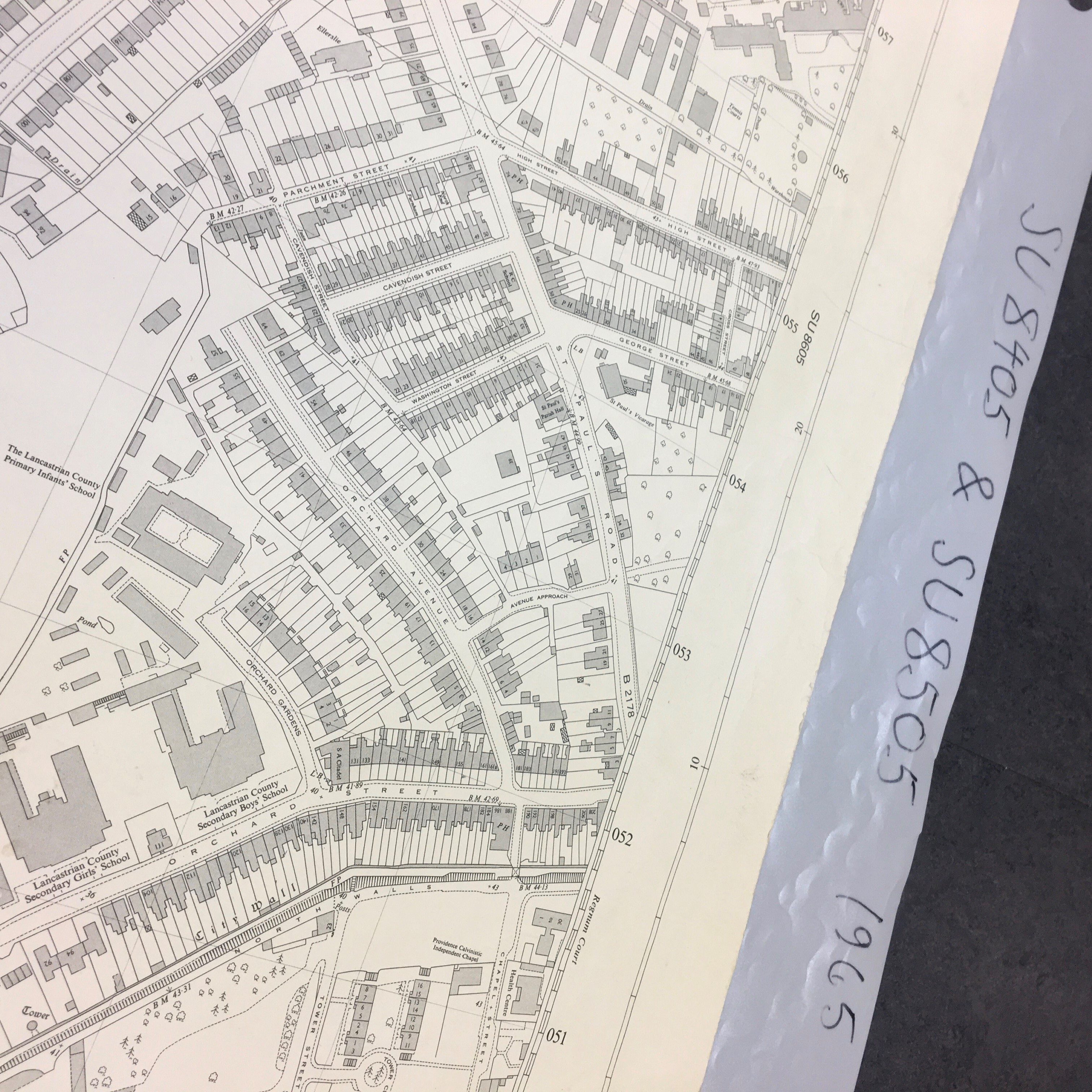
Following our tried-and-true methodology for house histories, it is best to begin with maps as so much can be discovered from these resources. To make this task more manageable it is advised to start with the most recent map available and then trace your way back from there. From the key map I identified that the map reference I would need was SU 8405. This led to the 1967 and 1965 editions OS maps. As you can see below the demolition of Somerstown had taken place between these two maps. You can find out more about Somerstown in our previous blog.
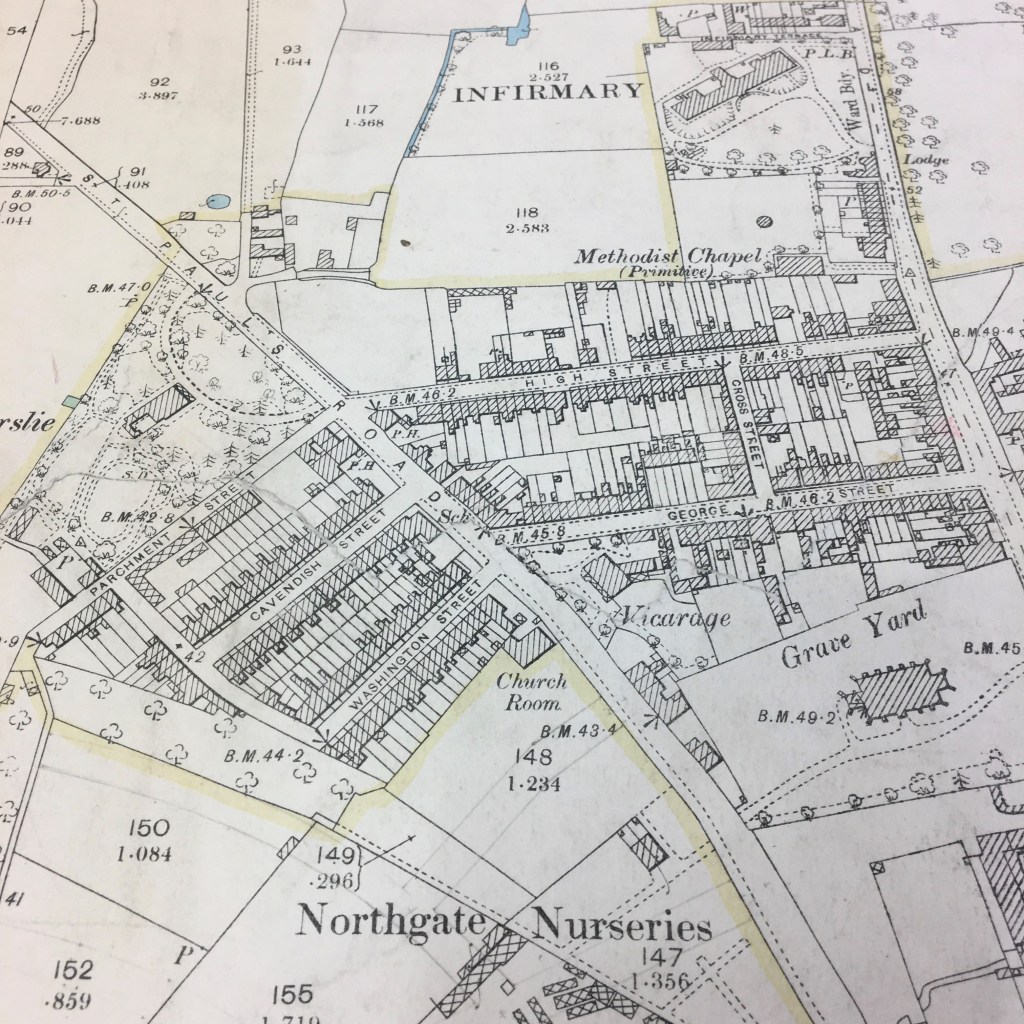
From here I was now able to look at the 5th edition OS map and searching for Cavendish Street was easier as I could use St Paul’s Church as my landmark because it close to Cavendish Street. First returning to the key map again I needed to identify a new map reference to move onto older OS maps which was 61.7.
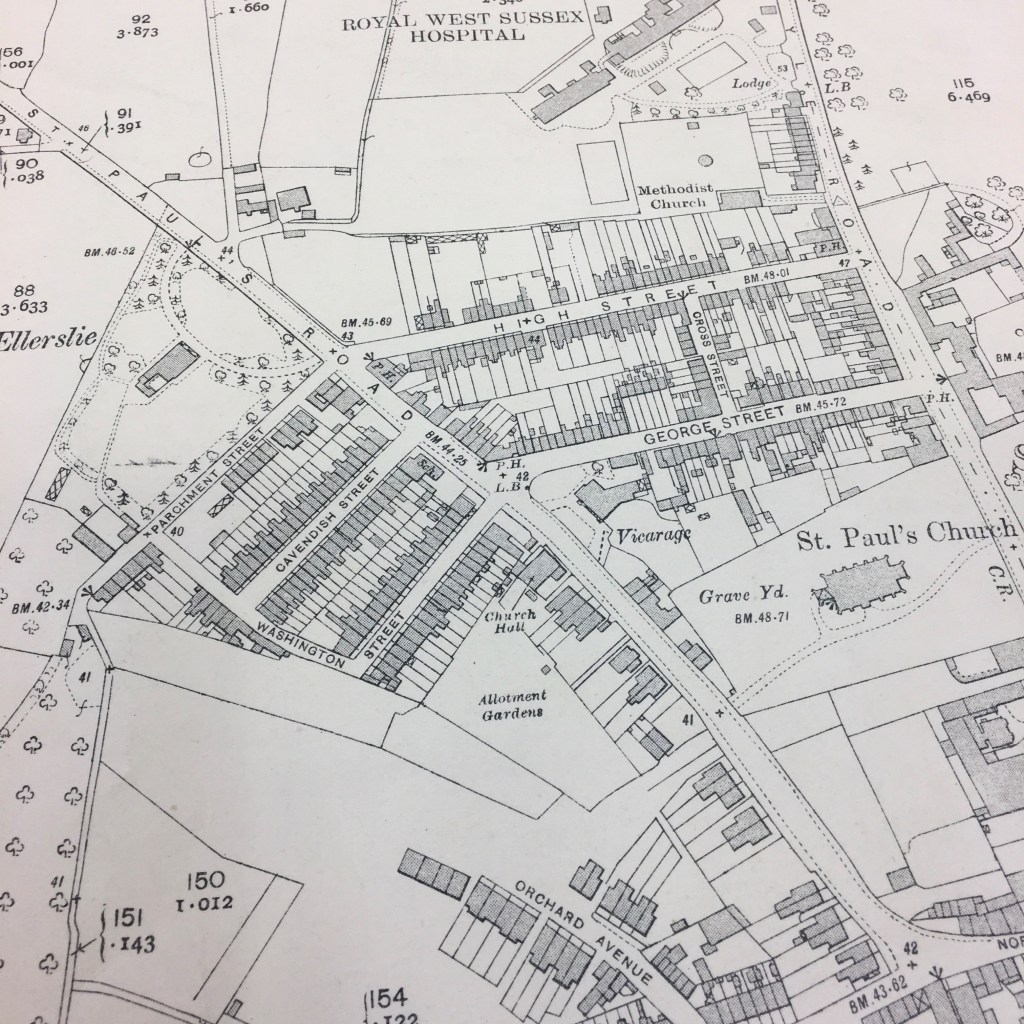
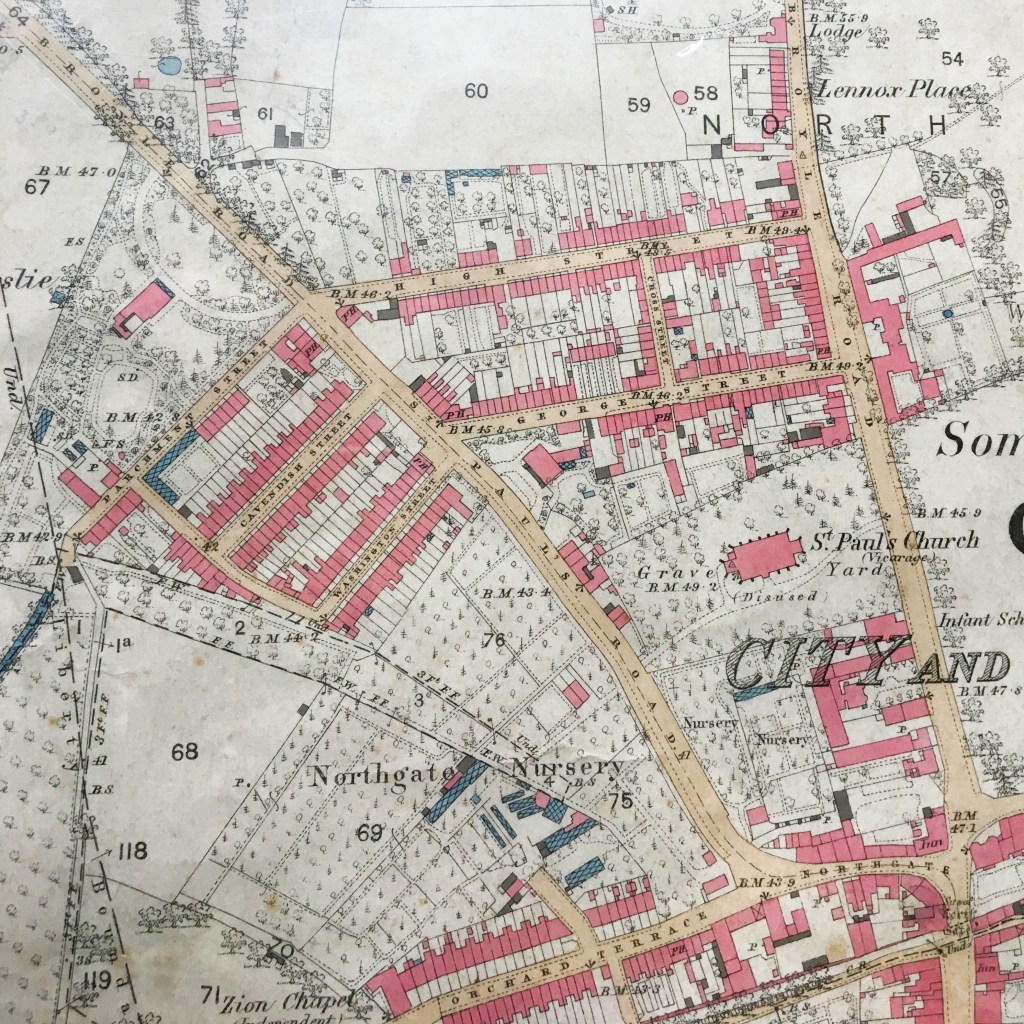
The next step was to move onto the 1st and 2nd editions OS maps. Using the same reference gathered from the previous OS map, 61.7, I was able to locate both of these editions. The 2nd was from 1898 and the 1st from 1875. These maps reveal slightly more detail, especially the 1st edition due to the colour coding. The colour coding was blue/crosshatched for glass, burnt sienna for roads, carmine for buildings made of brick or stone, and grey for buildings made of wood or iron. More details about the colour coding of OS maps can be found here.
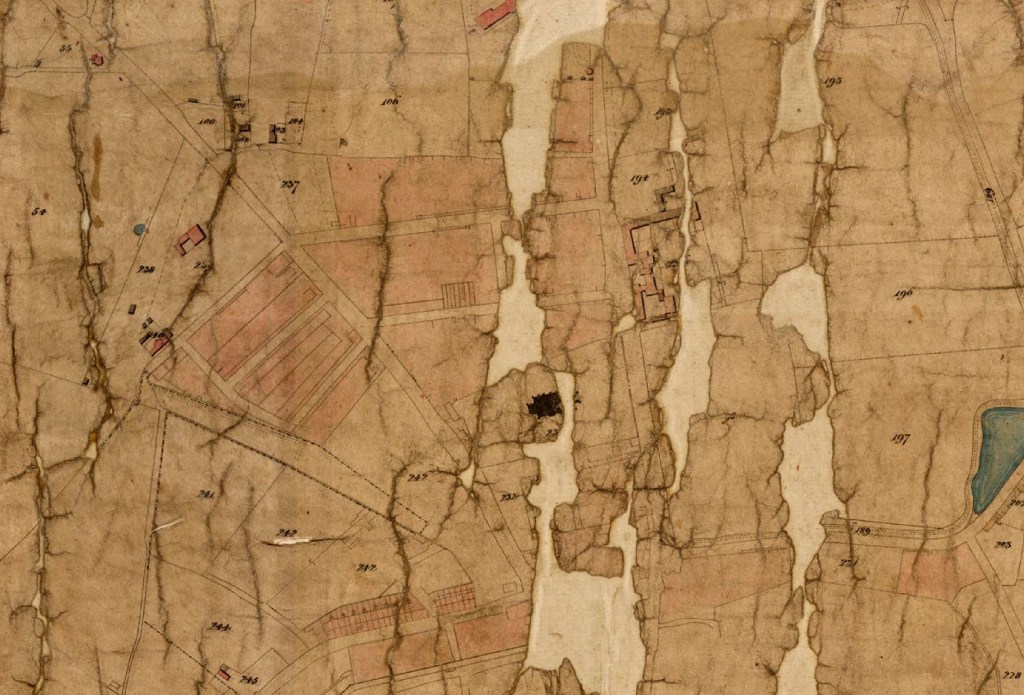
Moving on from OS maps, I now wanted to see if this area appeared on a tithe map as this can give way to a wealth of information within the apportionments. From this data you can learn the names of landowners and occupiers, land use and tithe rent charge. If you want to learn more about tithes, took a look at this handy research guide by TNA.
Unfortunately, this particular tithe map of Chichester, St Peter the Great, is in very poor condition and a lot of map is illegible. In saying this, the street that this blog is focusing has somehow been spared! But what important detail is missing…the lot number. In order to search through the apportionments it requires the lot number as this will link to the land owner, etc. Having no lot number can point to different theories as to why this land was not paying tithe. From my research into Cavendish Street and the surrounding streets, Parchment and Washington, they were not fully completed until 1847 (Chichester: A Documentary History’‘, Roy R. Morgan, p. 191) and this tithe map is from 1836-1837. It is possible that this might be why no tithe was being paid. Additionally, although I have been unable to confirm this when briefly consulting the original apportionments, this land may have been exempt from paying tithe.
Moving on from tithe maps it is now advised to consult estate maps. These pre-date 1840 and, unfortunately, due to their age few have survived. It is usually unlikely that you will be able to find your property of interest. In my case, there were no estate maps were available for the area that covers Cavendish Street.
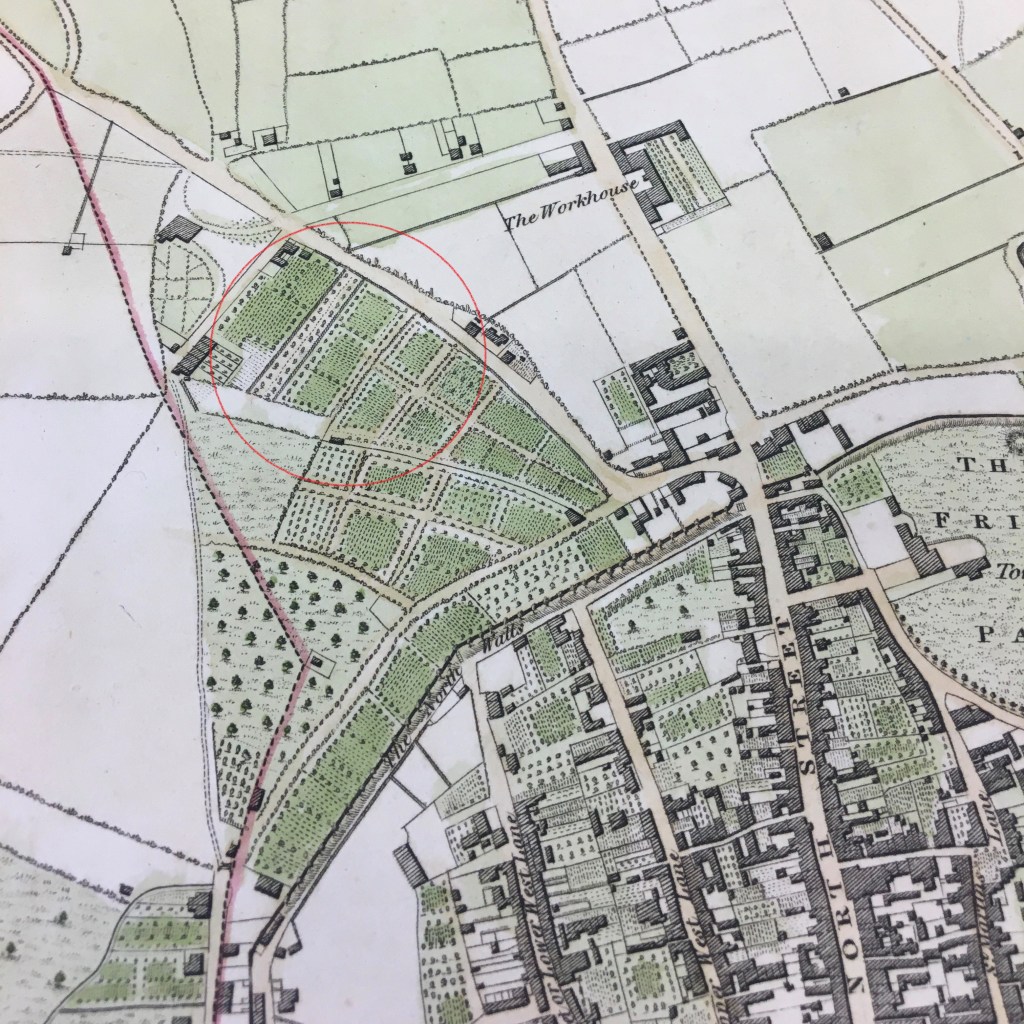
On the other hand, I did check our catalogue to see if we held any other maps that show the land where Cavendish Street now stands before it was developed into housing. Luckily, I was able to find a printed map titled ‘Plan of the Liberties of the City of Chichester by George Loader, Surveyor’ in our collections. This was noted to include the outer perimeter of the city walls of Chichester from 1812. The area that I have circled is a rough guess of where Cavendish Street and the surrounding streets stand today.
As evidenced in this blog post a lot of information can be uncovered just from maps alone. The next steps in such research will be informed by what you hope to find out. The sources that are used in house/street histories are vast and give way to a plethora of information. Building plans, sales particulars and title deeds can give way to construction details and when your building or street of interest was built. Census returns, electoral registers, land tax returns, probate records and rate books can give details about who owned the property and/or who were the occupiers. These details can form a picture of the kind of lives others have led in your house and/or street. Please note that it may not be possible to find all records relating to your particular property. This is very much reliant on whether records have survived or if they have been deposited with us.
If you are planning to embark upon discovering more about a property, you can contact the Record Office via record.office@westsussex.gov.uk and ask us to give you some helpful pointers on how to get started. We also have complied a house history leaflet that details the different types of sources that can be used in your research which is available in our Searchroom or we can email you a PDF copy. We also run a ‘Researching the history of your house’ workshop. Our February slot is currently fully booked, however, you can still call our reception 01243 753602 to be put on the reserve list. Or we will running the same workshop on 2 October and you can call our reception to book your place before it gets fully booked.
It can be daunting to begin a house or street history due to the sheer number of potential sources that information could be held within. However, when it is broken down into manageable sections it is more than achievable!
Stay up to date with WSRO – follow us on Facebook, Instagram, Twitter and YouTube

 West Sussex Record Office