By Alice Millard, New Jerusalems Project Archivist
Please be aware that this blog post discusses mental health issues and drug use.
No, the ‘New Town Blues’ were not a football club, but rather the name given by the British press and several 20th century sociologists to a perceived phenomenon occurring in the country’s new towns during the 1950s and 1960s.
Supposedly springing from issues such as the significant upheaval that was involved in moving away from an ‘organic’ community to an ‘artificial’ one, and the transitional quality of many new towns (not quite being urban nor rural), the ‘new town blues’ were seen by some as a hazard of the new town movement.
Despite debates over its use as a legitimate, or even helpful, term, what couldn’t be denied is that it was useful in conveying the lived experience of many new town residents in the early years. How widespread or even calculable it was as a psychological phenomenon isn’t easily quantified, but I have found a number of contemporary references to feelings of poor mental health experienced by residents of Crawley during the 1950s and 1960s. This stands as a contrast to the many positive things said by new towners in Crawley but one which is just as important to consider when thinking about this period in the town’s history.
‘New Town Nerves’
An article in the Sunday Times on ‘New Town Nerves’ was published by broadcaster and journalist Tom Mangold in 1961. He wrote that “young wives are bored, restless, [and] niggly“, going on to report that “in one doctor’s language, something brings on a “state of mind of excessive depression, anxiety and personal difficulties.“”
The article cites a report written by consultant psychiatrist Dr Peter Sainsbury in which he estimated an increase of “50 per cent more mental illness among women than in an old-established town of the same size“. Dr Sainsbury’s report clearly expressed a significant problem. An interesting fact to note at this point is that Dr Sainsbury was also born and bred in Sussex, and was director of the clinical psychiatry research unit at Graylingwell hospital in Chichester in 1957.
Yet, the perception that migration to a new suburban community could cause a decline in mental health was not entirely new, just more pronounced given the new town movement’s proliferation after the Second World War. As early as the 1930s, GP Dr Stephen Taylor had written in The Lancet of his observations concerning the distress caused by moving into suburban developments.
In the book ‘Invincible green suburbs, brave new towns’, Mark Clapson writes that “problems of loneliness, of physical and psychological disorders, or spiritual poverty in conditions of increasing material well-being, underpinned the notion of ‘suburban sadness’“.1 ‘Spiritual poverty’ is a particularly interesting descriptor, given a new town’s often inherent tendency towards being indistinguishable from their counterparts, thereby loosing that sense of place so deeply felt when you live a long time in a place which has seen centuries of growth.
In April 1962, The Birmingham Daily Post reported that a Crawley based GP [unnamed] had conducted his own survey of psychiatric illness. He had “found that depression was appreciably higher in the new town“. The same GP later wrote in The Lancet that “People who had stood up well to the most appalling housing conditions before they were moved to the new town broke down when they were rehoused.” The doctor’s concerns are evident at least in a situation reported by the South London Observer from May 1961, which tells of a husband who was desperate to move his young family away from Crawley back to Peckham, as his wife had been suffering immensely with depression since making the move.
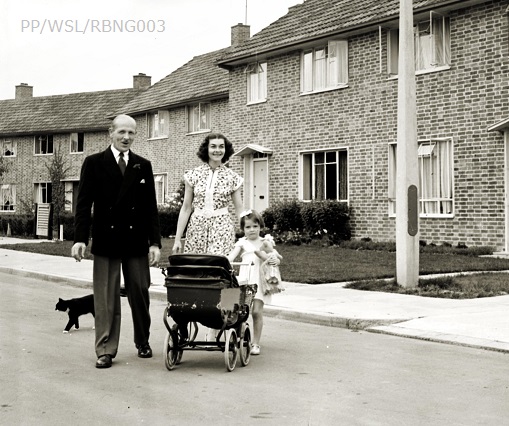
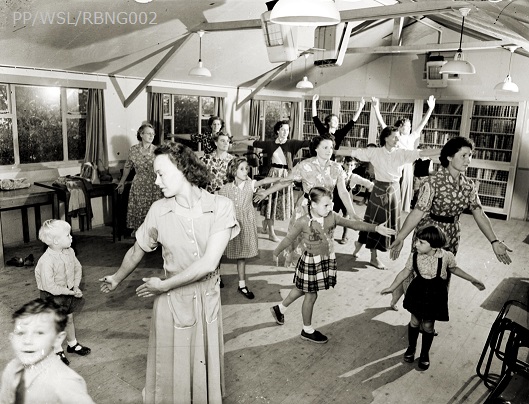
What we can glean from these reports is that the ‘blues’ appeared to affect young housewives more than other demographics, perhaps because they were more likely to spend much of their day alone at home and not out forging relationships in the community. Whilst there were groups for young housewives to join and socialise with each other, such as the Langley Green Young Wives Club where children were welcome too, they were perhaps not an adequate replacement for the close knit London communities that many new arrivals from Crawley would have come from. And, despite the reports of worrying rises in poor mental health, the Development Corporation were actually recording high levels of satisfaction amongst the new residents, as can be seen in their surveys in the archive.
‘Drug Horror in New Town’
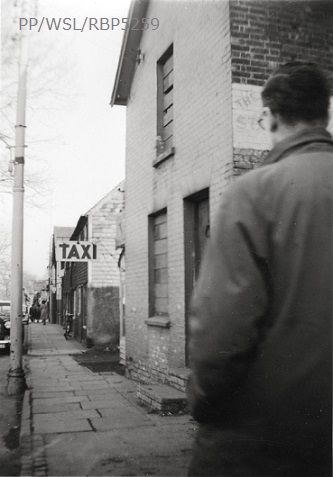
Housewives were not the only demographic to experience distress in the new town. During the 1960s, Crawley was experiencing what many believed was a significant increase in youth drug addiction. Another article, this time in The People from 1967, reported on the “Drug Horror” apparent in Crawley which was currently “a town of fear… a town of tragedy“. If you look beyond the obviously sensationalist language, the report concerns research carried out by a medical group which had revealed a prevalence of heroin use amongst young people, especially teenage boys, in the town. The news report doesn’t go into detail about the possible causes of the issue, but records of the Crawley Development Corporation do shed a little light on the matter.
In a folder of administrative documents under the title “Youth Services”, there are a number of letters regarding drug addiction. Several letters concern a study into “Juvenile Delinquency” which was carried out by Crawley Magistrates Court in 1965, but they don’t go into any detail about the study. In another letter from 1968, the Crawley Local Committee debated advising the local authority that they would consider allowing a premises for medical research into drug addiction. The local authorities were clearly concerned enough to consider taking some form of action.
The voices of residents themselves aren’t a feature of the Crawley New Town archive; the collection is largely made up of administrative records created by the Development Corporation. However, in a book of oral history transcriptions, one resident, Philip Ralph, recalls his youth spent in the New Town during the 1960s and 1970s. Amongst his recollections, Philip remembers –
“At one time, there was a lot of trouble with drugs in Crawley. The Crawley Bowl was well known as a centre for drug trading. There was a lot of police activity around there... There was also a fairly general disenchantment with Crawley amongst most of the young people in the town”
Old Town, New Town by Fred Gray, 19832
It may not be clear as to the extent of this phenomenon in Crawley, but it is important to record, preserve and reflect upon the varied experiences of life in the new town. This includes those that were positive and full of praise, but also those which speak of disappointment and shortcomings. Now that the Crawley New Town archive is catalogued and accessible to the public, it can be used to learn from this remarkable period of history.

 West Sussex Record Office