By Victoria Evans, Searchroom Archivist
Please note that the following blog post includes content that some may find upsetting.
This year’s Holocaust Memorial Day marks the 80th anniversary of the liberation of Auschwitz-Birkenau. It is a time to reflect on the atrocities committed and to remember those who were murdered. Within this blog post we will be shining light on the pre-war efforts of the Worthing Refugee Committee (WRC). First, we will explore the background of the WRC and how it came to be. Then we will be bringing into focus three true stories of refugees that the WRC provided aid and hope to.
What did the Worthing Refugee Committee do?
The Worthing Refugee Committee was founded at a public meeting in January 1939. The aim of the committee was to enable people to escape from Central Europe. It worked to obtain visas for refugees to enter the country mainly as transmigrants before moving overseas. From the outbreak of war to the evacuation of “aliens” from the coast in May 1940, the committee was responsible for several hostels in Worthing. From May 1940 the committee’s work consisted of providing for refugees in various parts of the country and administering funds. It then disbanded in 1950.
This is a true demonstration of how in Britain we are able to band together when we believe in a cause greater than us and help people who need it the most. The sheer determination shown by the founders and workers of this committee is a glowing light in a time that was veiled in darkness.
The following true stories have been compiled from three of the case files from this collection as well as the research conducted by the author. In the long term, it is the hope that the author will research all of the case files in this collection and this detail will be added to enrich the catalogue descriptions.
The Beermann Family
The Beermanns were a family of four who fled Germany on the 21st of April 1939. Hans, the father, Kitty, the mother, and their two children Heinz (known as Henry) and Elizabeth (known as Lisl) came to Worthing as transmigrants and stayed in Worthing until they were able to emigrate to America. Joan Strange, who worked with the WRC, kept extensive diaries throughout the war and entries including the Beermann family appear. Things like this entry from the 21st of April, “Got a telegram announcing the time of our Beermanns’ arrival here – six o’clock. They are even nicer than we anticipated”. And another from the 3rd of September, “I listened in the evening to the King’s broadcast in company with Mr and Mrs Beermann… (Germans who would have been our ‘enemies’ had they not escaped from the Nazis).” And lastly on the 6th of December, “Had a telegram from the USA so the Beermanns have had a safe voyage after all.” (Quoted from Despatches from the Home Front: the war diaries of Joan Strange, 1939-1945, edited by Chris McCooey.)
From searching Ancestry, the Beermann family were recorded on the Outwards Passenger Lists heading for New York from Southampton on 27th of November 1939. The name of the ship was Statendam.

The Rabl Family
Another family the WRC were able to help flee Czechoslovakia (now Czechia) were the Rabls. First Friedrich (Frits) arrived in May 1939 and Regina, his wife, and child, Marion, arrived just before the outbreak of war in August 1939. It can be confirmed that Friedrich was Jewish from documentation, however, it is unclear whether Regina was Jewish.
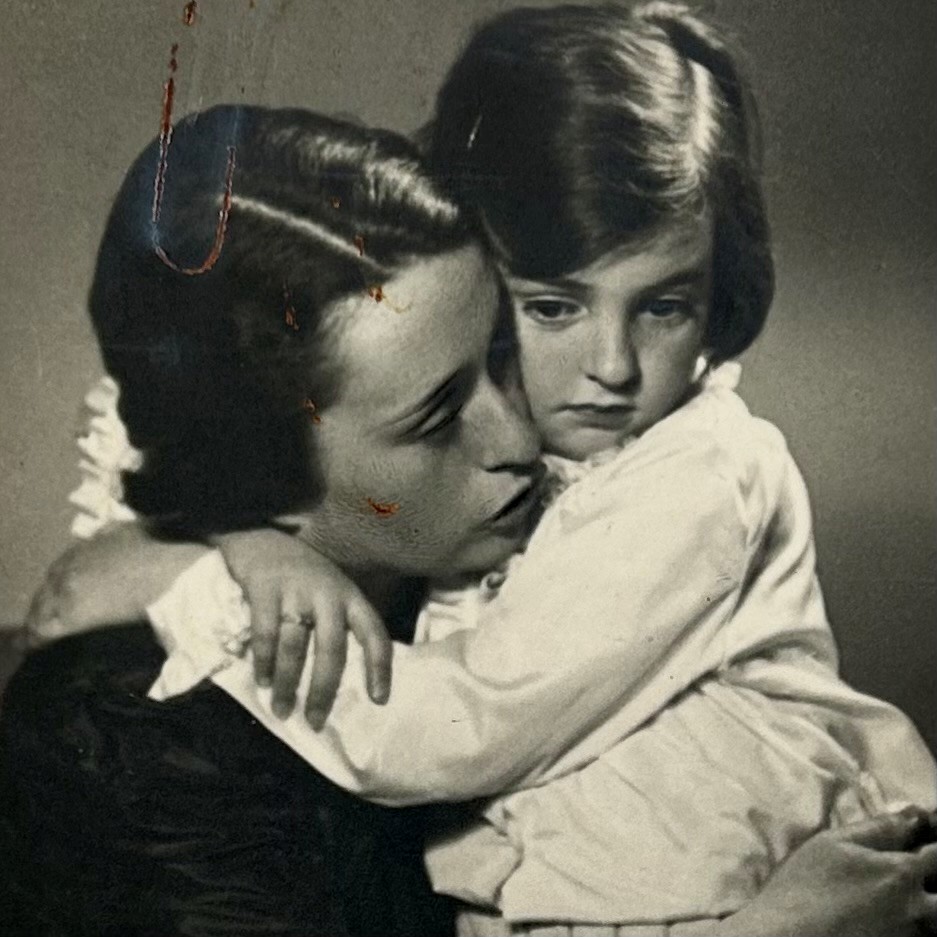
Add Mss 27810
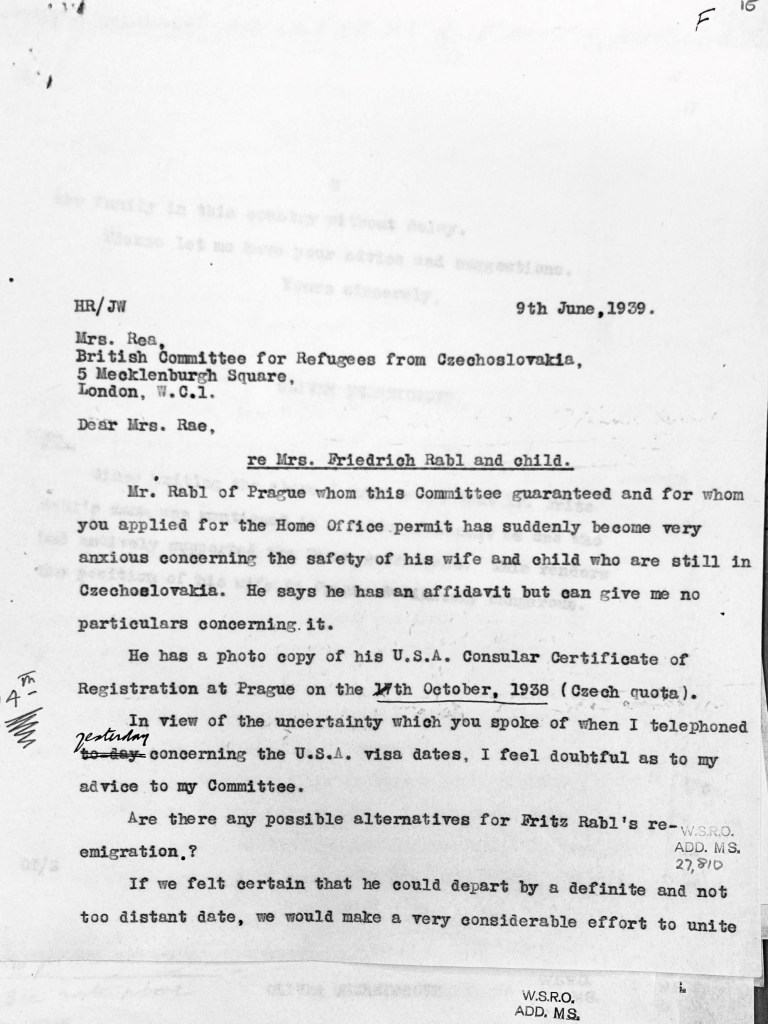
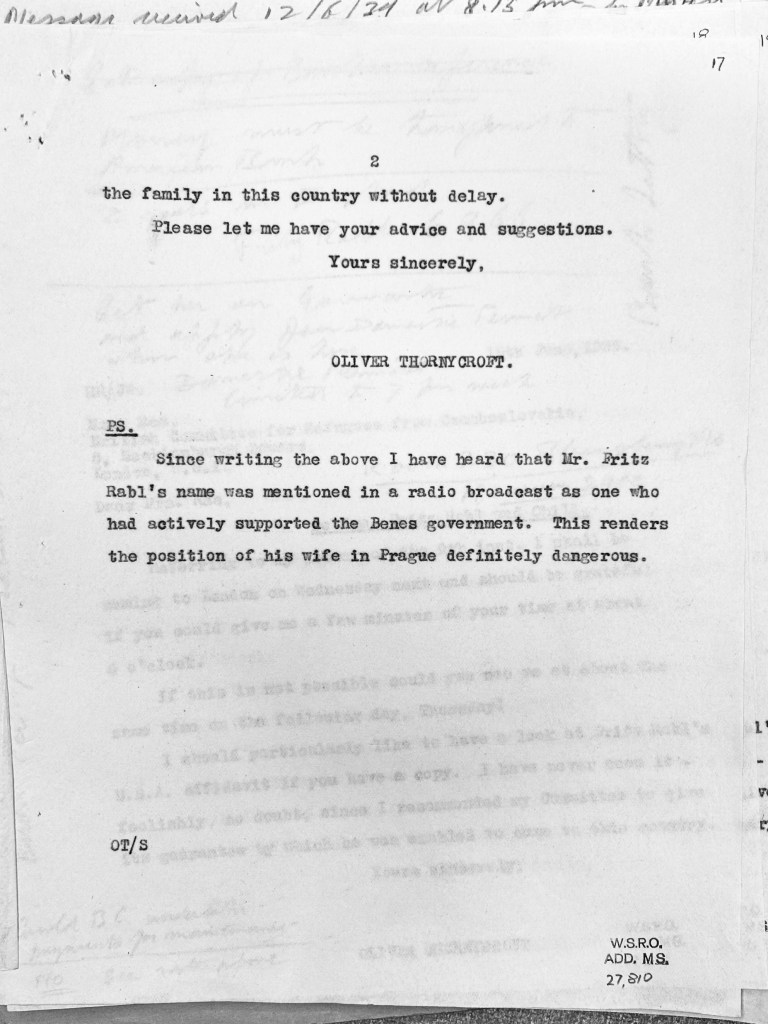
Reading through the correspondence files that we have within our archive, the anxiety to rescue Regina and their child is palpable…
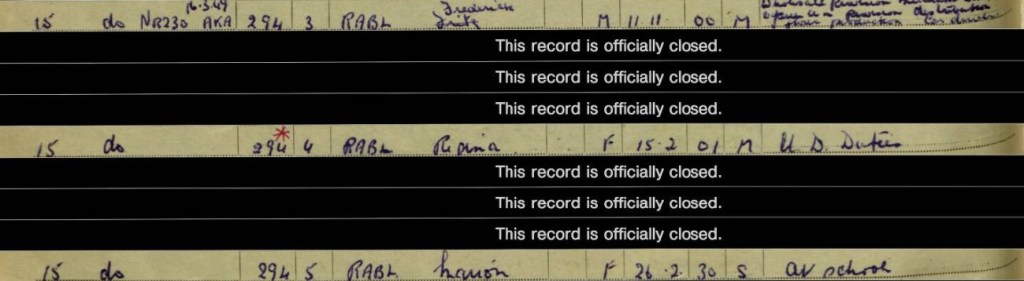
From searching on Ancestry to try and find out what happened to the Rabl family, the family appear on the 1939 Register. They were recorded as living at 15 Cranleigh Road and Frits’ occupation was described as “[Wholesale Provision Merchant Work. Production Distributor, flour production, car driver.]” This is a rough transcription from the original document as the handwriting is difficult to read. However, it appears that Frits was involved in food production which would have greatly helped during the war. Regina’s occupation was recorded as unpaid domestic duties and Marion was recorded as at school.
Going further into the records available on Ancestry, they settled in London mostly likely after the war had ended and did not immigrate to the USA like most of the families helped by the WRC. This can be evidenced by electoral registers from 1949 to 1965.
Hanna Keller
Hanna Keller was a 14-year-old Jewish girl who loved learning, was good at sports, musical and fond of needlework. She was living in Brno, Czechoslovakia (now Czechia), at the time when she and her parents, Alfred and Wally (Valerie), began corresponding with the WRC in April 1939 to arrange for Hanna to go to England. This came at a cost of £50 (£2,772.84 in today’s money according to the Bank of England’s inflation calculator) and, unfortunately, the Keller family had to flee from Sudetenland (the German name for the northern, southern, and western areas of former Czechoslovakia) to Brno in September 1938 which led to Alfred losing his job and money.

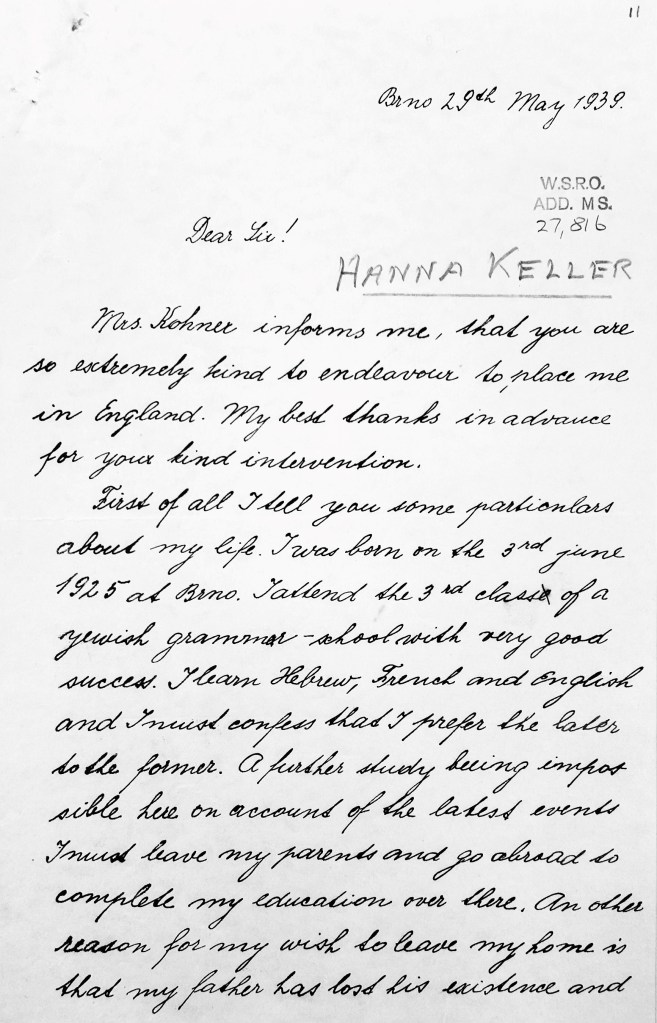
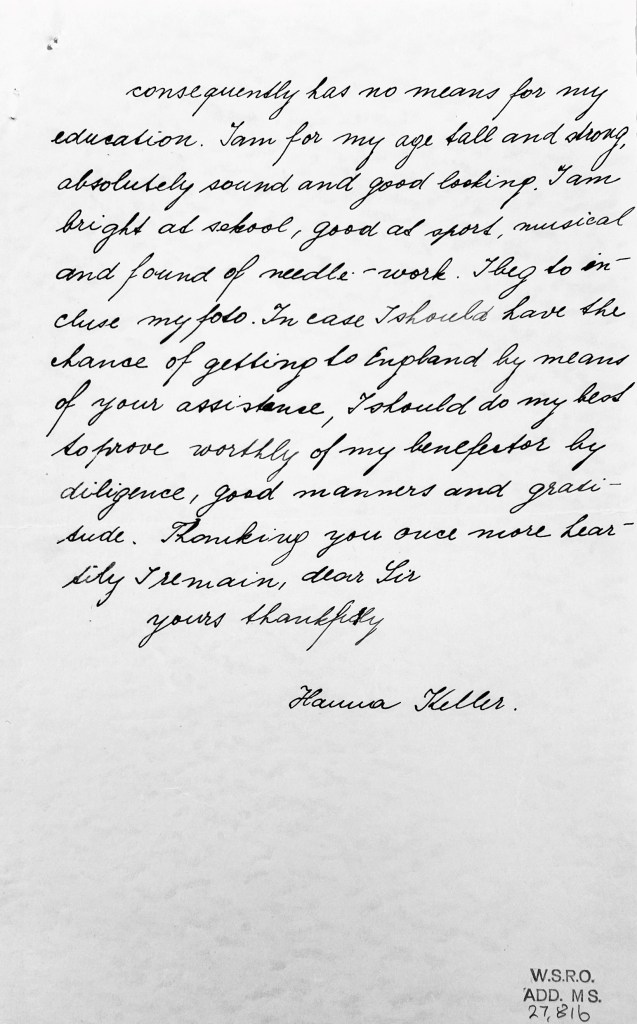
A guarantor who would vouch for Hanna was also needed for her visa application in order to enter England. This demonstrates the near impossible hoops that refugees had to jump through and the barriers they encountered when they were just trying to seek safety for themselves and their families.
Once again, the people of Worthing stepped up and someone offered to pay the £50 needed to get Hanna to England as well as another £50 to go towards her living expenses. Mr Thornycroft, secretary of the committee, also stepped up and put himself down as Hanna’s guarantor. By the end of June 1939, she was granted a guarantee by the British Committee for Refugees from Czechoslovakia. This meant that she should have been able to come to England by the end of August and the WRC began preparations for her arrival. Housing was found for her, and she was also to attend the Worthing High School for Girls.
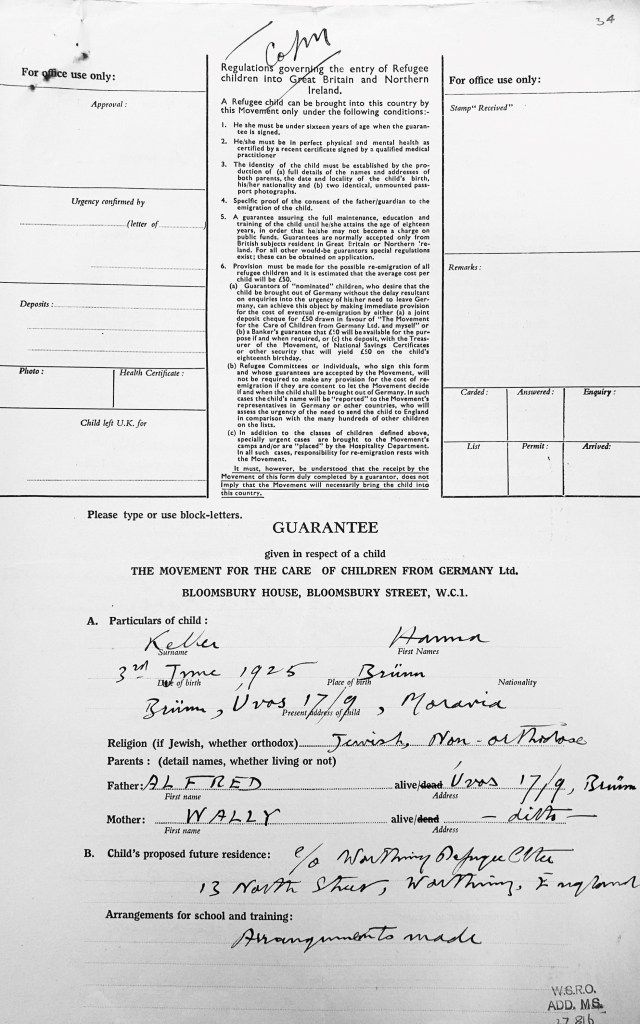
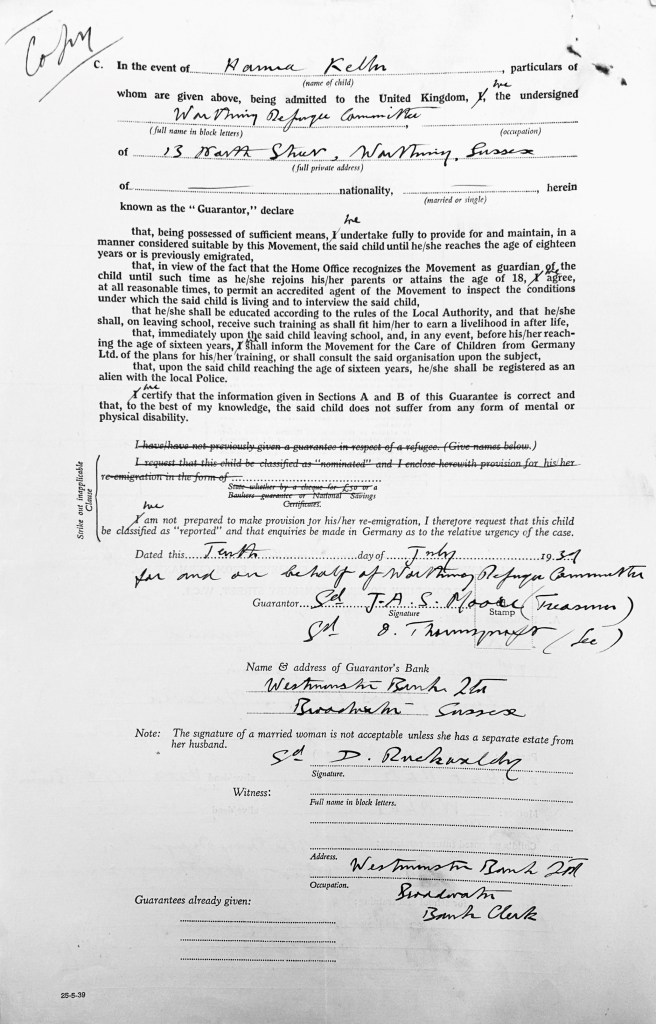
However, all of this hard work and hope came crashing down on the 1st of September 1939 when war broke out. Knowing that Hanna was so close to escaping, it brings up deep feelings of frustration and anger. But the WRC did not give up and they fought to find another way to get her to safety. Once again, near impossible obstacles were at play as Hanna’s previous visa application was now invalid and a new application would need to be submitted once she reached a neutral country.
In the correspondence it was discussed if Hanna could go to Italy to stay with an uncle, or if Holland or Switzerland would be better. This back and forth is palpably frantic and in a letter dated 9th of January 1940 it added yet another layer of urgency as it stated, “[Hanna’s] father has been ordered to go to Poland, I do not know when this will take effect, but it is apparently a terrible fate.” Finally in March of 1940 the WRC had done as much as they could to help Hanna and the correspondence ends.
Wanting to find out what happened to Hanna and her parents, the author began searching the Holocaust Survivors and Victims Database and the Yad Vashem Shoah Victims’ Names Database. It soon became apparent that Hanna, Alfred and Valerie were first imprisoned in Theresienstadt Ghetto in 1941.
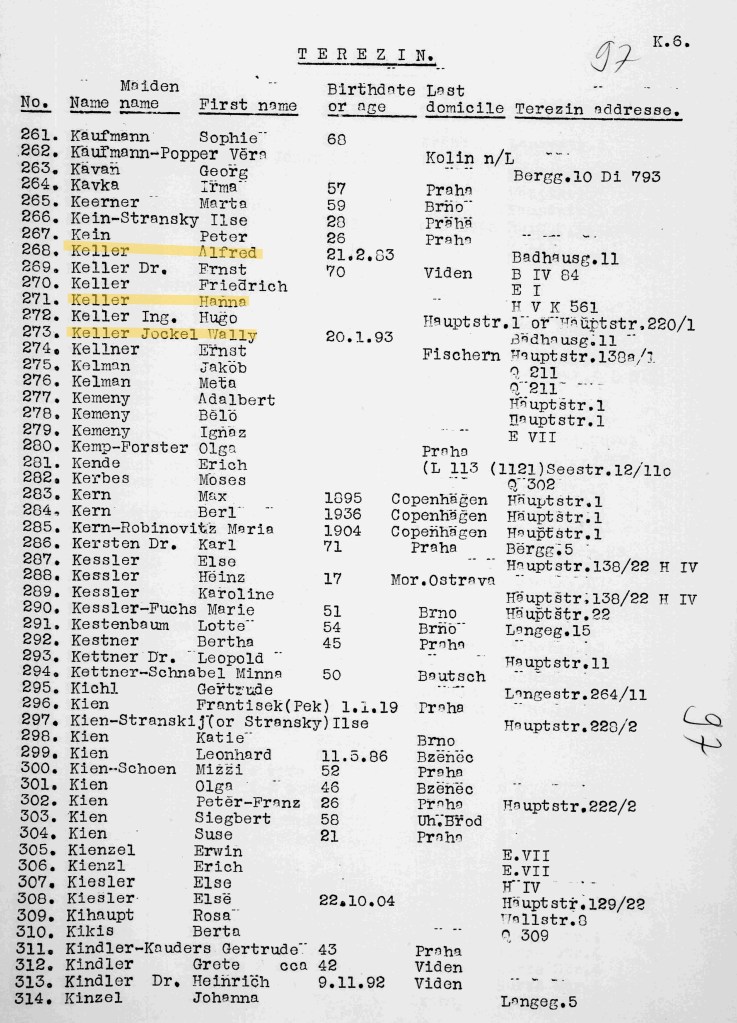
And then finally in 1944 Hanna, Alfred and Valerie were murdered in Auschwitz.
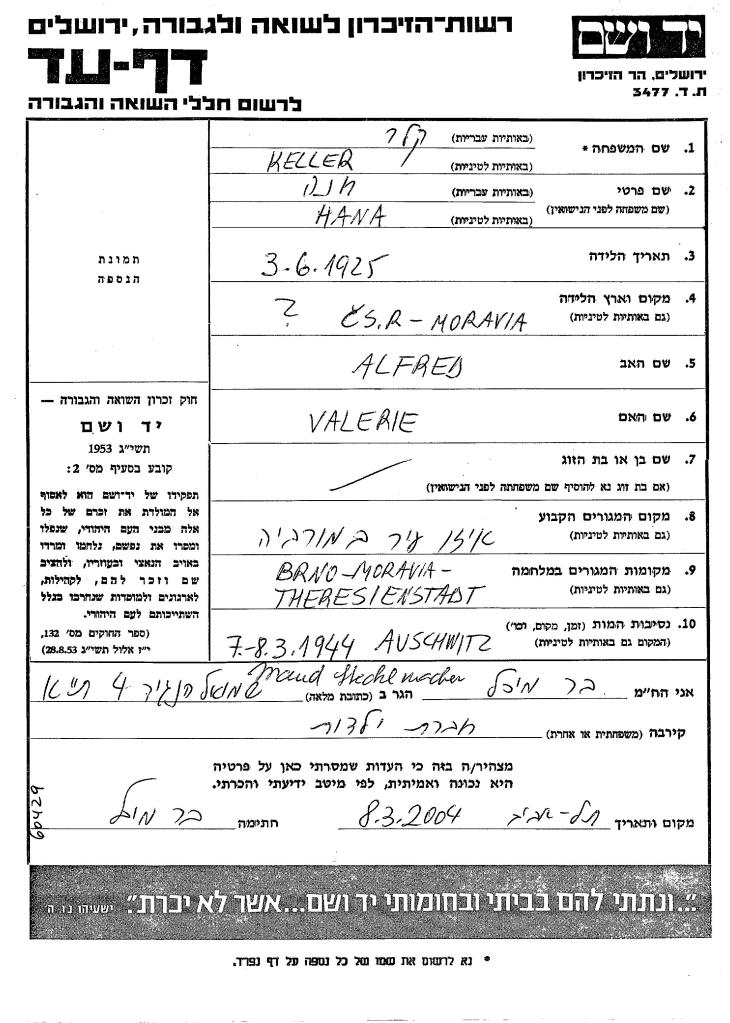
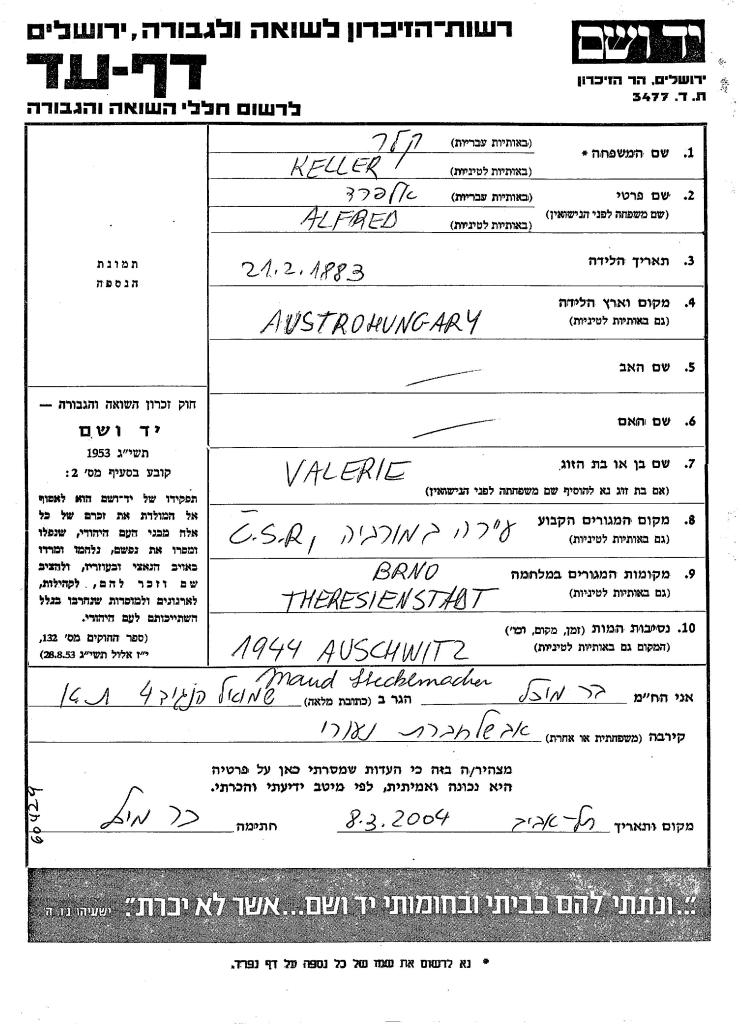
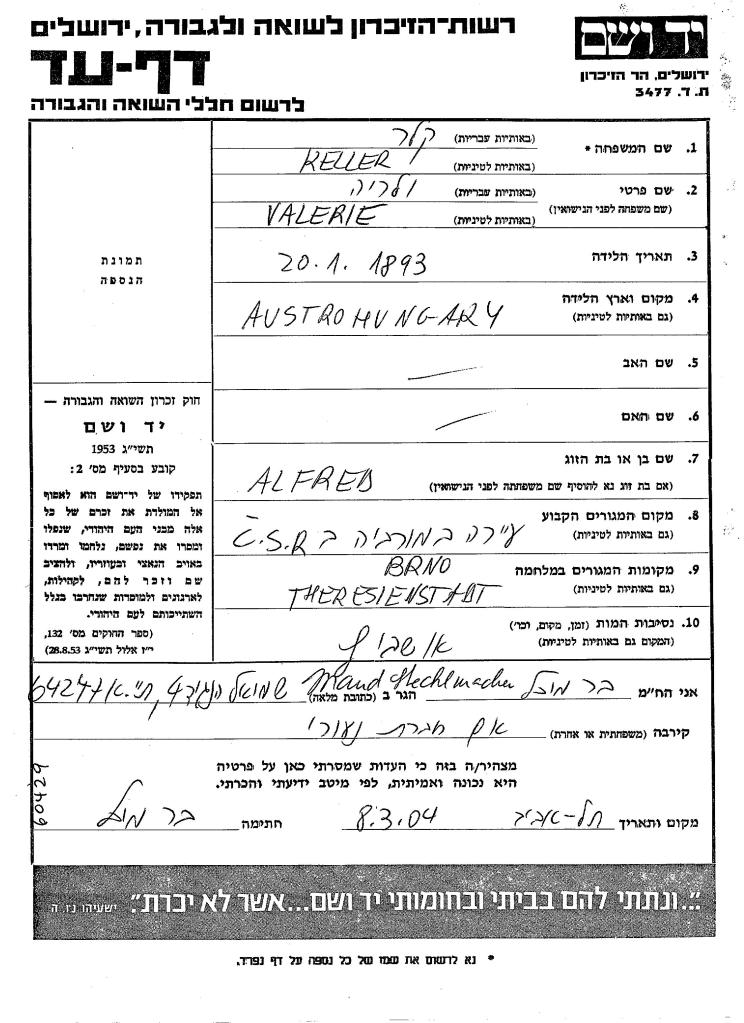
It brings great sadness to find out that Hanna was so close to reaching safety and everything was done by the WRC to try and save her, but it still was not enough. Today is a time for us all to reflect on the millions of lives that were taken during the Holocaust and to learn from this so history may never repeat itself again. It can be hard for one to fathom how six million Jewish people were murdered between 1941 and 1945, however, bringing Hanna’s tragic story to the light can help us comprehend in a much more humanistic manner.

 West Sussex Record Office