By Nick Corbo-Stewart, Archivist and Volunteer Coordinator
In this series of blogs looking at new collections at West Sussex Record Office (WSRO), I will continue to guide you, the reader, through the variety of work undertaken by the volunteers. Through a culmination of sorting, listing, ordering, cataloguing and packaging, their completed collections are now open for use by our researchers with the ability to inform and educate all who have an interest in the history of West Sussex. Below is a preview of three of these collections:
Juliet Pannett of Angmering
Juliet Pannett was an English portrait painter, born in Hove on 15th July 1911. Educated and trained at the Brighton College of Art, her first commission was for the Sussex County Magazine, drawing craftsmen, shepherds and fishermen. She and her family moved to Angmering in 1964. Over the coming years, one thousand people from all walks of life sat for Juliet Pannett to paint their portraits. Sitters included leading figures in British society from the mid to late twentieth century such as Queen Elizabeth II, other members of the Royal Family, several Prime Ministers and well known military officers, musicians and athletes. She was the sister of Phoebe Somers, a well-known Sussex professional lecturer and illustrator. Juliet died on 22nd August 2005.
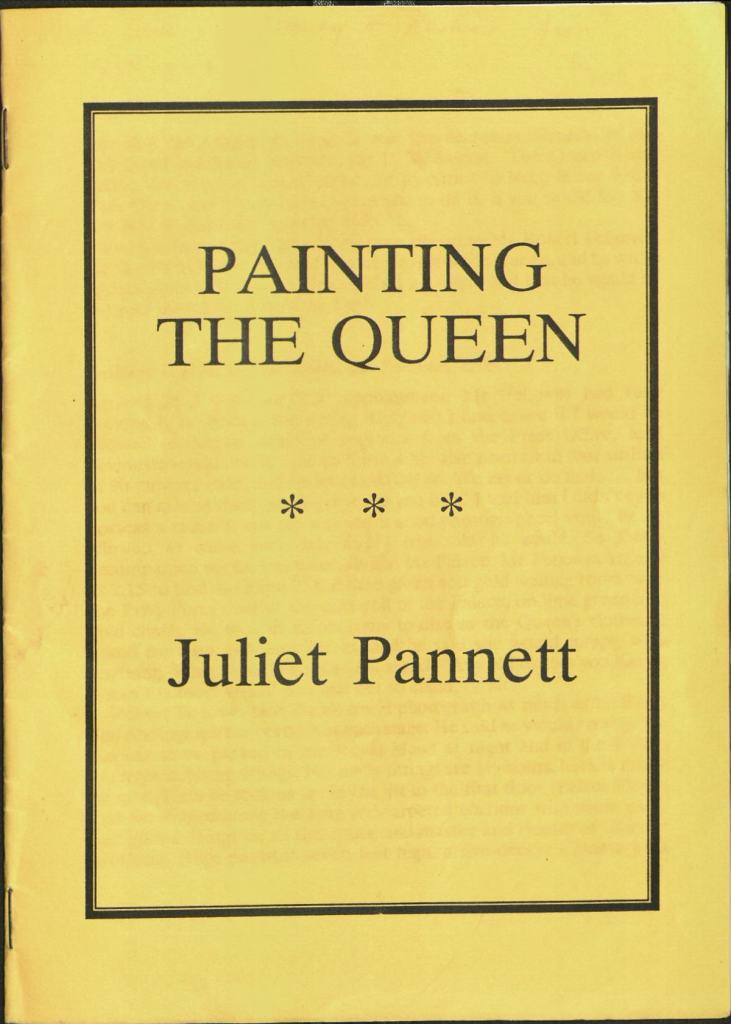
This collection brings together a small number of personal items showing Juliet at work. This includes personal correspondence with her family, a sequence of photographs showing Juliet painting, leaflets documenting Juliet’s professional painting life, her time painting a portrait of Queen Elizabeth II and a list of fees for her commissions.
To learn more about Juliet Pannett, see Lib 19615: My Colourful Life, by Juliet Pannett. For a related collection regarding Phoebe Somers, see AM 677.
Catalogue reference: AM 1860
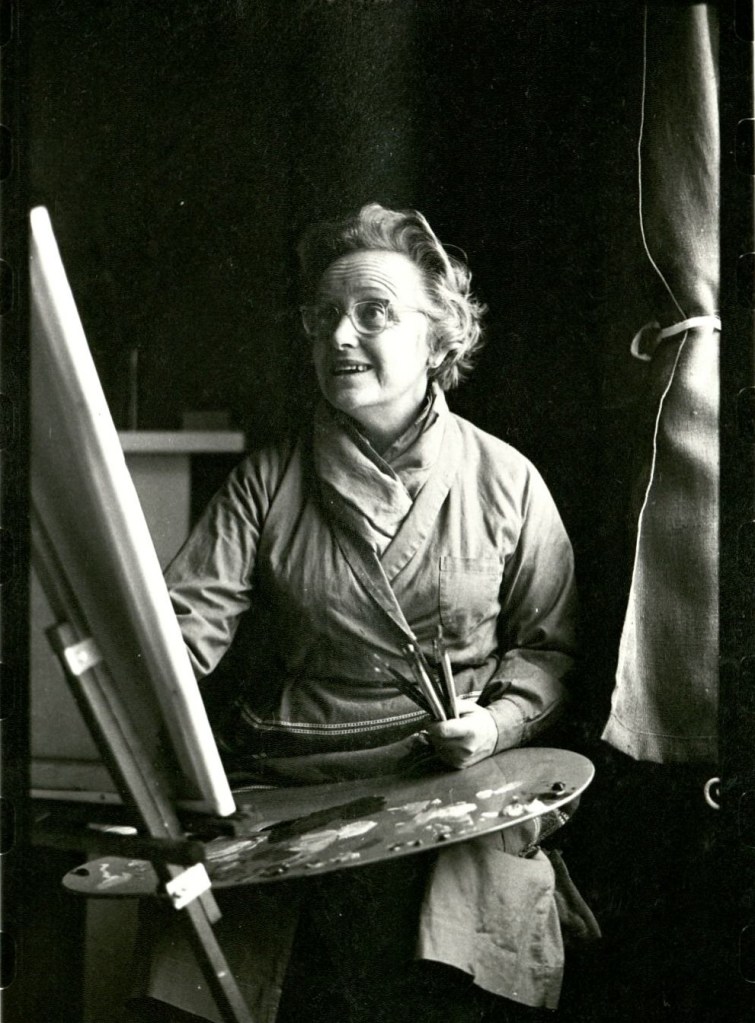
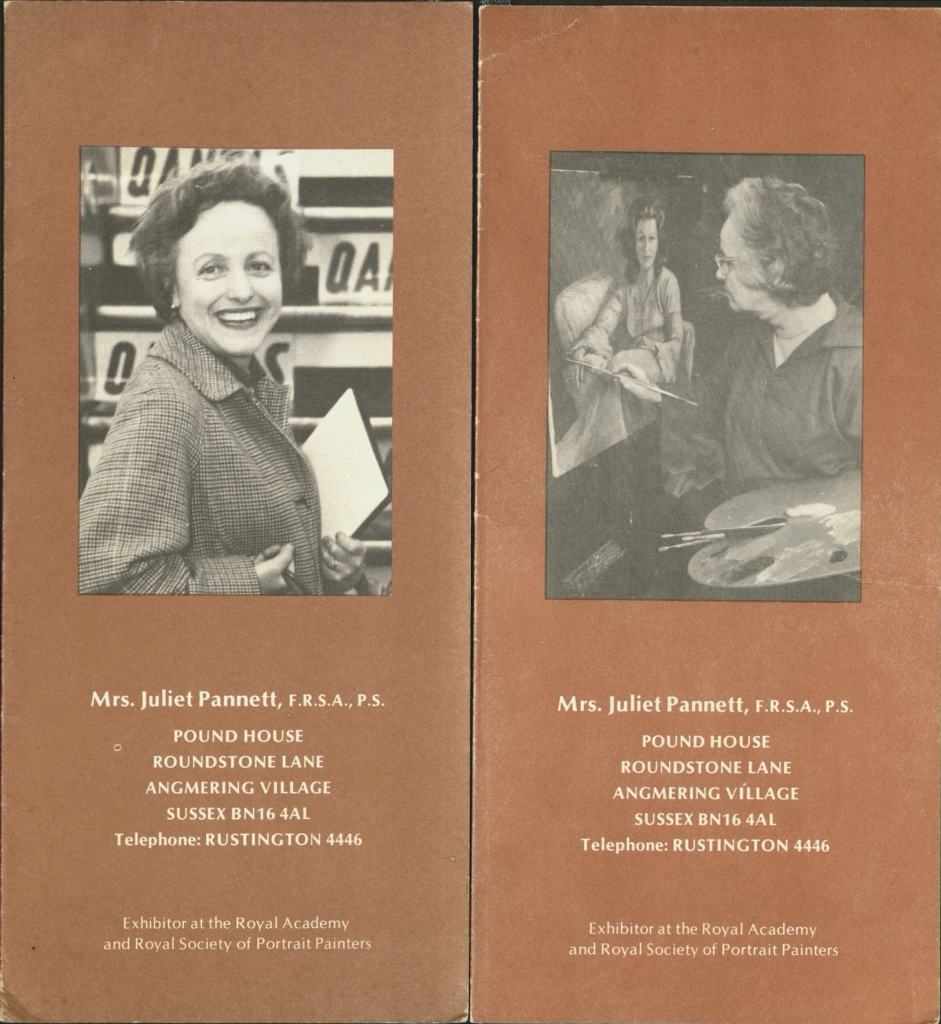
- AM 1860/2/1: Juliet Pannett, painting, late 20th century
- AM 1860/3/2: Booklet pages: Painting the Queen, c1989
- AM 1860/3/2: Booklet cover: Painting the Queen, c1989
Festival of Industry, Chichester
Held at Chichester Cathedral between the 14th and 18th June 1968, the Festival of Industry was envisaged as a showcase for the variety of manufacturing across Sussex and a demonstration of what can be achieved through skilled craftsmanship. It was an unusual joint partnership, a coordinated event organised by the Diocese of Chichester, trade unions, the Federation of Sussex Industries, West Sussex County Council and manufacturing companies.
Fifty exhibitors attended, including Beagle Aircraft Limited of Shoreham, the Cathedral Workshop of Chichester (specialist builders and restorers of churches), The APV Company Limited of Crawley (aluminium vessel manufacturers), Lec Refrigeration Limited of Bognor Regis (manufacturers of refrigerators), sculptor and designer John Skelton and many others.
The Festival comprised four days of displaying and demonstrating diverse manufacturers and craft skills. Exhibits included a Madonna and child in bronze, a relay that prevented damage through overloading, a specialised galley of a BOAC VC10 aircraft, and a Man Cooler Fan. The exhibitors entertained and networked, snacks were provided for the public and invited guests, and the whole event culminated with a festival service of celebration on Sunday 16th June at 6pm.
The collection at the Record Office takes you on a journey, from the preparation for the event to the Festival itself. The collection contains series of papers, publicity, photographs and miscellaneous items. The papers are associated with the administrative organisation of the exhibition, such as a list of exhibitors, fees charged and plans of the exhibits. The publicity series includes programmes, posters, flyers and a form of service at the Cathedral, as well as reports from the Chichester Observer and West Sussex Gazette. A series of photographs of the event itself features church dignitaries meeting exhibitors, exhibits and the service. A final series includes some of the event branding, with badges produced and a list of members of the Federation of Sussex Industries.
Catalogue reference: AM 1568
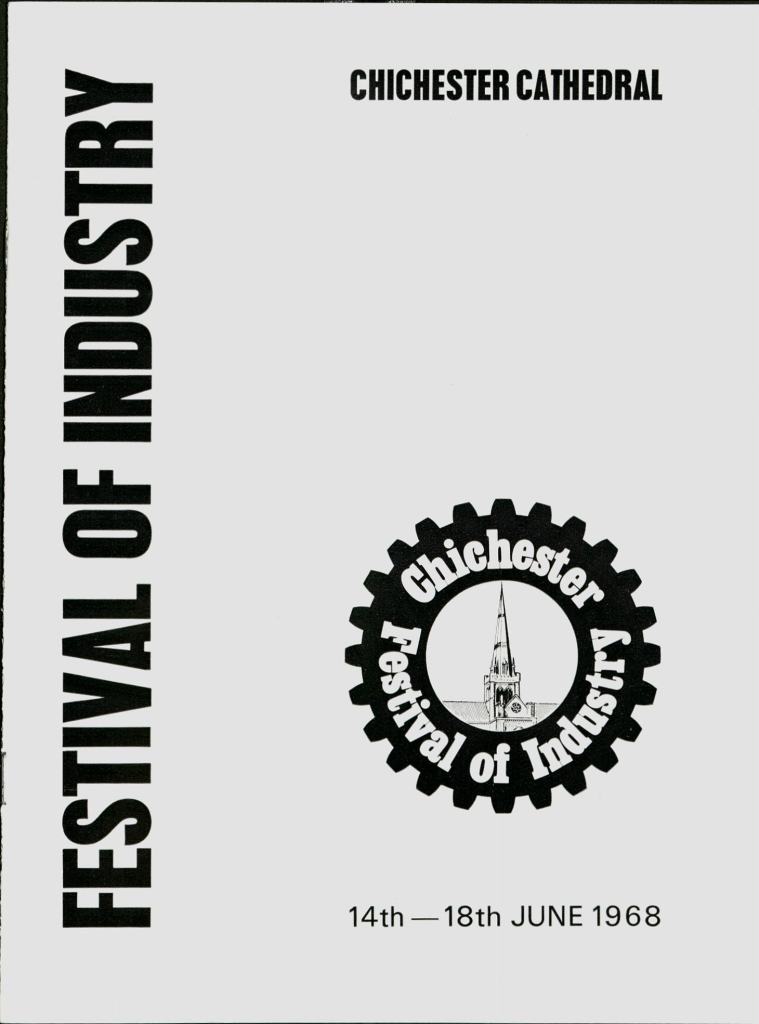
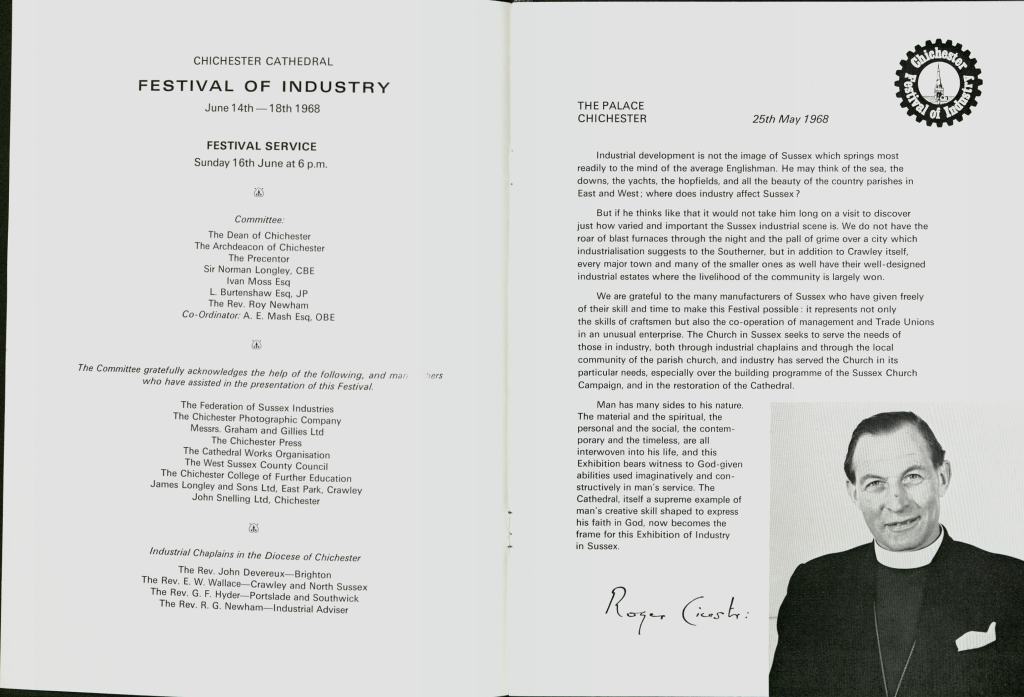
- AM 1568/2/2: Festival Of Industry programme cover, 1968
- AM 1568/2/2: Festival Of Industry programme inside pages, 1968
For those wishing to learn more, see APV (APV Baker Limited of Crawley).
Deeds Relating to Properties in East Grinstead, Bognor Regis and Chichester
Walking through the urban landscapes of many towns in West Sussex, you will come across the buildings which contain the telephone exchanges built for the Post Office and latterly British Telecom (BT). These exchanges were purpose built for a rapidly expanding communication network and the need for these new exchanges often resulted in the demolition of the previous buildings on that land. Dating from 1808 to 1968, this collection contains over a hundred documents: mortgages, conveyances, leases, declarations and abstracts of the title which record the transfer of land, its ownership and property that once existed upon it. Written on them are the names of the parties involved in these transactions, from landowners to companies or institutions, and the documents provide clues about how they used that property. This catalogue gives a glimpse of those buildings and their use, lost in the pursuit of this 20th century technological advancement.
Ranging right across the county, these eclectic deeds encompass the following locations and land uses:
- Schoolfield, Eastergate, Chichester which later became Eastergate Telephone Exchange.
- Maypole Road and Garland Road, East Grinstead which later became East Grinstead Telephone Exchange
- Upper Bognor Road, Bognor Regis. Formerly part of Bognor Meadow and 6 and 8 Upper Bognor Road and later known as Belvedere House and Bognor Lodge (the latter then Belvedere Lodge) and afterwards known as St Dominic’s Convent and School, later became Bognor Regis Telephone Exchange.
- The Lawn and The Dutch House, Campbell Road, Bognor Regis which later became Bognor Regis Telephone Exchange.
- Upper West Lane (later Chapel Street) and West Street, Chichester which later became Chichester Telephone Exchange.
- Tower Street, Chichester, which includes part of the Boys’ Lancastrian School and which later became Chichester Telephone Exchange.
Catalogue reference: AM 1755
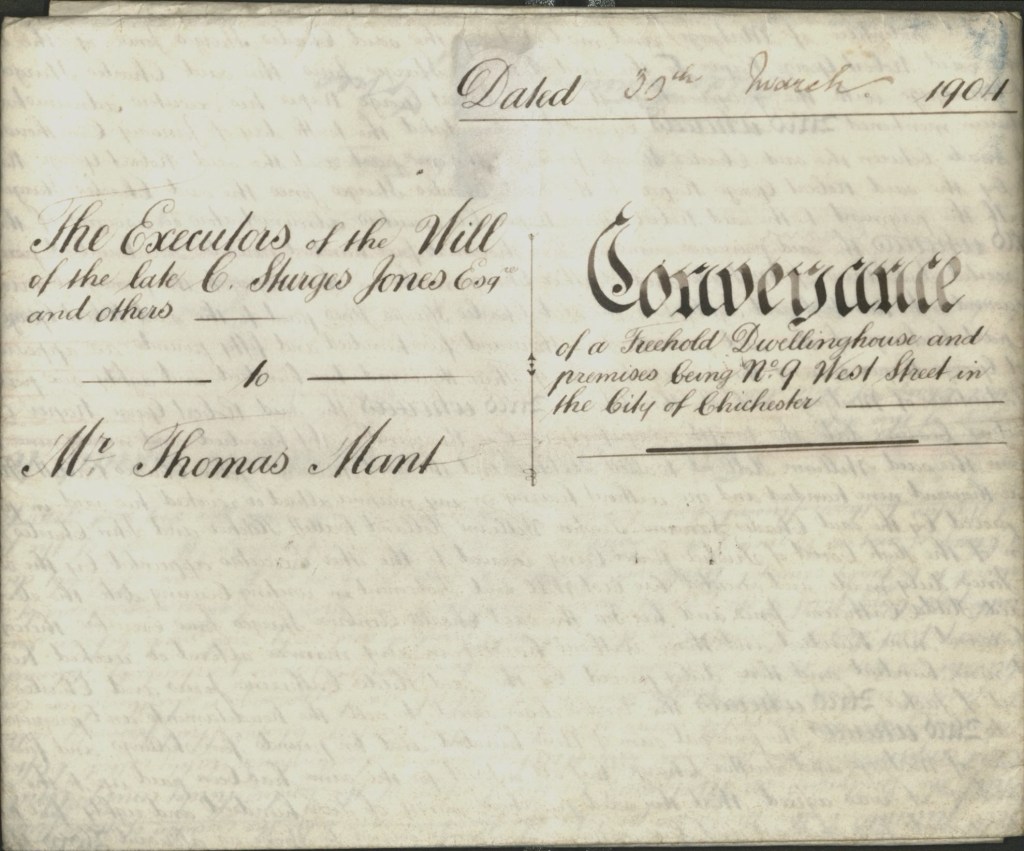
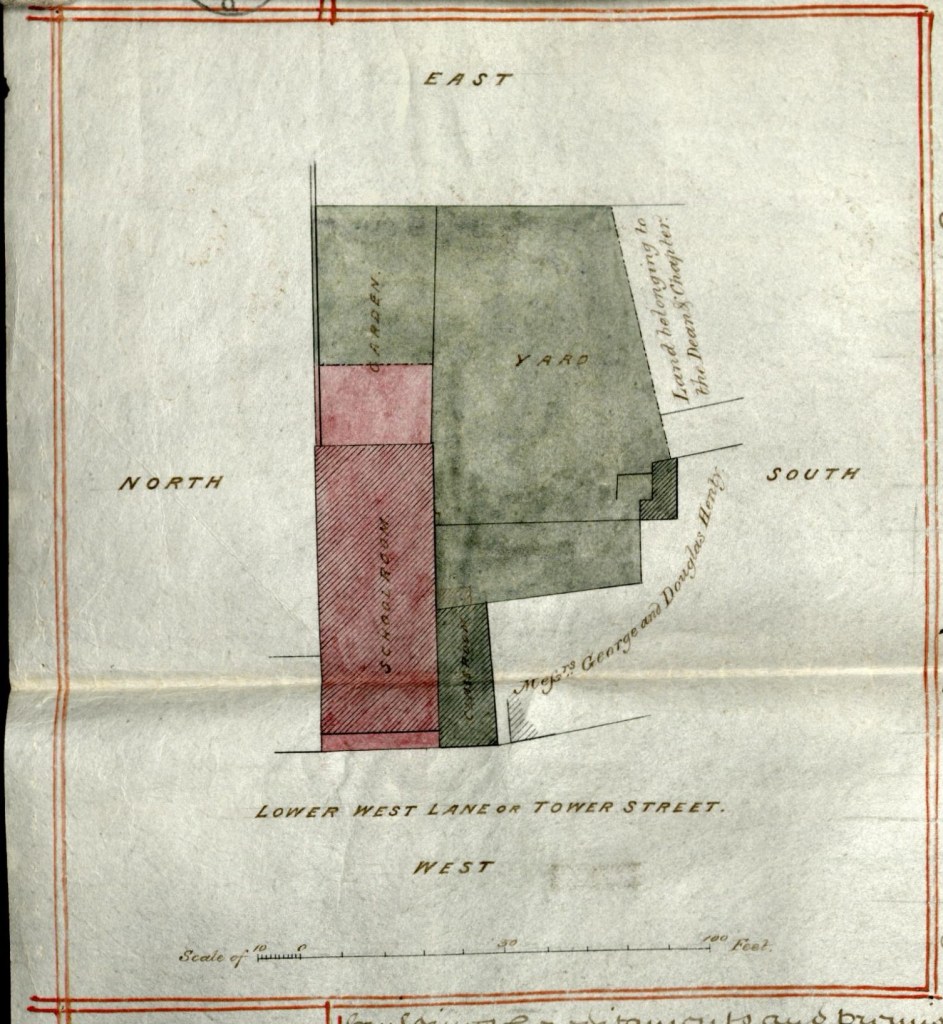
- AM 1755/5/22: Conveyance for 9 West Street, Chichester, 1904
- AM 1755/6/1: Conveyance plan for Chichester, early 20th century
Stay up to date with WSRO – follow us on Facebook, Instagram, Threads and YouTube

 West Sussex Record Office