By Victoria Evans, Searchroom Archivist
Building further upon a blog post written six years ago we are delving back into the history of fascism in West Sussex. Specifically, we will be focusing on the British Union of Fascists (BUF), also known as the Blackshirts, and their summer camp of 1937 which saw thousands flock to Selsey.
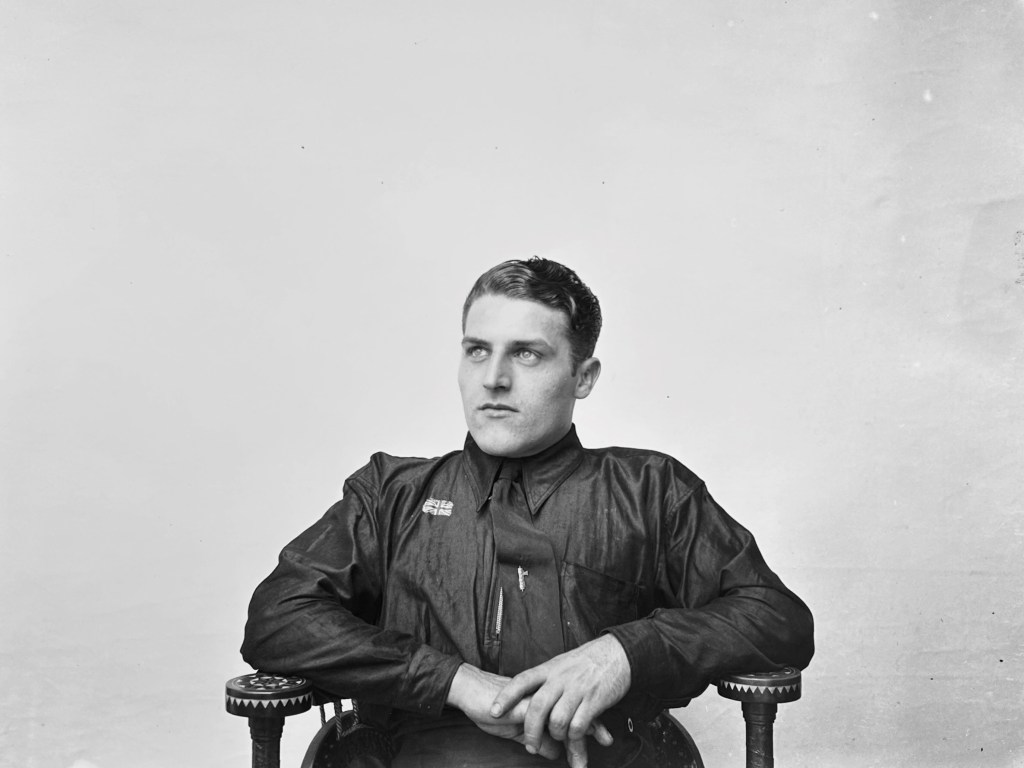
Such camps were an important multifaceted tool that the Blackshirts utilised in rallying current supporters, attracting future supporters, to spread propaganda through leaflets and marches, and to raise funds. The Selsey 1937 camp was one of the largest and the beachfront campsite next to the Medmerry Windmill must have been quite alluring to those travelling from further afield. Visitors and campers descended upon Selsey from Bristol, Leeds, Newcastle, London, Birmingham, Swansea and many other places across the UK.
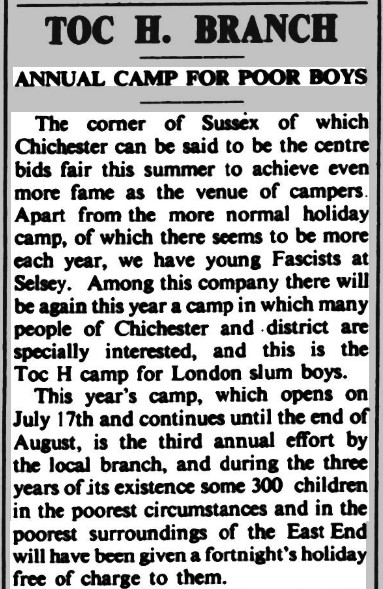
The camp kicked off on the 17th of July with the cadet camp. Fundraisers were held in the months leading up to this so the poorer Blackshirt families would be able to send their children to the summer camp free of charge. This clearly demonstrates how the movement sought to root itself in the family life of the Blackshirts. This lasted until the 31st of July and with the cadet camp ending, it opened up fully to all.
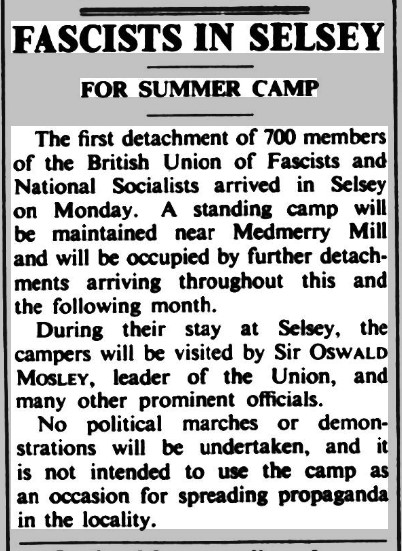
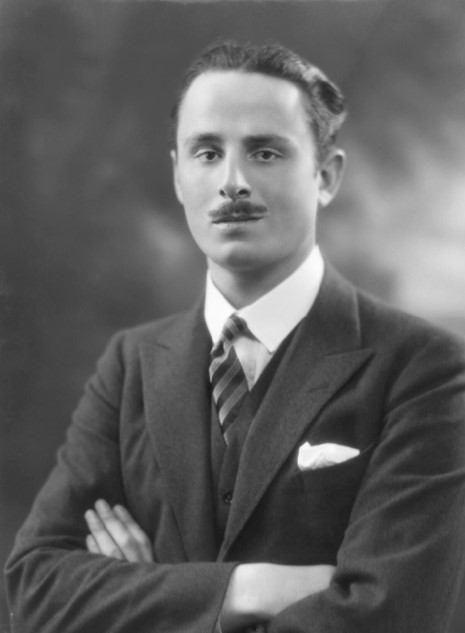
On the 1st of August, it also drew an even larger crowd of Blackshirts, and it was a day they would not want to miss out on. Sir Oswald Mosley, the BUF leader at the time, was to visit the camp. Arriving at the camp in his open-top Bentley to cheers and straight-arm salutes, this was a chance to publicise the Blackshirt movement and show off how involved their party leader was. However, from reading the book Blackshirts On-Sea by J A Booker (Lib 14066), there was evidence of idolatry as crowds swarmed around him, hands reached out to try and graze the sleeve of his jacket, and chants of “hail Mosley” filled the air.
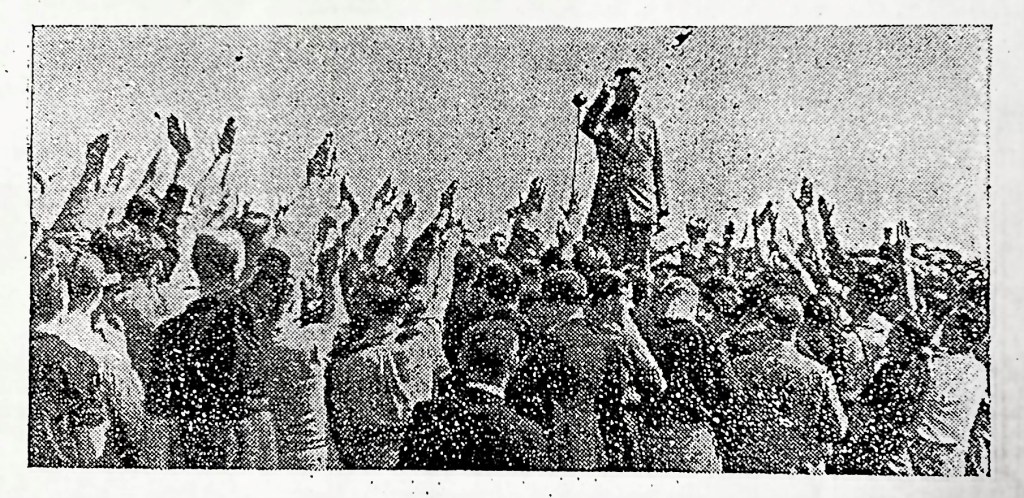
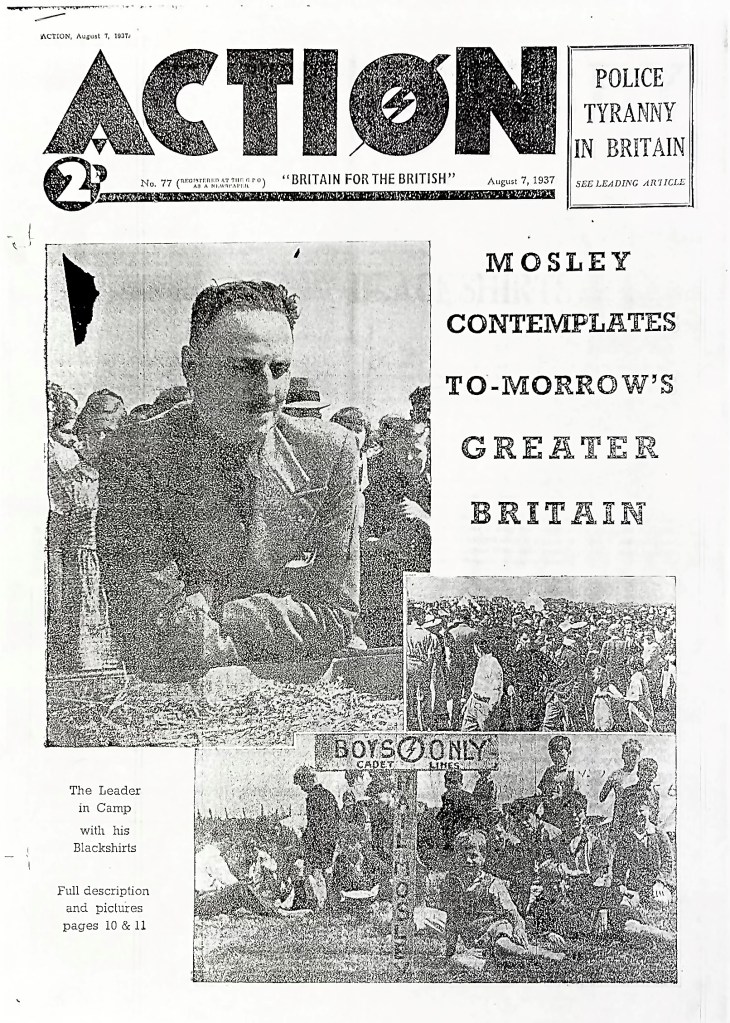
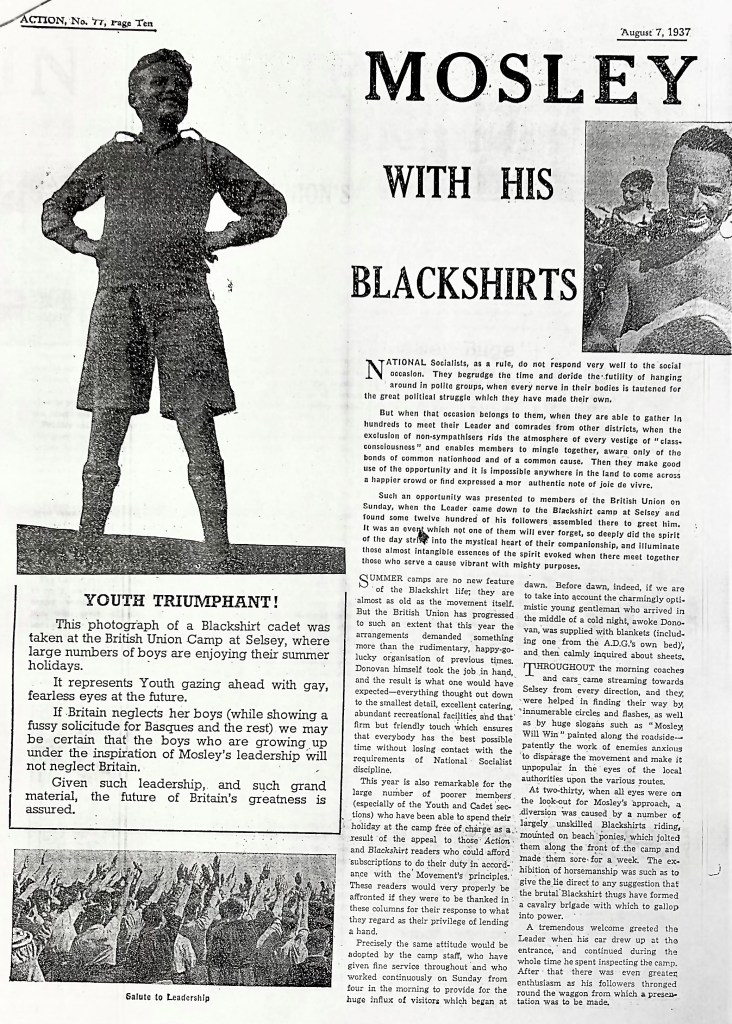
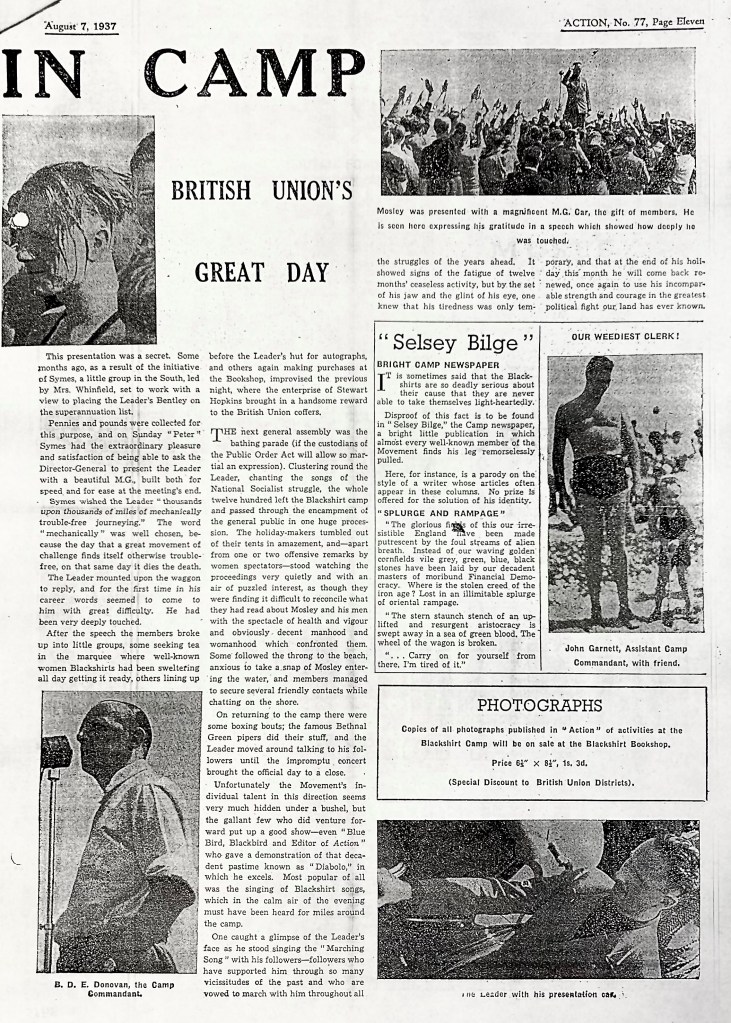
So, what did this camp have to offer? Well, being so close to the sea many would have spent their time in the water or beside it on the expansive sands of the beach. But also offered were excursions to the countryside to explore the quaint West Sussex villages and Selsey itself offered entertainment in the form of a cinema and a tennis club. Surprisingly, this camp was not used as an opportunity to overtly distribute propaganda. This meant that news of the camp barely made it into the press. It was only briefly covered in the beginning before interest was lost. Of course, though, the two newspapers (Action and The Blackshirt) published by the Blackshirts themselves covered the camp extensively and deemed it a great success. Furthermore, what can be gleamed is that these publications took this chance to showcase their party leader as personable and down to earth compared to other party leaders. Within our archive we hold some grainy photocopies of some pages from the 7 August 1937 edition of Action and some photographs taken during this summer (MP 3935). Of course, the propaganda shines through as the glorified praises of Mosley are sung out by this Blackshirt publication.
Full copies of these fascist newspapers are held by the University of Birmingham: Cadbury Research Library: Special Collections.
The last part of August and the first week of September saw the camp become a space for women Blackshirts only. The activities that the women partook in were horseback riding, swimming and shopping as well as their accompanying military-like Blackshirt duties. With this coming to a close, the summer camp of 1937 would too, and the tents were packed away and driven back to London.
If you are interested in learning more about the history of fascism in West Sussex, the book mentioned previously (Blackshirts On-Sea by J A Booker) is a great place to start and this is available on the Searchroom shelves. However, our archive is lacking original material relating directly to fascism and we would benefit greatly from having more! We aim to preserve all aspects of history relating to the county. If you have or know someone who has documents relating to fascism in West Sussex and would be willing to either deposit them with us (see details here) or for us to take digital copies, please contact us via record.office@westsussex.gov.uk.
Stay up to date with WSRO – follow us on Facebook, Instagram, Threads and YouTube

 West Sussex Record Office