By Nick Corbo-Stewart, Archivist
With the new season now underway, in this article we feature some of the items from our diverse West Sussex Record Office (WSRO) collections related to the game. They present to the researcher a sense of the investment, dedication, competition and excitement generated by the football season across Sussex:
Collection title: Chichester City United Football Club badge
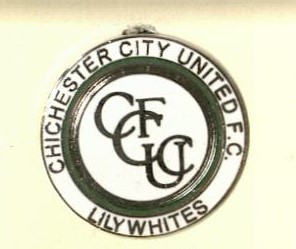
For a football supporter, your club colours matter. They give you a shared identity with the team you support, and the players as they engage the opposition on the pitch. These are unique to your team. Sold in the form of strips, scarves and other memorabilia, they are regularly displayed at games. For those with a passion for Chichester City United Football Club, established in 1873, wearing these colours matters in whatever shape or size.
This item is the one of the smallest of its type, a club pin badge dating from the late 20th century and made of enamel and metal. It features a circular design, with Chichester City United F.C. and Lillywhites (the club nickname) written on the outside border, with interlocking capital lettering of the club name in the centre. The badge a vividly portrays the colours of the club it represents; silver, green and white.
Catalogue reference: AM 712/10
Collection title: Programmes for match days
Youth football is every bit as competitive as that played at the senior level. Many competitions are held throughout the football season for players from age 4 to 18 regardless of ability and or gender.
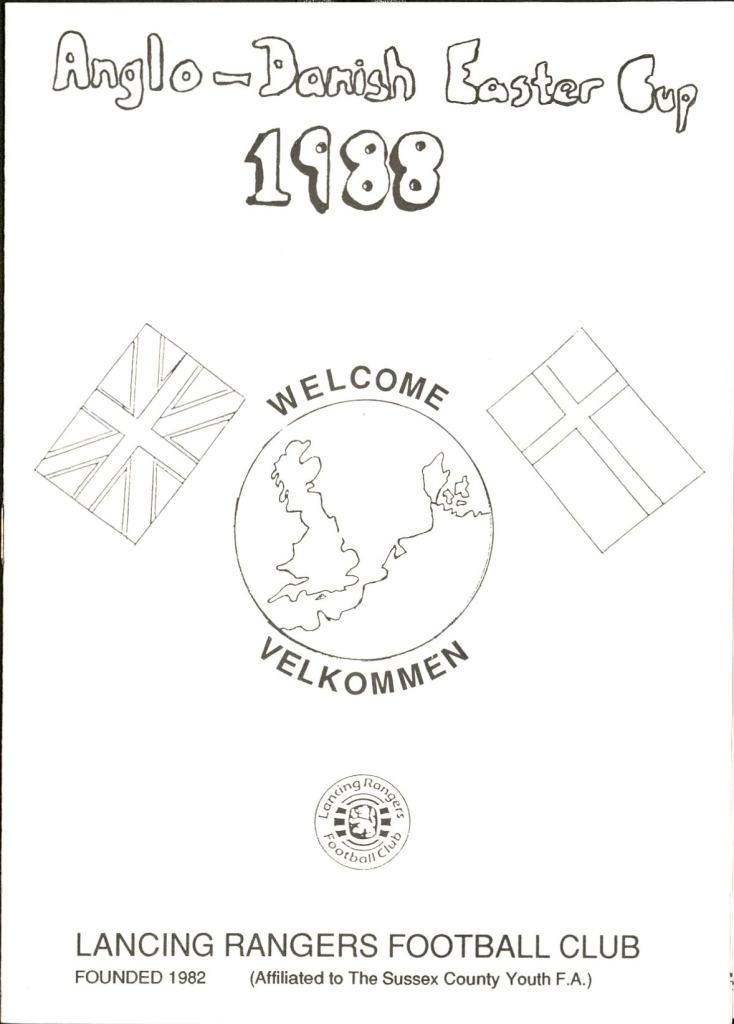
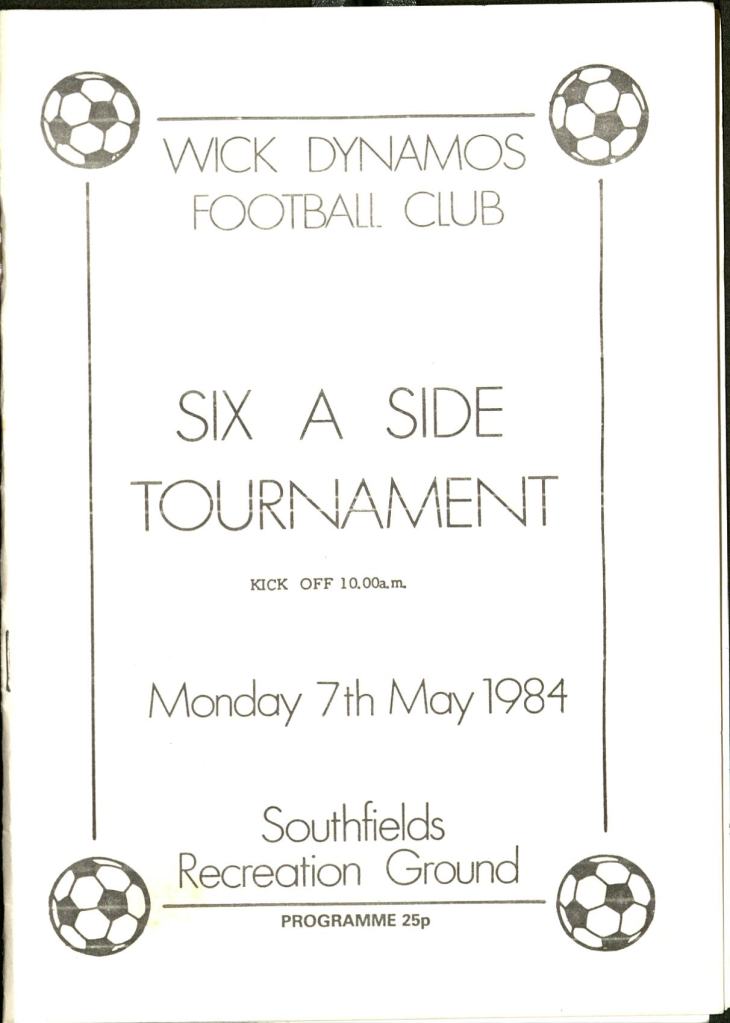
These programmes, although plain in design, have been produced for youth competitions, he first of which is for the Wick Dynamos Challenge Cup. Hosted by Wick Dynamos Juniors, this club was founded in 1969 for children of all abilities to enjoy playing football, with the philosophy ‘Inclusive Not Exclusive’. In 1984, they hosted a gruelling six-a-side group competition, split into two groups and featuring 10 teams from across the county, including Petersfield Town and Bognor Targets. The semi-finals and final were also to be played on the same day. The second programme is for the Anglo-Danish Easter Cup (donated by the Tulip Meat Company Limited), a competition held in 1988 at Lancing Rangers, to be played ‘in the spirit of friendship’. It includes teams from England, such as Fishergate Flyers and Worthing Minors, and from Denmark, Vejgaardboldspilklub from Aalboorg. The tournament was a popular option for an end-of-season competition for these youth football teams.
Catalogue reference: AM 1549/3/1
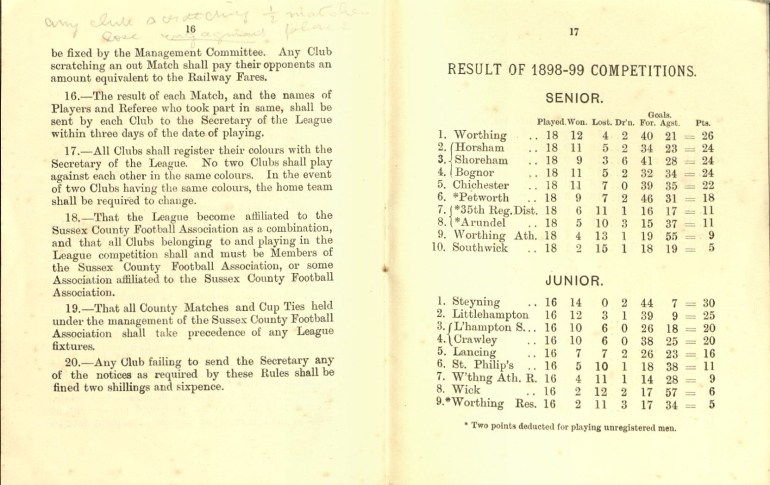
Collection title: West Sussex Football fixtures for the season 1898-1899
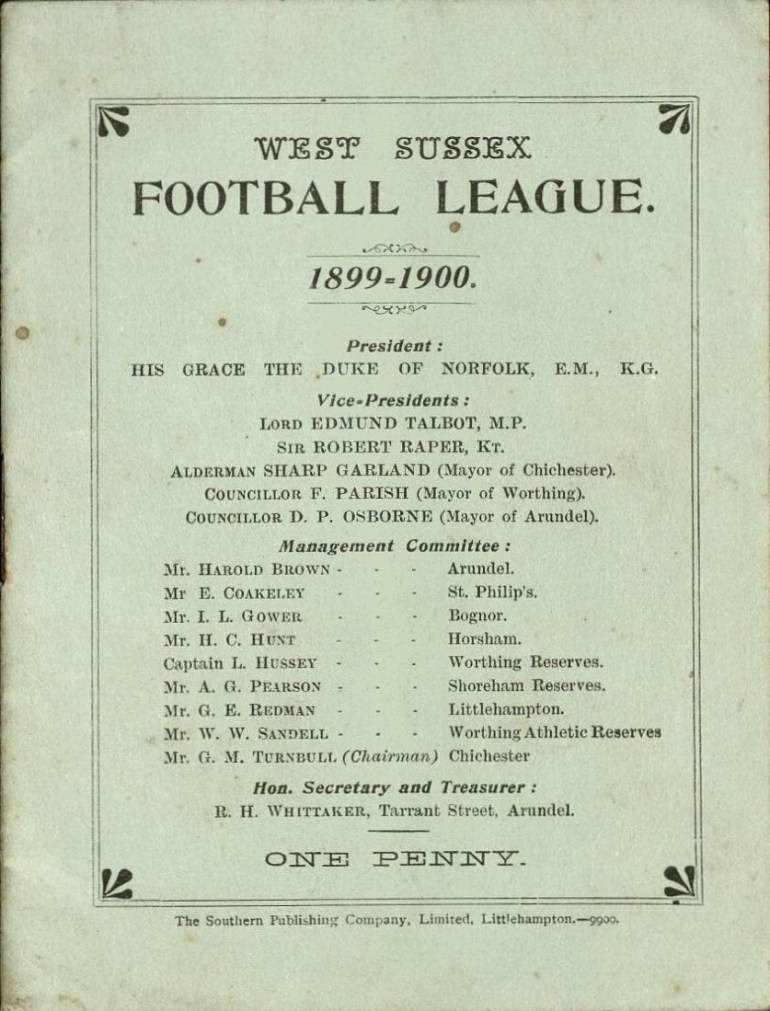
The West Sussex Football League was founded in 1896. It is an FA accredited league, affiliated with the Sussex County FA and a regional feeder league to the Southern Combination Football League Division Two. It was formed to maintain public interest in the game throughout the season and included teams from all of West Sussex. The league initially comprised two divisions, with 10 teams in each.
In the days when programmes were not widely available at the lower levels of amateur leagues, publications like this were available for football fans, helping them become aware of and attend matches in their area. For the price of one penny, a spectator could purchase this all-inclusive booklet to find the results of the previous season (both senior and junior), a full list of the rules for participating teams in the league, senior officials and finally, up and coming fixtures for the new season.
Catalogue reference: AM 197/3
Collection title: Plan of stand for Arundel Football Club, Mill Road, 1938
Arundel Football Club play at Mill Road in Arundel. Known as ‘The Mullets’, a term which historically refers to people born in Arundel and originating from the abundance of grey mullet fish in the nearby River Arun, the club was established in 1889. They were founder members of the West Sussex Football League in 1896 and were placed in the Senior Division. As with many clubs at this level, they started with rudimentary facilities but by the 1930s a growing interest meant investment had to be made in the construction of a new ‘main’ stand for both spectators and the team.
This plan features the design for a covered, wooden structure showing viewpoints from above, front section and side elevation. The stand features five rows of seating, with changing rooms for home and away teams, as well as the match officials. It was to be situated with its back to the putting greens and tennis courts, facing on to the pitch approximately on the halfway line. Included with the plan is a notice from the Urban District Council of Arundel, listing the features of the new structure. It’s rather basic by today’s standards as it features no running water or a privy but it was better than getting changed in the local pub!
Catalogue reference: BO/AR/16/181
Stay up to date with WSRO – follow us on Facebook, Instagram, Threads, Bluesky and YouTube

 West Sussex Record Office