By Mia Curtis-Mays, Archives Assistant
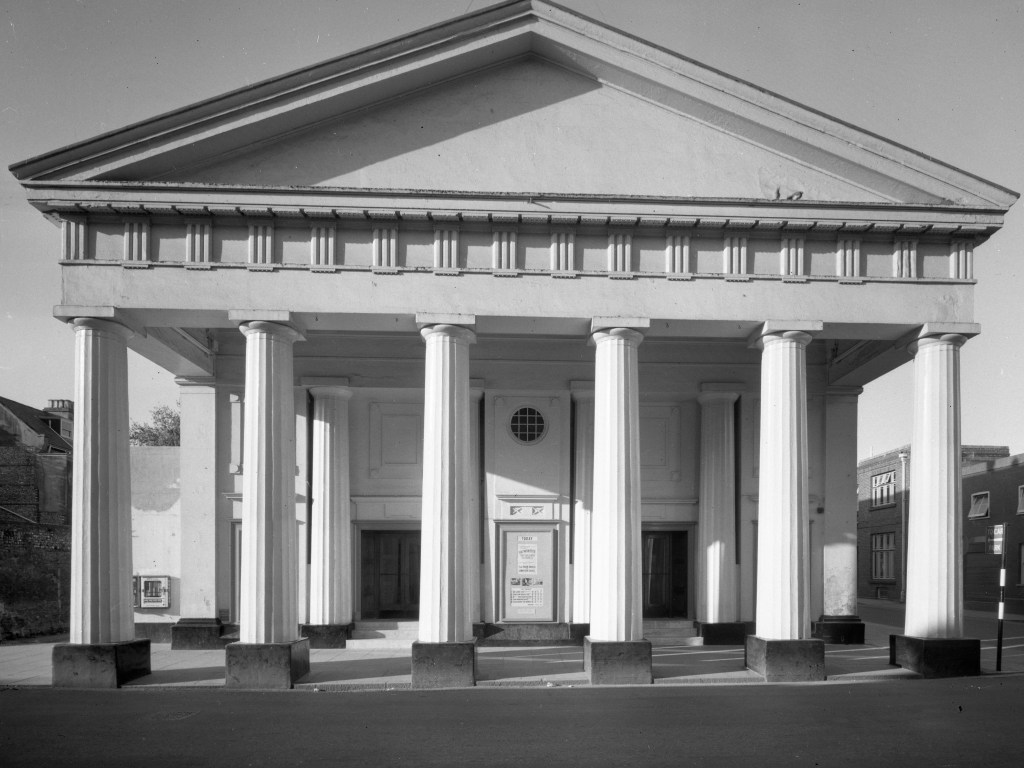
The beginning of the Corn Exchange
The Corn Exchange in East Street, Chichester, was erected in 1832 to be a marketplace for local farmers, corn merchants and millers. Due to the lack of interest in the corn market by the corporation, farmers and corn merchants took matters into their own hands, calling a public meeting chaired by James Hack at the Swan Inn to discuss the possibility of building a corn exchange in the city.
The Swan Inn on East Street was the principal coaching inn in the city. It was a popular venue for meetings and auctions. It closed down in the 1840s and burnt down in 1897.
The meeting took place on the 20th June 1832, where it was decided there should be a regularly established pitched market for the sale of corn and grain in Chichester. The second meeting took place on the 27th June, where three more committee members were appointed: Stephen Farndale, J P Hayllar and W Field. Robert Raper, at the time a partner in the Chichester solicitor’s firm of Johnson and Co (later Raper & Co) was appointed secretary and the local bank of Dendy, Comper and Gruggen was appointed treasurers.
It was decided that the site would be a spacious mansion house on East Street, which went up for sale in May 1832 after the death of its last occupant, Mrs Fitzherbert (more about this mansion can be found in Lib 11871). The architect chosen was George Draper, with remodelling done by John Elliott.
You can read more about the building’s use as a corn exchange in Lib 17217.
Beyond the sale of corn and grain
In 1883, it was decided by the Committee in charge to hire out the same room for occasional drama productions and other live entertainments. Regular bookings were made by local flower shows, badminton clubs, musical societies, and there were occasional charity, political and civic events, bazaars, concerts, and plays. The sufficient usage persuaded the committee to purchase its own chairs (250 of them) in April 1899 – before that, people were known to have sat on corn bins.
In the 1890s, a travelling company owned by Miss Maggie Morton started to bring Christmas pantomimes to the Corn Exchange. At 8pm, on Saturday 26th December 1896, she introduced the city to its first cinematograph. These early pictures were normally short single reelers, of 50 ft or a minute, which were a single-shot production with one camera in a fixed position. On the side of the Corn Exchange building, there is a plaque commemorating this cinematic achievement.
The Poole Showmen
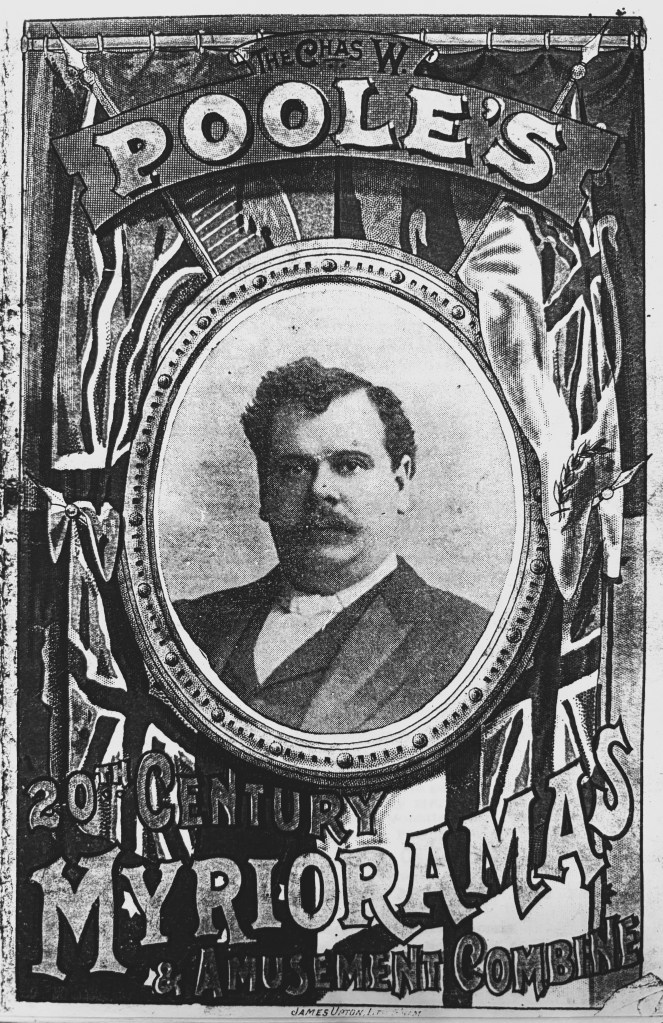
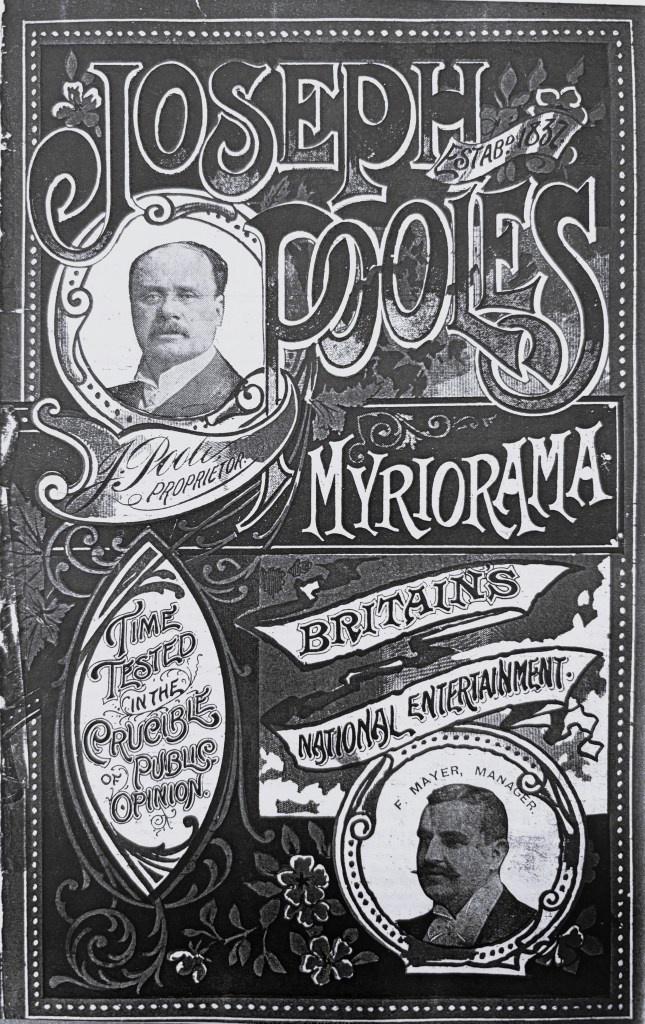
The Poole’s travelling shows started with Charles Poole (1821-1877) and his brother George Walter Poole (1828-1877), from Malmesbury, Wiltshire. Their business continued through their nephews, Joseph Poole and his brothers, who introduced Chichester to Myrioramas in the 1890s. Myrioramas were pre-cinematic forms of entertainment. They presented panoramic pictures on a canvas screen (27ft long and 14ft high), which would have been drawn across the stage on rollers, showing contemporary and historic scenes. With the aid of spoken commentary, these scenes were aimed to both educate and amuse the audiences.
Messrs Poole would book the Corn Exchange once a year, for a week at a time, with their Myrioramas attracting large audiences. We hold the brochures for these, under the catalogue number Add Mss 49767-49774. They originally belonged to Frank Miles who was employed at Pooles before WW1. Later on, Frank and his son became electricians at Graylingwell Hospital, where they presented films to the patients in the Recreation Hall. This practice continued until the mid-1980s.
In November 1897, Charles W Poole presented his ‘Royal Myriorama’ for a week. He displayed pictures of Victoria’s Diamond Jubilee, which attracted crowded houses. A year later, when Joseph Poole booked, there is reference to extra fire insurance, suggesting that he had added films to the programme. During his visit in October 1899, the programme included ‘Pooles’ Kinematograph of Animated Photography’. Charles came back with his ‘Royal Myriorama’ in 1901, combined this time with the Edison-Poole eventograph showing war films from South Africa, footage of Queen Victoria’s funeral and the state opening of Parliament shot only a few days before.
By 1910, the Corn Exchange started to become a permanent cinema – “Pooles’ Electric Picture Palace”. Expensive alterations were made to serve its cinematic purpose – alterations to projection boxes, installation of electric lighting and tip-up seats. Messrs Pooles’ continued to draw in large audiences, and in June 1910 managed to quickly acquire 3,000 ft of film of Edward VII’s funeral. ‘Singing Pictures’ were then introduced in 1911, with Miss Florrie Norris synchronising her voice to lip movements on screen. In a bid to improve business, boxing, whist drives, ‘select’ dances and variety shows were introduced. It was only on Wednesdays that these events could not happen, as this was when the Corn Exchange was held.
Wainwright and Granada
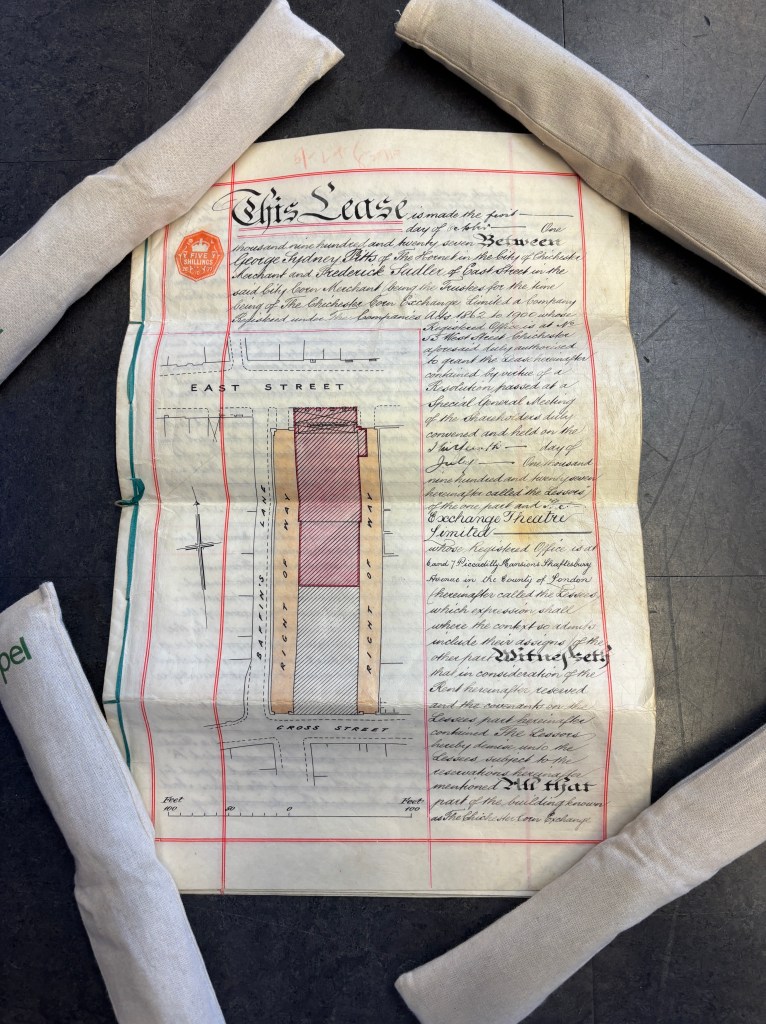
In 1927, the Corn Exchange Company agreed to a 35-year exclusive full-repairing lease of the trading hall to allow it to be converted into a bespoke theatre (Add Mss 5301). This coincided with the take-over by the London-based Wainwright circuit, who closed the building for 4 months for major alterations. The architects tasked with this were G S Hall and G de Wild, who installed racked seating and a proscenium-arch stage. A plan of this can be found under catalogue number BO/CH/16/1/296. In depth detail about the alterations can be found in Lib 13342.
Re-opening on the 8 December 1927, The Exchange Cinema was born. They claimed to be the first cinema to show talking pictures in West Sussex and in the 1930s, spot prizes were given during Saturday evening performances, with the winner chosen at random by a spotlight.
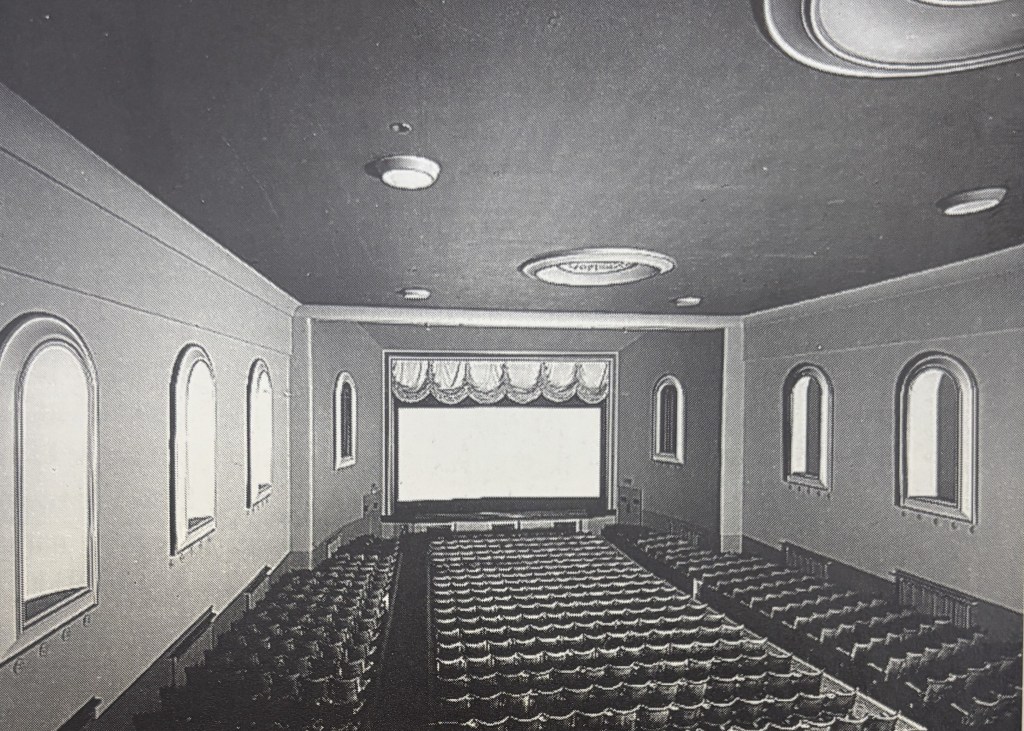
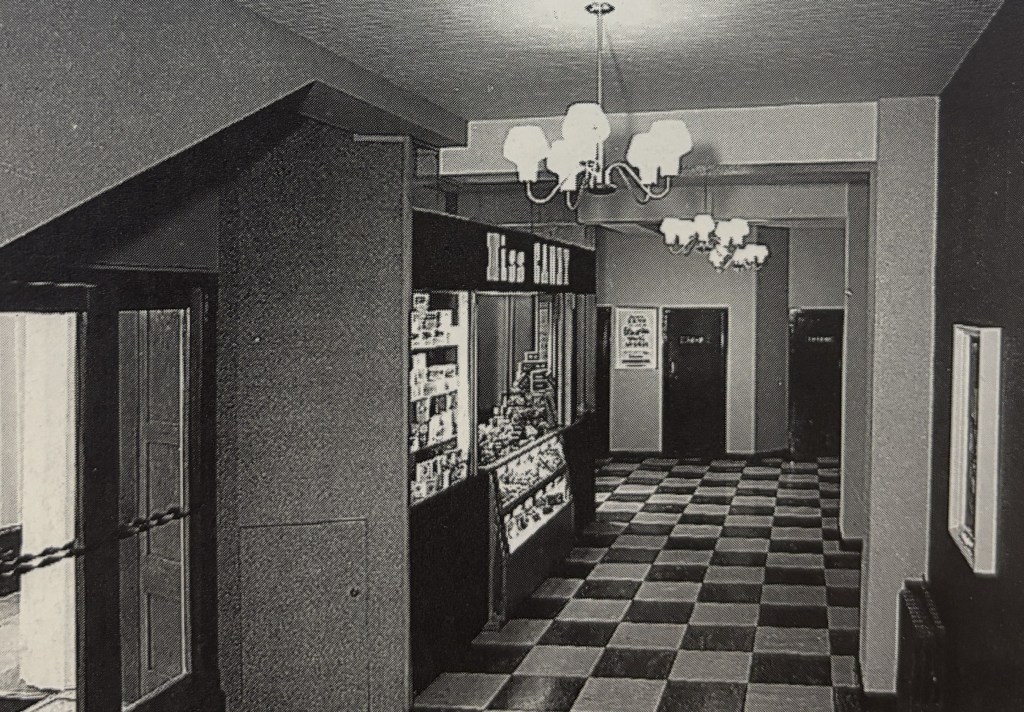
Images from Lib 13342
After the Second World War, in November 1946, Granada took over. Two years into Granada’s era, a Saturday morning children’s club called the Exchange Rangers was created and the capacity grew from 740 seats to 900 by making new alterations. After these alterations were made, upon its re-opening, there was fanfare from trumpeters of The Royal Sussex Regiment and a special showing of ‘The Guinea Pig’. Sheila Sim, who appeared in the film, made a special appearance. It was then called The Granada Exchange, but by 1950, Exchange was dropped from the name.
Granada’s cinemas joined a new circuit showing 20th Century Fox’s releases in a new Cinemascope process in 1954. Chichester’s Granada cinema became one of the last to be fitted with a new wide screen and accompanying magnetic stereophonic sound. The cinema scene in Chichester started to decline by the 1960s, with The Granada becoming the only cinema in town for nearly 20 years.
The closure of The Granada came in August 1980, with its last event being a four-week run of The Empire Strikes Back. The building remained empty and unused for more than 6 years, before becoming a McDonald’s. Now, in modern times, the building is occupied by New Look, appealing to the current needs of the high street. Next time I walk past the Corn Exchange building, I’ll be taking a moment to appreciate its multi-faceted existence. I wonder, in the following years, what it is yet to become.
Stay up to date with WSRO – follow us on Facebook, Instagram, Threads, Bluesky and YouTube

 West Sussex Record Office