By Nick Corbo-Stewart, Archivist and Volunteer Coordinator
In this series of blogs looking at new collections at West Sussex Record Office (WSRO), I will continue to guide you, the reader, through the variety of work undertaken by the volunteers. Through a culmination of sorting, listing, ordering, cataloguing and packaging, their completed collections are now open for use by our researchers with the ability to inform and educate all who have an interest in the history of West Sussex. In this blog edition, we focus on three collections.
The Market Cross, Chichester
Catalogue reference: AM 1924
The Market Cross stands at the intersection of the four main streets of Chichester and was erected in the late 15th century. During the 1660s, a bust of Charles I was added in memoriam to late King. Carved by the French sculptor Hubert Le Sueur, this was mounted within a niche at the top of the Cross. The bust remained on display for many years but during the latter half of the 20th century, pollution and weathering had begun to take its toll. Its condition was a worry to conservators, city engineers and others wishing to preserve it. Therefore, in the late 1970s, the sculptor Derek Rollings was commissioned to make a replica. This was made with fibreglass and substituted for the original, which now resides in the Novium Museum, Chichester.
This collection gives us a glimpse of Derek Rollings’ work and some of administration behind it. Colour photographs show the damaged original, a detailed replica and Mr Rollings inspecting his work. A newspaper report takes the reader through the logistics of replacing the bust and is accompanied by an image of the original and replica side by side. Finally, correspondence relating the commission and sent to Mr Rollings gives thanks on behalf of the Chichester City Council for work to replace the bust.
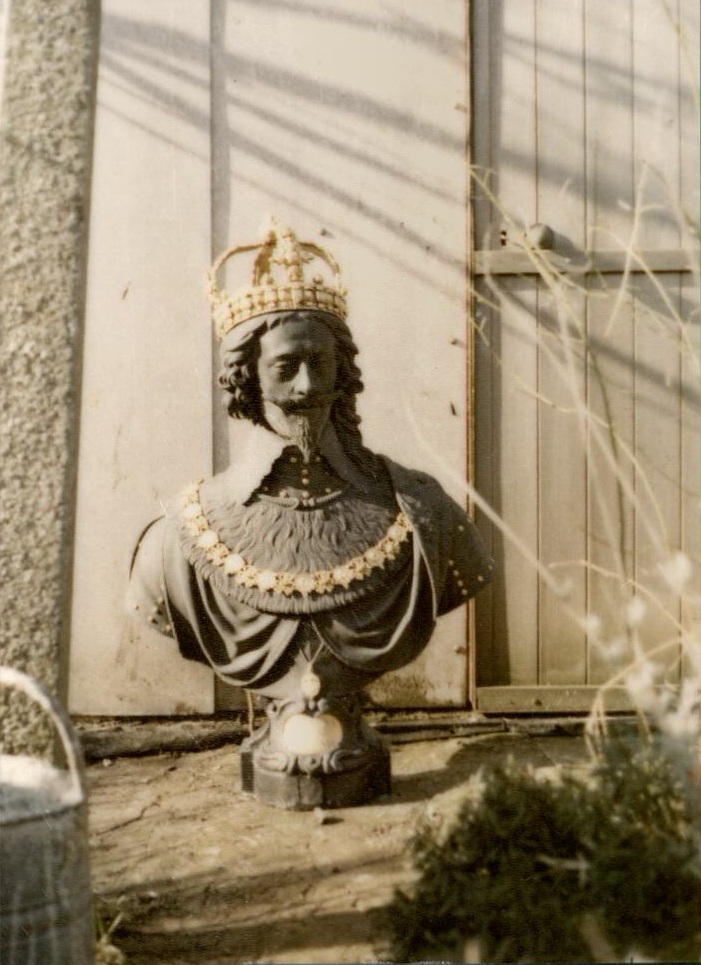
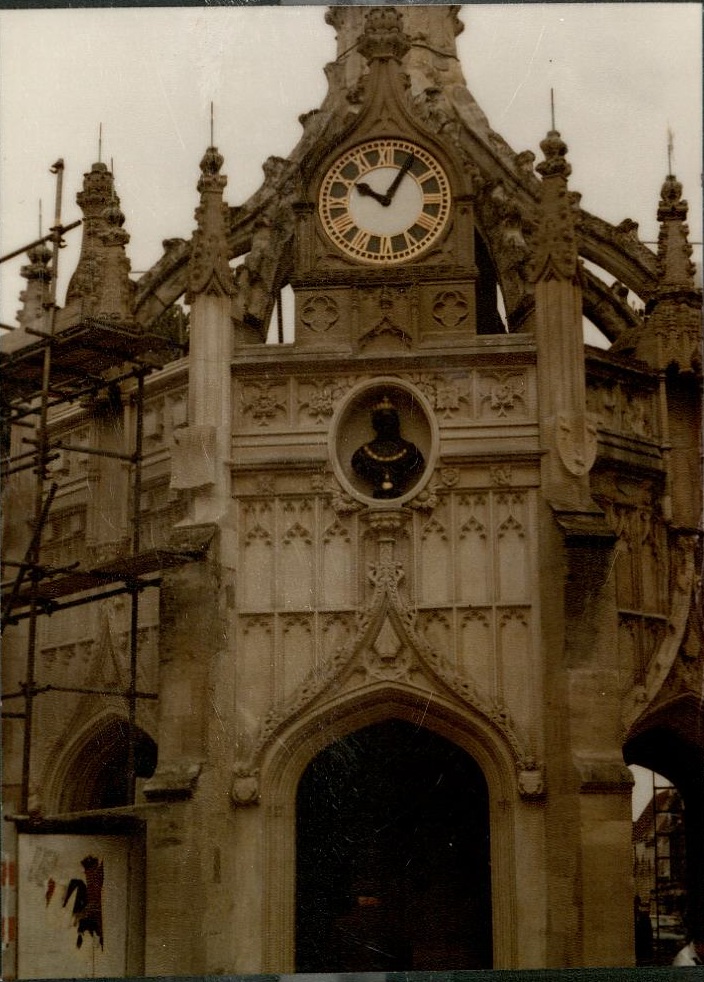
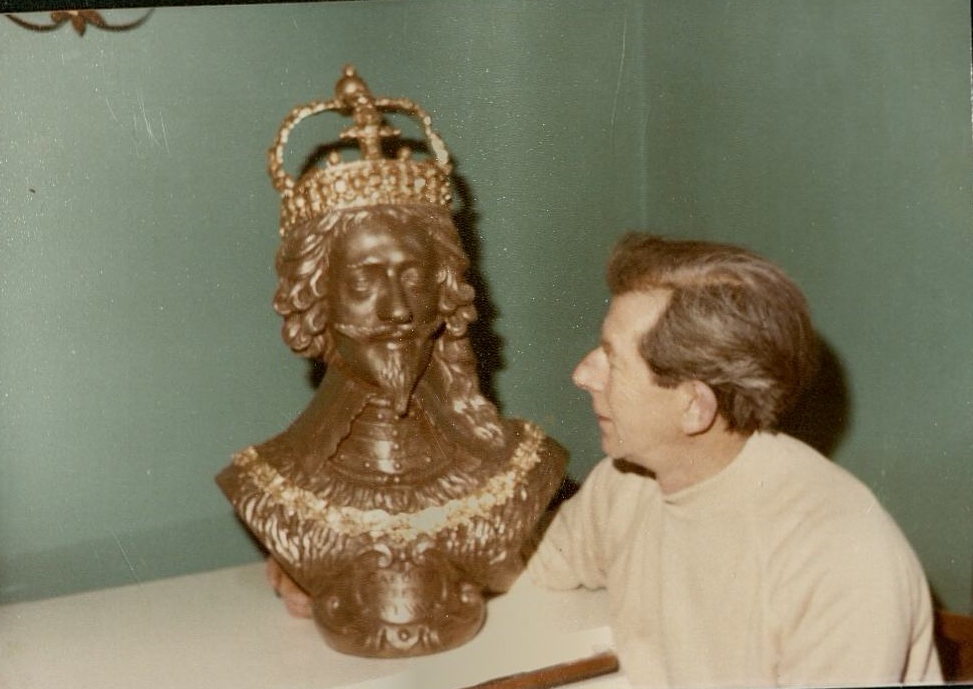
- AM 1924/1/2
- AM 1924/1/3
- AM 1924/1/4
F Hodges, Cash Stores of East Preston and Angmering, 1900
Catalogue reference: AM 1839
What are you buying in 2026? We have become used to selecting a from a large range of food and other consumer items we feel are essential to our modern day lives, plus the convenience of purchasing whatever we want online, or in large retail outlets and getting it almost instantly. In 1900, you had to rely solely on the local store for all you needed and were therefore restricted to what they had. F Hodges, a grocer, draper and provision merchant, operated one such store.
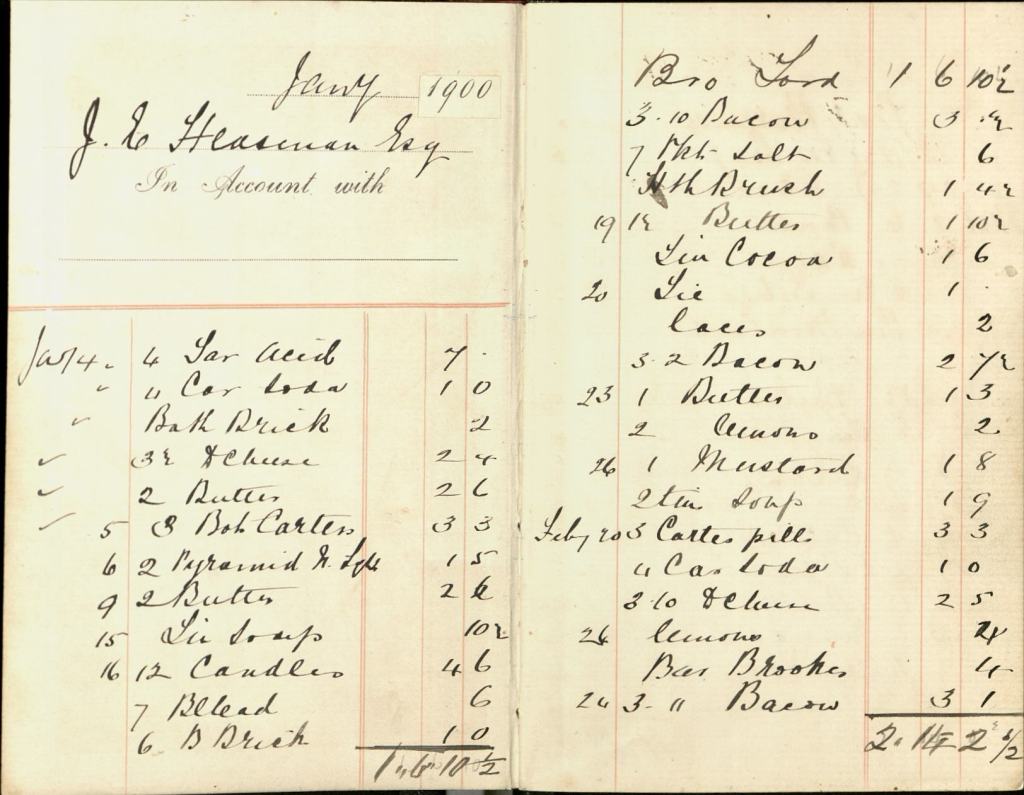
The single item in this collection dates from the turn of the 20th century. It is one of F Hodges’ red leather bound account books belonging to a customer, J E Heaseman. The front cover is embossed with the name of the business, in gold lettering. Inside, it lists items purchased. These include bath bricks, butter, candles, cocoa, ice, mustard, tinned soup, bacon, laces, starch, soft soap, tea and cheese. The costs range from a few pennies to shillings and pounds. To the researcher, these lists reveal a great deal about how we used to live at the time. They show the basic staples of people’s diet, what was needed to look after the home and the relatively low cost of some of these purchases. Compared to current times, it soon becomes apparent how restricted your choices were and how much a modest income could purchase.
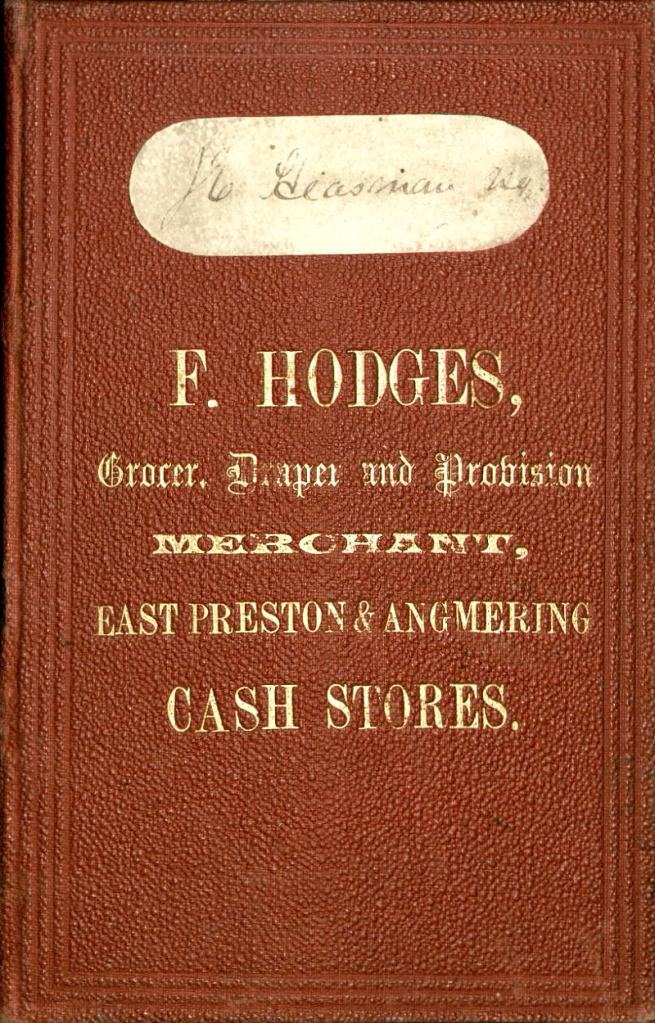
- AM 1839/1
- AM 1839/1
- AM 1893/2
- AM 1839/3
Grove Park Estate, Chichester
Catalogue reference: AM 1893
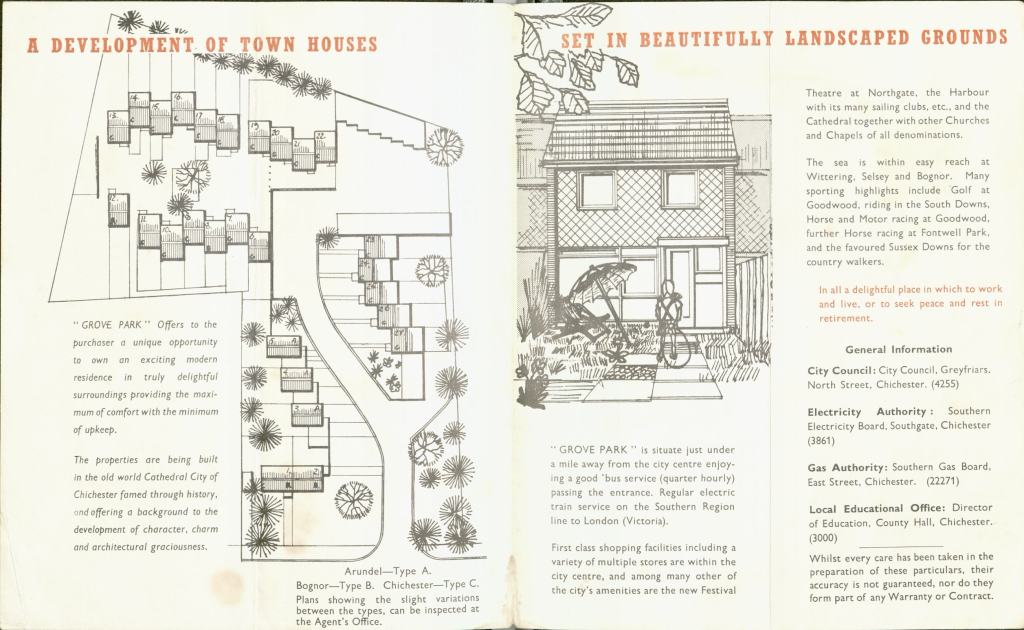
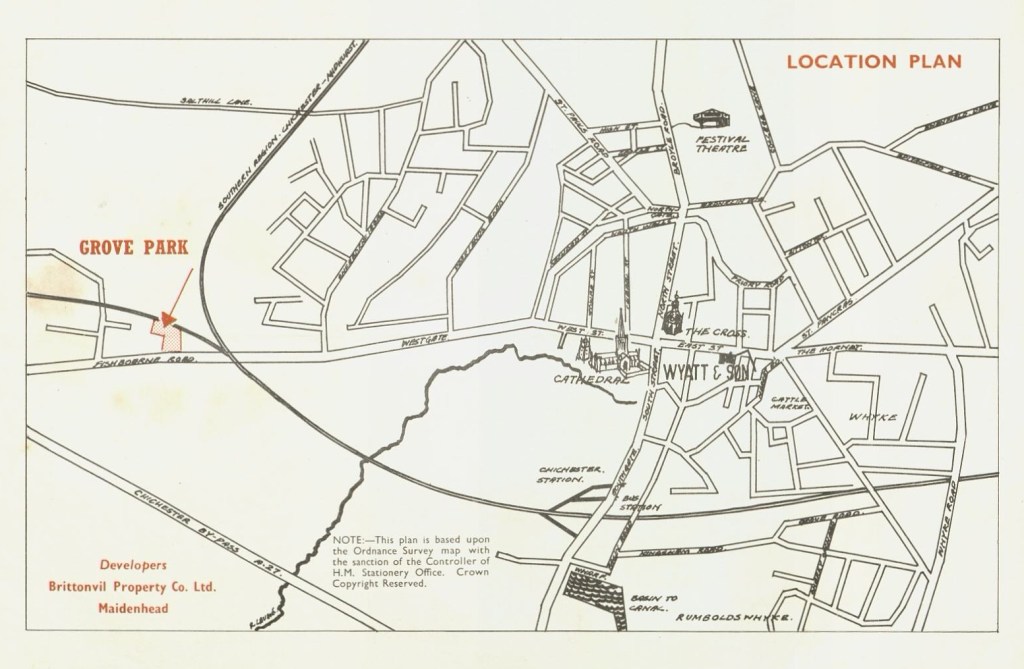
The post-war period marked new age in housing development, with the construction of well-designed, light filled, easy living dwellings right across the country. Chichester was no exception. In the 1960s, a housing development took place on land next to the Fishbourne Road, on what was then the outskirts of Chichester. 27 homes were constructed by the developers Brittonvil Property Company Limited of Maidenhead. This was conveniently located for good commuter connections to the A27 and railway lines, whilst also being near to the city centre.
Highlights of the collection include the sales pitch of this estate to prospective buyers. Sales particulars by Edward Gray and Co: Auctioneers, Surveyors, Valuers, Land and Estate Agents, marketed the properties as including 3 bedrooms, lounge/dining and kitchen rooms, with a price range between £4550 to £4995. They also highlighted the attractions of these properties being ‘for family occupation, weekend retreat or retirement’. Flyers give a visual representation of what the development will look like when complete, with images showing houses built as ‘staggard’ (sic) terraces, with open front gardens, wide windows and enclosed front door porches. In addition, the collection comes with reservation forms, produced by Wyatt and Son of Chichester, as well as a developers build specification and sale promotion leaflets.
Stay up to date with WSRO – follow us on Facebook, Instagram, Threads, and YouTube

 West Sussex Record Office