By Louise Conway, Archives Assistant
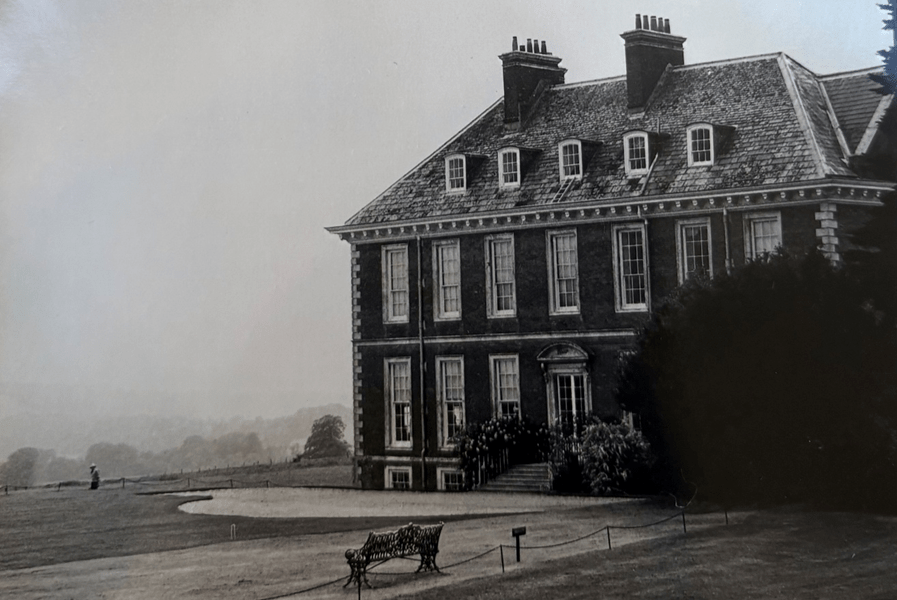
Over collection care fortnight 2025, the team added over 2000 new records to our collection database, many of these relating to the Uppark collection, in turn uncovering even more stories around the infamous estate.
Situated in South Harting, West Sussex, Uppark, as it is recognised today, was built around 1690 for Ford Grey, 1st Earl of Tankerville (1655–1701) who inherited the estate from his mother Catherine Ford (1634–82). The house was built from the designs of Talmar, a pupil of Inigo Jones (often credited as the first significant architect in England, and for introducing the classical architecture of Rome and the Italian Renaissance to England). Lib 2788.
On 24th December 1746, Matthew Fetherstonhaugh (1714–74) married Sarah Lethieullier (1722–88) and with this marriage, Matthew Fetherstonhaugh gained his baronetcy. Just a few months later, Sir Matthew Fetherstonhaugh bought Uppark from the Tankerville’s for £19,000. (Uppark 31/22). IT was with the Fetherstonhaugh family that the house gained real opulence, with Fetherstonhaugh undertaking a grand tour between 1748 and 1753, filling Uppark with an impressive collection of Italian art.
Sir Henry Fetherstonhaugh, known as Harry (1754–1846) was the only child of the Fetherstonhaughs, and in 1774 was the sole heir of Uppark.
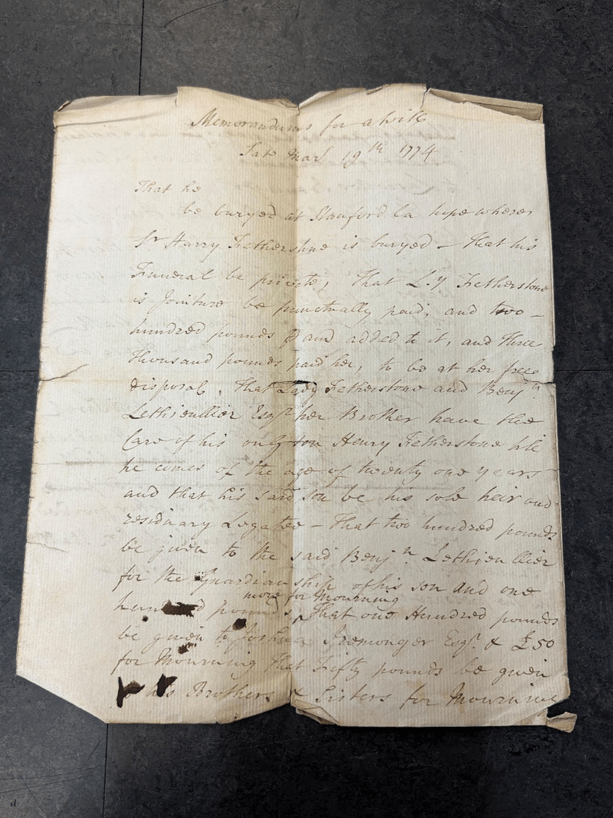
Copy of extract from the will of Sir Matthew Fetherstonhaugh,
19 March 1774
Sir Harry lived an excessive lifestyle and would have to sell the family’s London and Northumberland homes to pay off his debts, but he kept Uppark.
By the 1780s, Sir Harry was good friends with the Prince Regent (future King George IV), who frequented the lavish parties Sir Harry hosted at Uppark.
“It was not long before the Prince of Wales was writing before a visit to Uppark to ask for ‘my old room’, and there is no doubt that during the twenty-five years from 1785 – 1810 ‘Prinny’ was a frequent visitor to Uppark”
Uppark 31/22
Harry had numerous relationships throughout his life, including with Emma Hart (1765-1815) (real name Amy Lyon, but later known as Lady Hamilton). Emma lived at Uppark in 1781 until she became pregnant, at which point Harry sent her away and refused to support her.
Writing to Sir Harry Fetherstonhaugh on 2nd July 1806, Lady Emma Hamilton pleads for Sir Harry to lend her five hundred pounds which she vows to pay back (including a memo to Coutts and Co bank to pay Sir Harry five hundred pounds in nine months along with the letter) as she is momentarily expecting two thousand pounds from Lord Nelson.
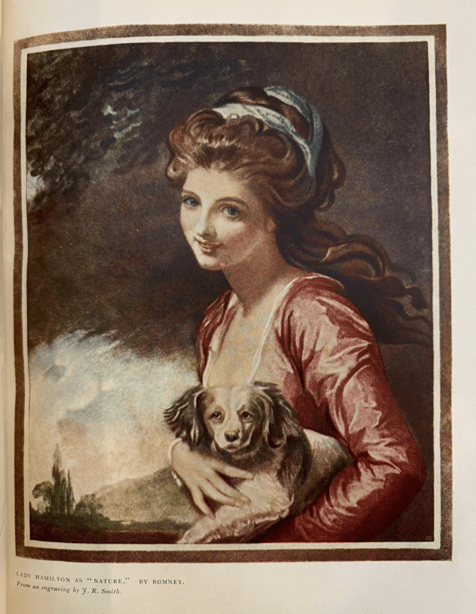
“Emma did not long remain destitute. Greville befriended her – Romney painted her – Sir William Hamilton married her, and Nelson loved her”
Uppark 31/22
Emma went on to live a very well-documented life. She was considered a muse to George Romney, who painted her over 60 times, and in 1791 she married Sir William Hamilton (1730–1803) and became Lady Hamilton. Through her husband, Emma met Admiral Lord Nelson, and the two had a famous (seemingly tolerated) affair. In 1801, Emma gave birth to Nelson’s daughter, Horatia (1801 – 1881).
In 1816, there was a brief possibility that Uppark would become home to Field Marshal Arthur Wellesley, 1st Duke of Wellington. Before purchasing Strathfield-saye, Uppark was considered for the nation’s gift to the conqueror of Waterloo, to which the Duke assured Sir Harry ‘for all I have heard and know of Uppark, I should prefer to have that place to any other’. Lib 2788.
However, ultimately, it seems “when he saw the steep road rising up to Uppark on the crest of the South Downs…quickly calculated that if he lived at the top of such a hill he would have to buy new horses for his stables every eighteen months, and turned down the proposal” – Uppark 31/22
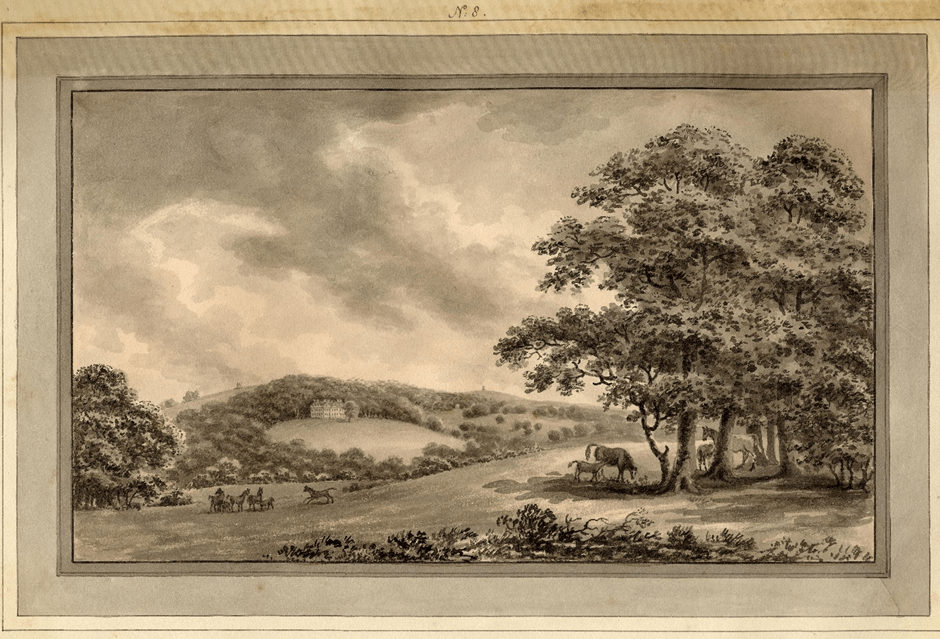
Still at Uppark, Sir Harry remained a bachelor until 1825 when, aged 70, Harry married his head dairymaid, Mary Ann Bullock (1805–1874), daughter of the Uppark poulterer and park keeper. The marriage lasted over twenty years until Sir Harry’s death in 1846 (aged 92).
Sir Harry left the house and estate of Uppark and all its contents to Mary Ann. Mary Ann’s sister Frances moved in and assumed the name Fetherstonhaugh, together they managed the estate.
Amongst the many servants of Uppark in the 1851 census is Sarah Wells, née Neal (1822 – 1905) housekeeper for Miss Frances Bullock Featherstonhaugh and mother of H.G. Wells.
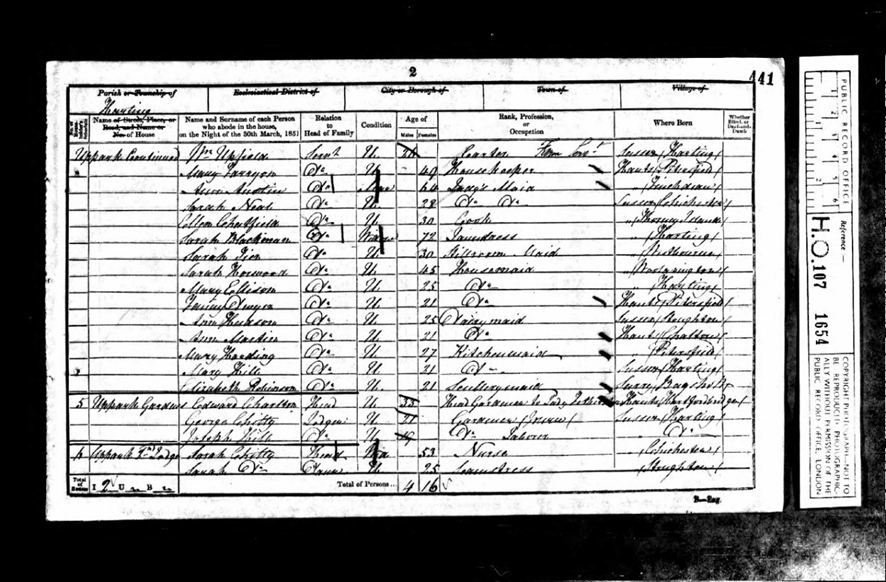
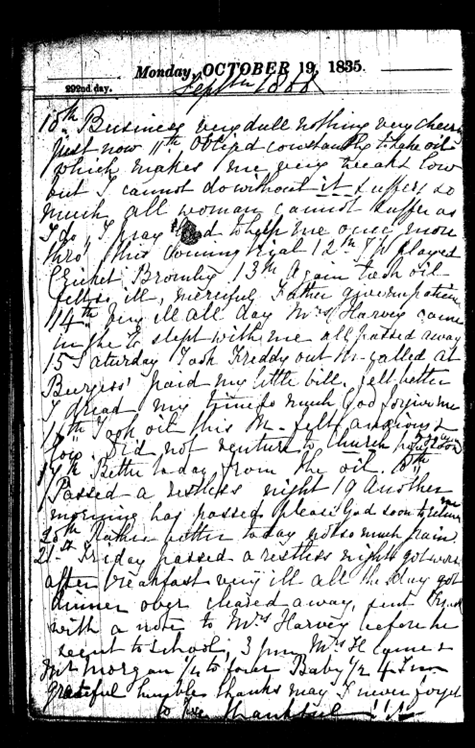
Sarah Wells kept diaries, and almost her almost daily notes on the running of the house on 21 September 1866, we read of the birth of H G Wells.
During a period of financial difficulty, H.G. Wells, or Bertie, as his family called him, was allowed to stay with his mother at Uppark, which provided him with access to the house’s library. In his autobiography, he says, “the place has a great effect on me”.
Upon Mary Ann’s death in 1875, Uppark was left to her sister Frances. However, with no legitimate heir, upon Frances’s death, Uppark was left to a friend of the family, Col. Keith Turnour (1848–1930), who was obliged to take on the Fetherstonhaugh family name as a condition of the inheritance.
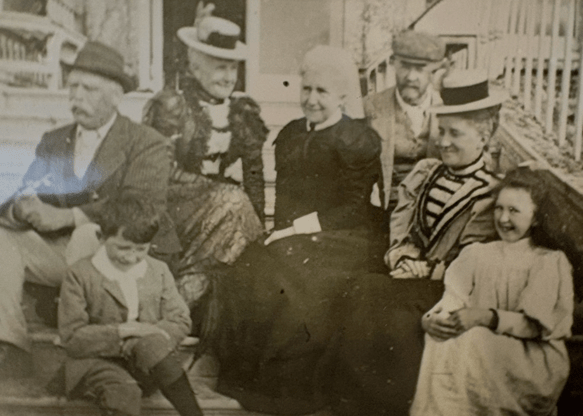
Uppark then passed to Admiral Sir Herbert Meade (1875–1964) who also took on the Fetherstonhaugh name on inheriting the property. When the Meade-Fetherstonhaughs moved to Uppark in 1931, they undertook major repairs to the property and Lady Margaret Meade-Fetherstonhaugh (1888–1977) became well respected for her work with textiles.
In 1954 the Meade-Fetherstonhaugh family transferred the ownership of Uppark to the National Trust who opened the property to the public.
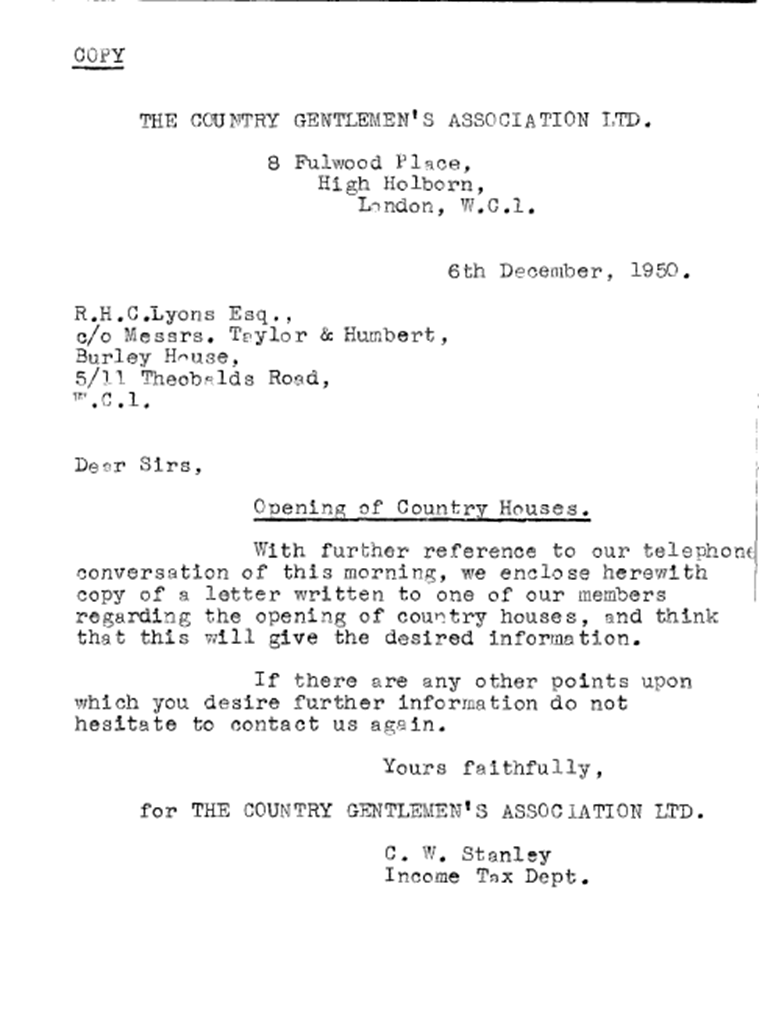
In 1989 a devastating fire broke out at Uppark. “More than 150 firemen from West Sussex, Hampshire and Surrey battled for more than four hours”- Chichester Observer – Thursday 31 August 1989.
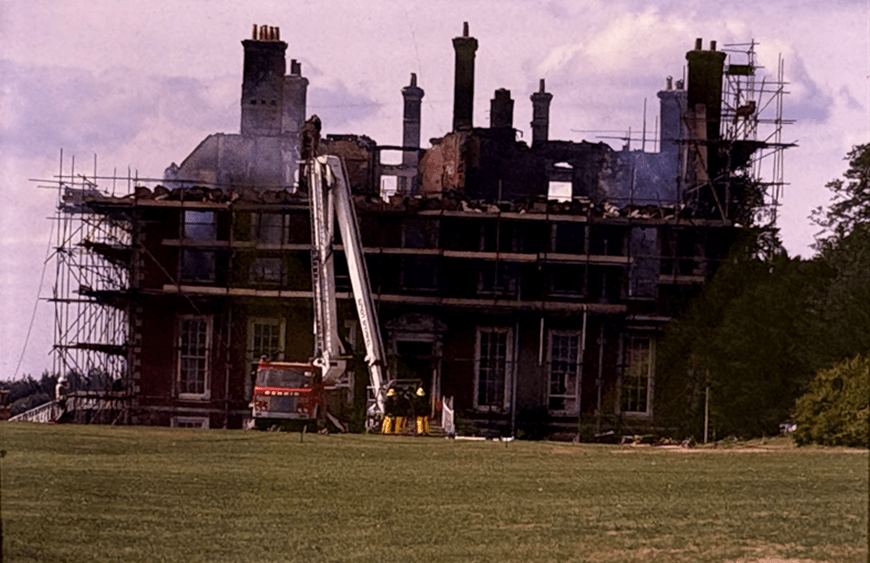
“The loss is immeasurable. It is probably the single biggest disaster to face the trust in its history because it was probably the most complete 18th century interior in the country, if not in Europe” – National Trust spokeswoman Rachel Thackray. – Portsmouth Evening News, 4 Sep 1989.
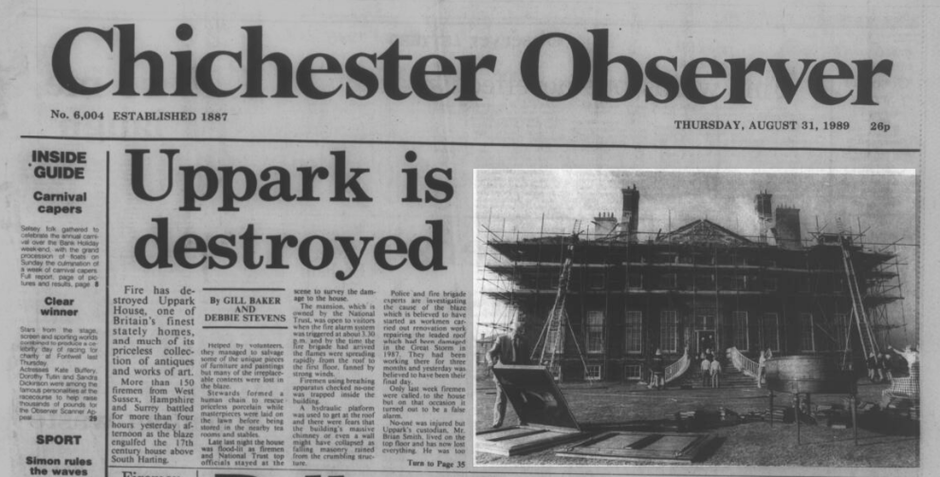
After an extensive restoration project, Uppark reopened to the public in 1995. Today members of the public can visit the grounds and gardens for free or paid entry to the house.
Stay up to date with WSRO – follow us on Facebook, Instagram, Threads, and YouTube

 West Sussex Record Office