Back on the 29th of June a group of colleagues from the Record Office took a social trip to Standen House. This particular trip stemmed from two of us having a deep appreciation of William Morris and the Arts and Crafts movement. We do also plan in the future to visit more historic sites that we have records of in our archive and have coined ourselves the ‘County Archive Squad’! Our next proposed visit will be to Petworth House in October, so keep your eyes peeled for that.
Each member of the squad has written up their account of our first trip and what they enjoyed most…
Victoria Evans
Knowing that we hold a Standen House collection we set ourselves the task of locating an item referenced in the records of the house. The item in question is a letter from Philip Webb to Mrs Beale regarding a specific light fittings that was designed for the house.
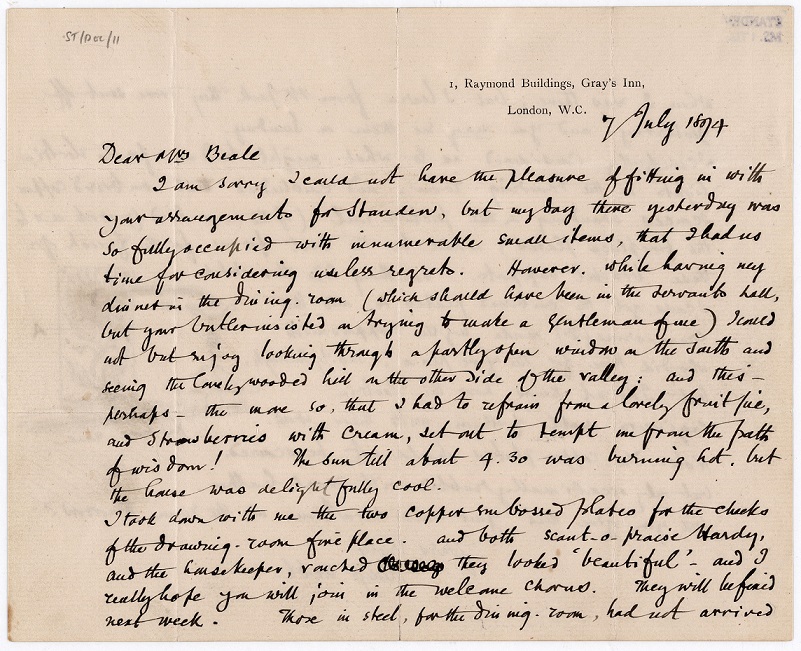
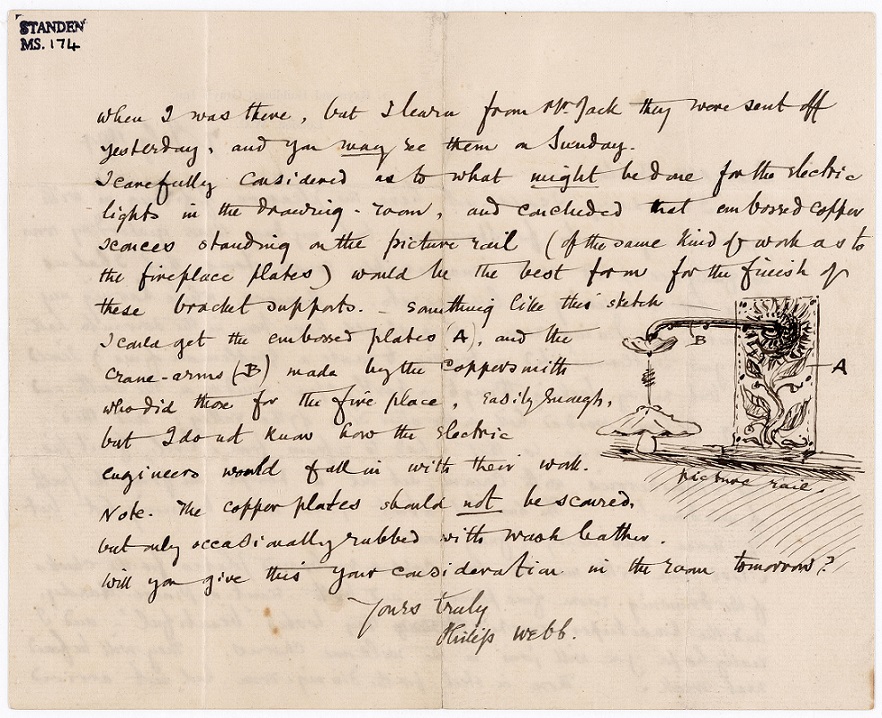
It was like a little scavenger hunt for us, but we were happily distracted by the intricate and beauty of the interiors of the house too. However, once we laid eyes on one of these light fittings, it was truly remarkable to see how this sketch in a letter came to life before our very eyes.
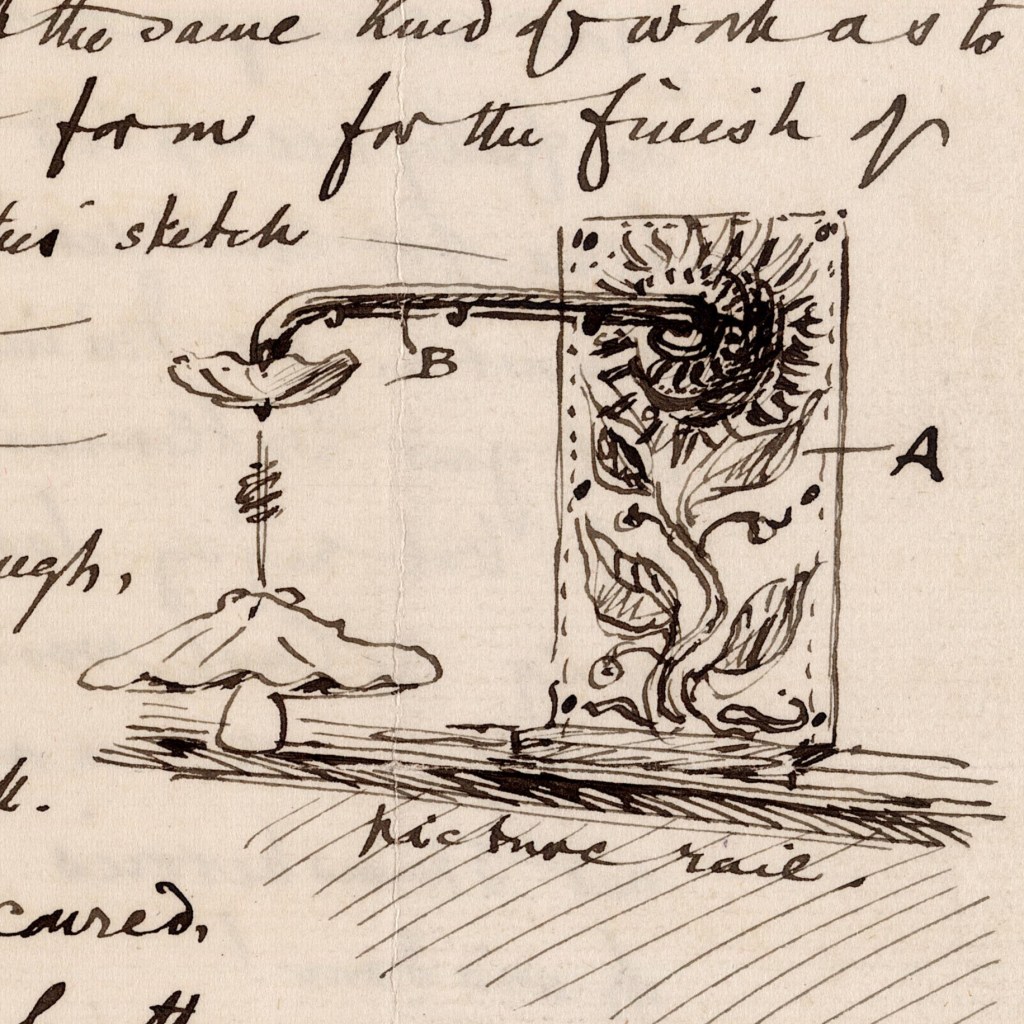
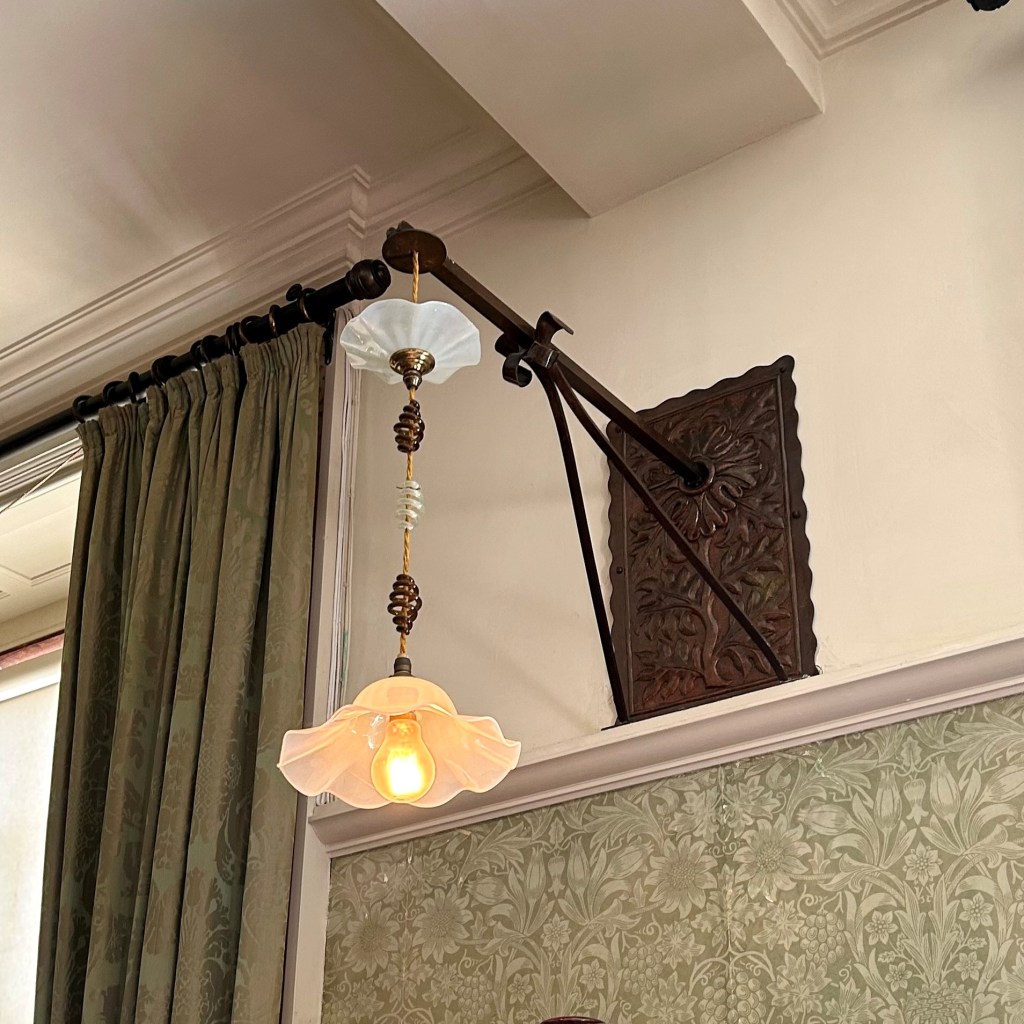
This intricate light fixture appears in different rooms around the house and in differing variations. The piece overall is a marvel to look at but the masterful craftsmanship of the glass as the lampshade drew my eye in the most. The delicate smooth ripples make the form of a flower.
For someone who adores all things William Morris it really was a feast for the eyes! Wherever you laid your eyes you were treated with a harmonious concoction of patterns and colours. What Morris was able to capture in his designs is a fine balance between maximalism and a humble ornateness. Morris and the Arts and Crafts movement as a whole wanted to breathe character and thoughtful craftsmanship back into art and design in response to industrialisation and the lack of attention to detail in everyday objects and interiors. Seeing how the Beale’s had a true appreciation for this was wonderful to see in reality.
Imogen Russell
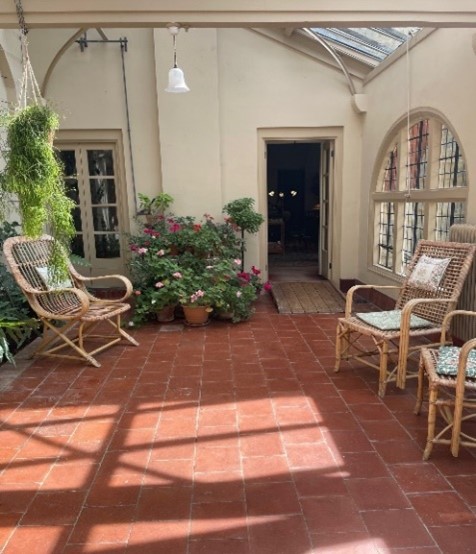
When we first arrived, at Standen House, I was hit by the knowledge of the guides especially the one who greeted us. What was interesting was how this was the first known house to have electricity installed at the time of its construction and almost every member of the family was included in its planning’s. I especially liked the story of young Harriet Beal asked the architect to build her a playroom at the back of the house and charged her sixpence for the commission. The playroom had its own entrance out the back next to the orangery and is still a place for children to play today.
The house is dedicated to the Arts and Crafts movement, and I could clearly see that displayed in all the Morris & Co and other artisans dotted around the various rooms, whether it was the wallpaper, paint, embroidery, or pottery. It seems the Beales’ were quite artistic with one room dedicated as a classroom for painting, drawing and artwork drawn by Margaret Beale and the Beale children and grandchildren.
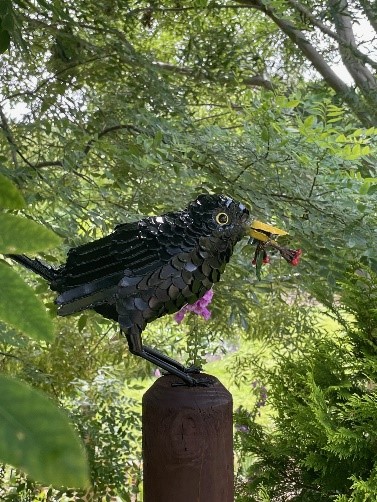
The theme of art and artistry has continued into modern times with the garden featuring artwork by Alison Catchlove, a Bothy by Will Shannon and pottery made by one of the estates tenants, from local clay.
I was particularly struck with the way the house catered for the needs of the family as well as the staff, with thoughtful and smart little quirks spread about the house such as a slate shelf above the radiator outside the dining room designed to keep food warm. And a cloakroom leading from the front door to the study, so visitors on business didn’t have to walk through the house, if they didn’t wish to.
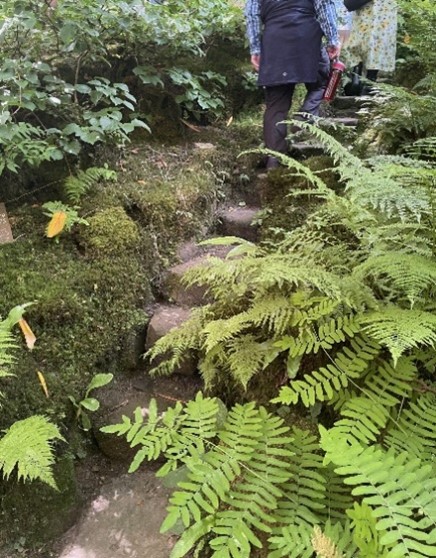
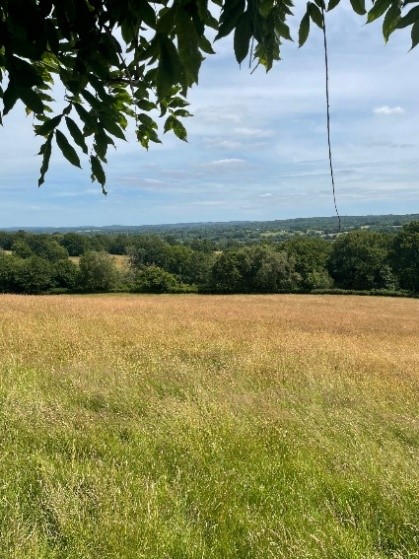
My favourite places were the orangery and the gardens. We were told when we arrived that the Beale children would spend all day in the gardens and I can see why, with many places to explore and play including wide open spaces, woodland, and its own quarry (much of the house was built of stone from this quarry). The sun was shining when we visited and for me it felt like going back in time to when the Beales’ were living there.
Mia Curtis-Mays
As we entered Standen House, we were greeted by a National Trust volunteer, who gave us a rundown on the history of this wonderful property. He mentioned that everything we will see was tailormade for the house; every detail was accounted for. Here are some ‘details’ of the house I enjoyed the most:
Upon arriving at the kitchen, the table is already set. Gloriously patterned ceramic plates and bowls filled with fruit and an assortment of glass tableware lined the table, accompanied by a dominating bouquet of flowers. It was quite a familiar tablescape in a historic house. However, upon further inspection, there was a piece of silver attached to every plate, which I have never seen before. A pip tray! Clutched to the edge of the plates, a silver tray holds the discarded fruit pips and stones. This ingenious idea was one I thought was needed in a modern world.
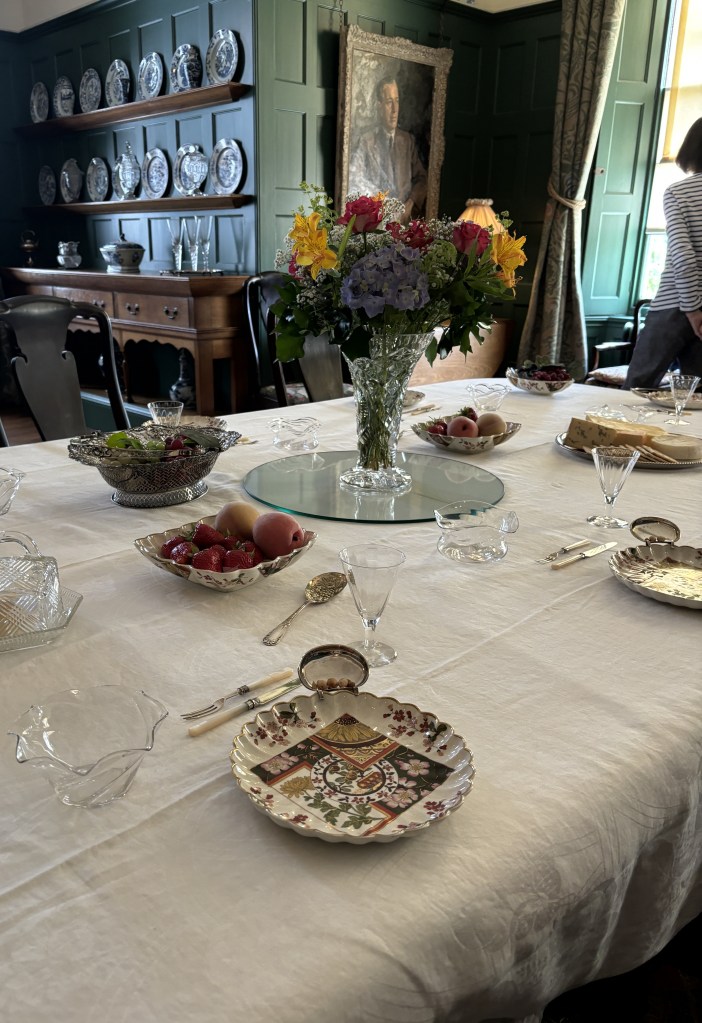
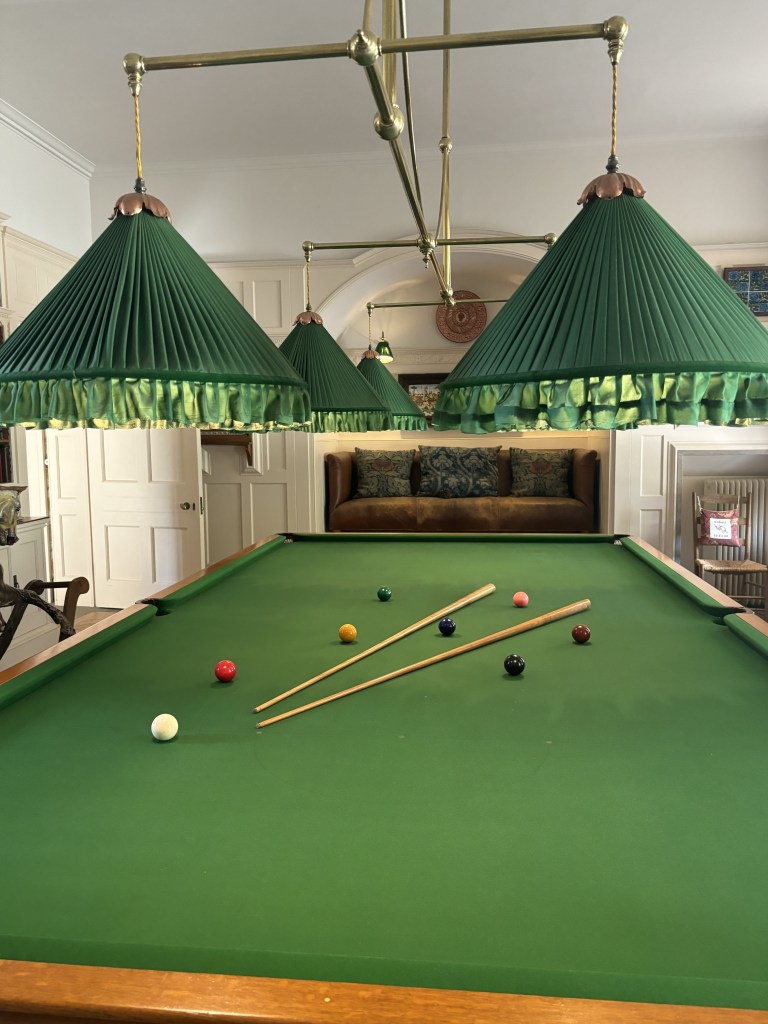
In the Billiard Room, I found a detail which I thought was aesthetically pleasing, but not very practical. Above the billiard table, six beautifully pleated lightshades hang, in matching green. While they definitely look the part, I can imagine they’d be a nuisance when trying to take a difficult shot in a game.
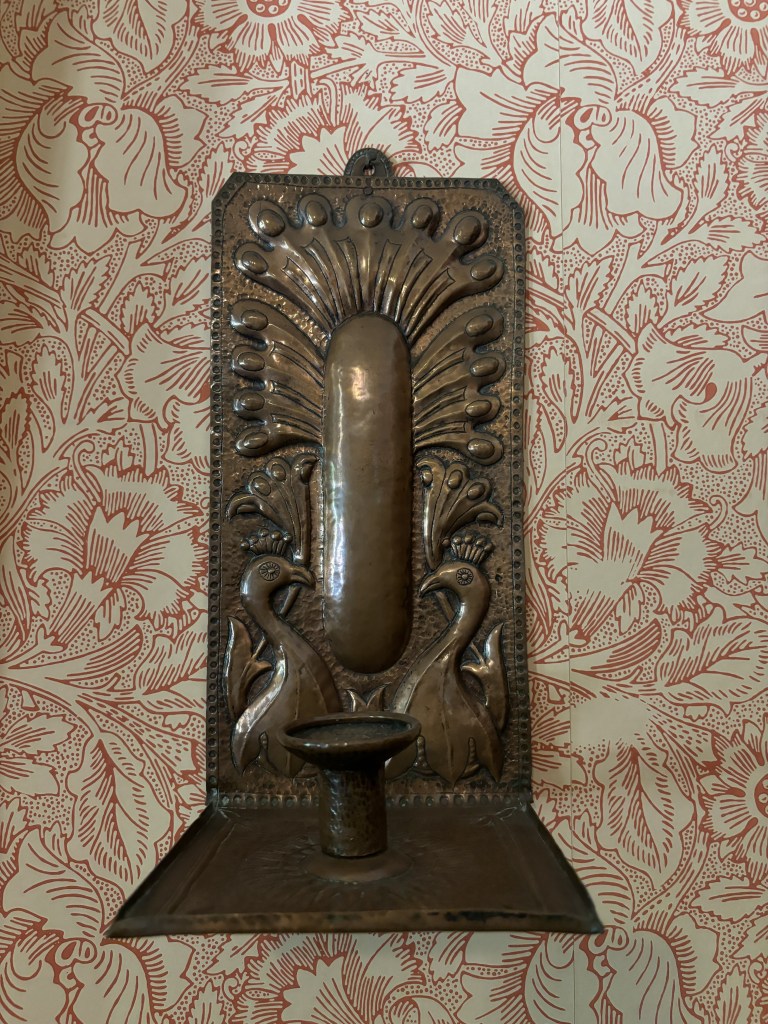
Every wall was decorated in a different William Morris wallpaper, each one as magnificent as the last. However, it was not only the wallpaper which caught my eye on the walls, but also the light fixings. A candle holder, embossed with peacocks was definitely a favourite item of mine in the house – interesting and cute!
Sorcha Riby
The Beales not only supported the Arts and Crafts movement but were inspired by it.
Margaret Sarah, or Maggie, Beale (1872 – 1947), James and Margaret’s second eldest daughter, was an artist, and studied fine art at the Slade School of Art in London, as well as in Paris.
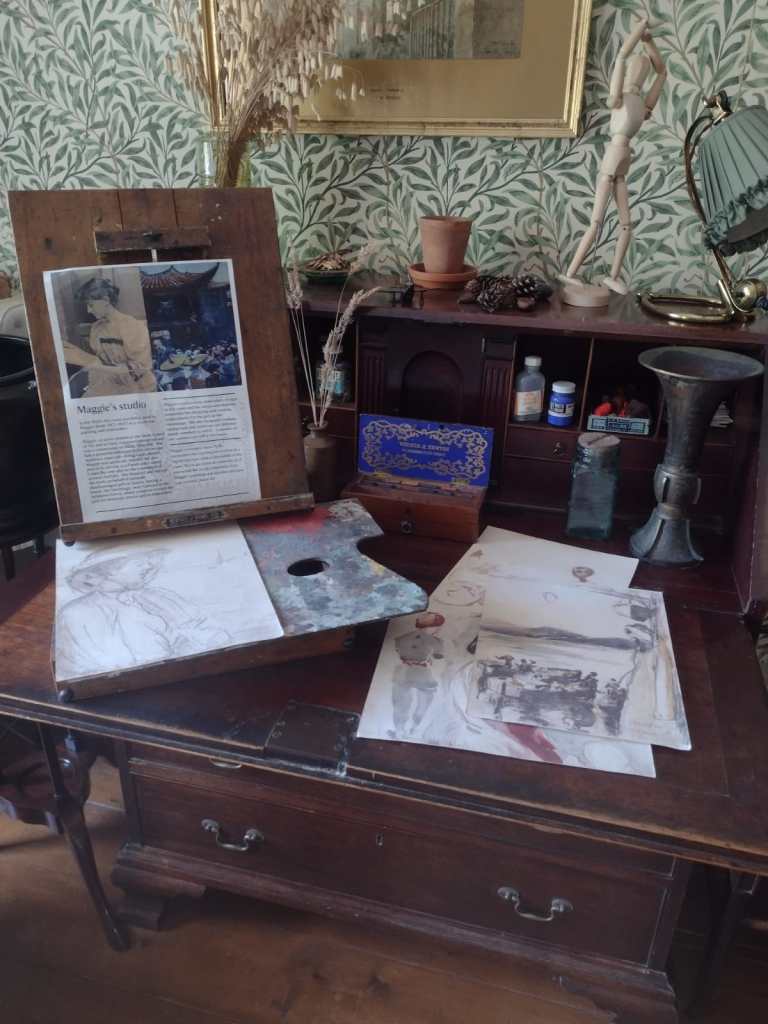
My favourite parts of Standen House were the Westbourne bedroom, decorated to reflect the memories and anecdotes of the nieces and nephews she taught to draw had of the room, and her artworks on display around the property. We were encouraged to sit at Maggie’s writing table and make our own creations inspired by her.
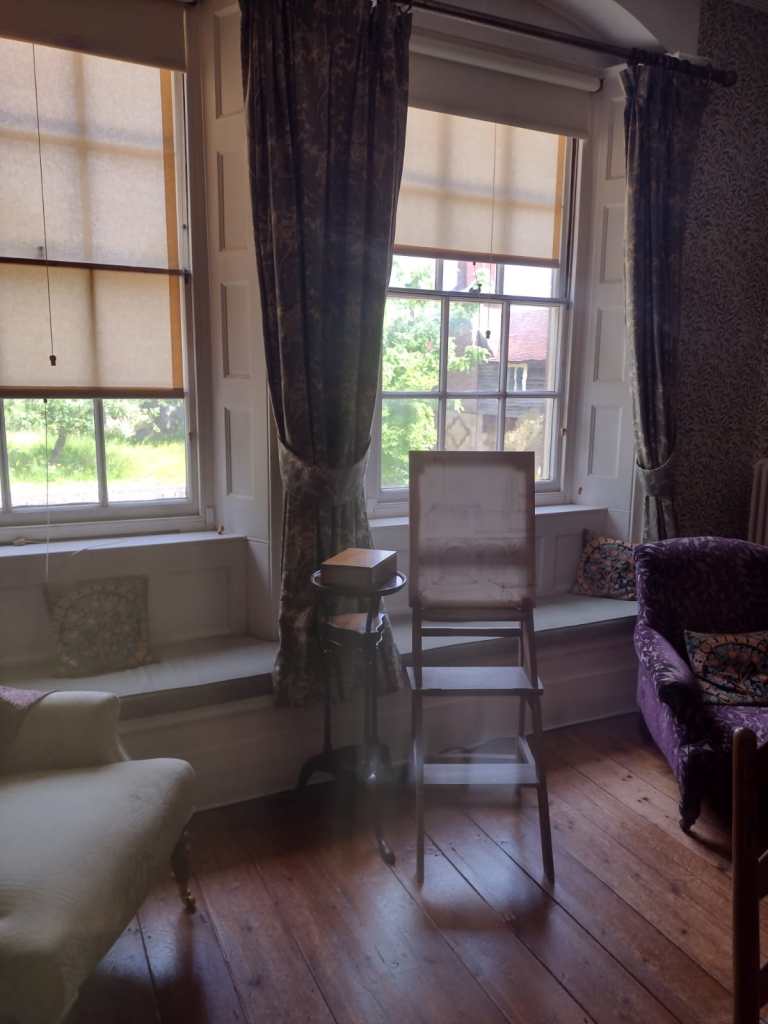
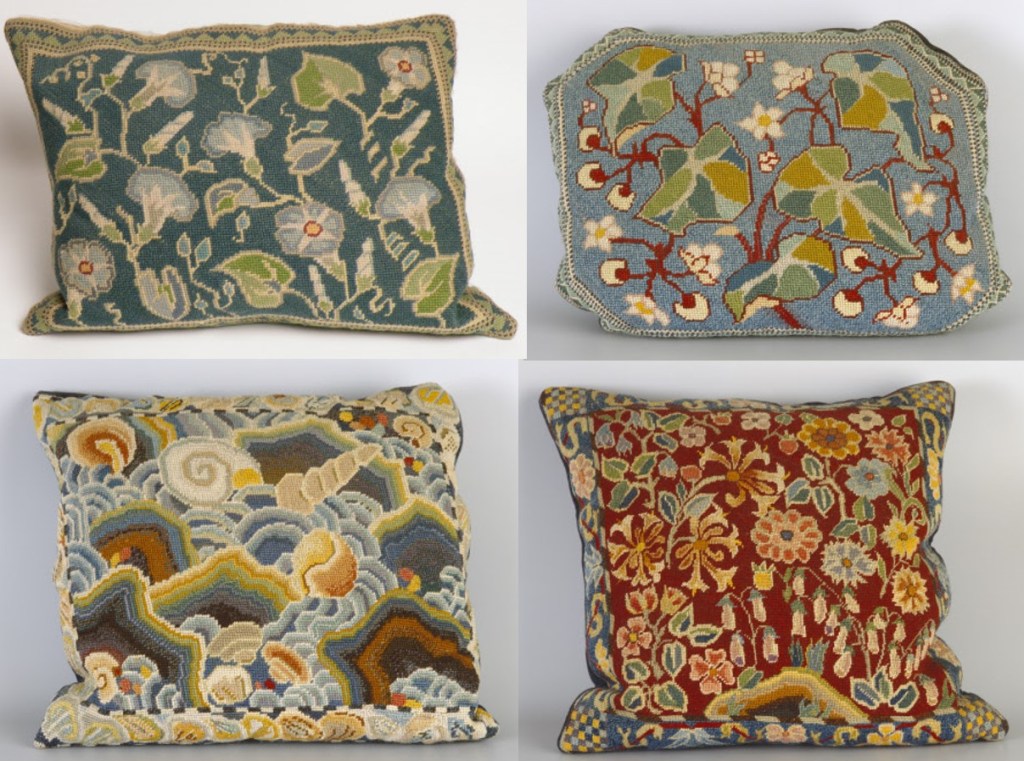
Maggie was known mainly for her embroidery designs. There are several cushions attributed to her on show around Standen House: her mother Margaret was also a talented seamstress. You can see the influence of the Arts and Crafts Movement on her work in the use of repeating floral patterns.
One of her watercolour paintings, Chinese New Year celebrations at Bhamo, Myanmar (Burma) (1907), inspired by a visit to the Chinese Temple in Bhamo, northern Myanmar on the family’s world tour, is on display in the drawing room. A beautiful album of her landscape paintings and floral studies is also held by the National Trust, though not currently on display.
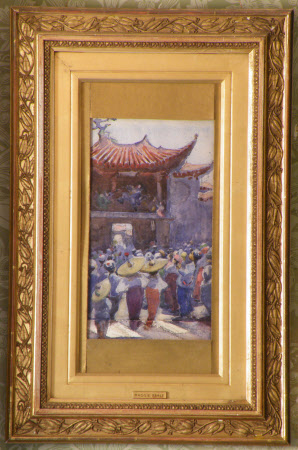
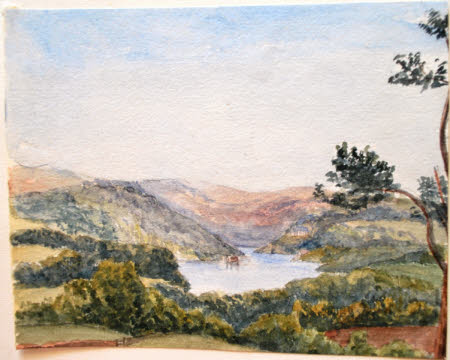
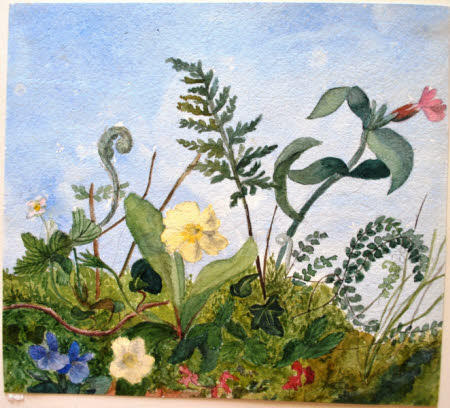
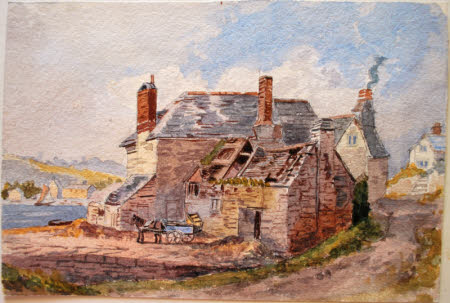
Paintings from the Maggie Beale Album courtesy of the National Trust and Tania Adams (Standen © National Trust / Tania Adams)
Nicki Clarke
I was drawn to Standen House because of the William Morris designs and interior decoration in the property. I have been a fan of Morris since school when I was introduced to his work in Year 8 pottery class, and I made a small plate with a light blue background and yellow flower – attempting to replicate his amazing designs!
I enjoyed going around and looking at all the wallpaper designs – the well-known ‘Strawberry Thief’ and the lesser known, but equally impressive ‘Daisy’
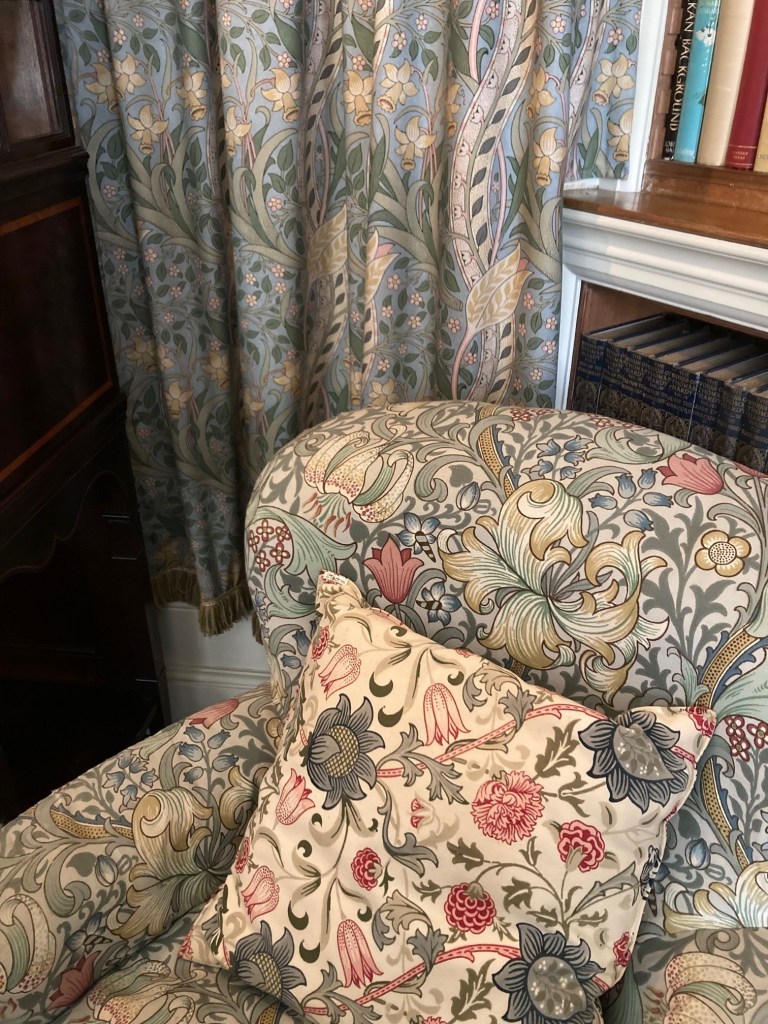
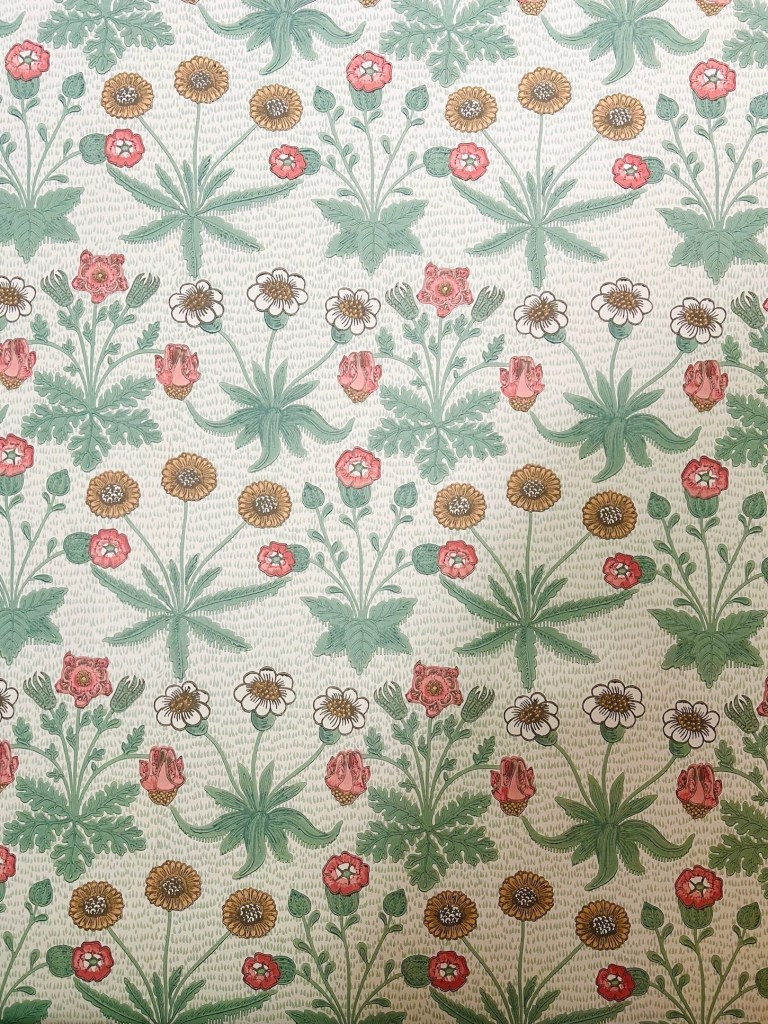
It is difficult to choose a favourite item amongst all the wonderful Morris designs, so on this occasion my favourite item in the house is a pip dish. This appealed due to its practicality and peculiarity; it perches on the side of a dinner plate and is such a novel idea for those olive stones, cherry stones, and other pips you might need to discreetly put to one side at a dinner party.
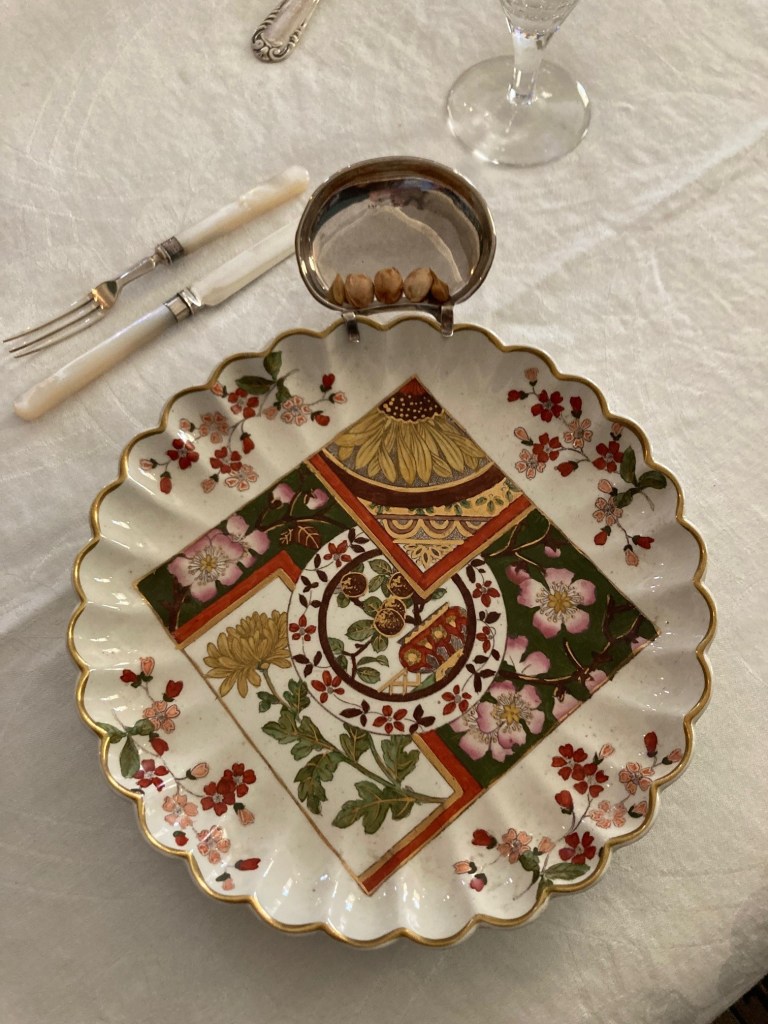
I was also intrigued to discover that the family has a connection to Oliver Cromwell and count him as one of their ancestors – they were particularly proud of their ‘Cromwellian noses’!
Our first outing as the County Archive Squad was a fun success; I’m looking forward to visiting more places linked to collections at the West Sussex Records Office and bringing our archive to life through locations in the county.
Stay up to date with WSRO – follow us on Facebook, Instagram, Threads and YouTube

 West Sussex Record Office
What a lovely illustrated article – unique insight into the production of the beautiful Phillip Webb light fittings. Worth a return visit for those alone. Good to see someone another fan of my favourite William Morris wallpaper (Daisy) in original colour way – still in production and in my hall. ❤️
LikeLiked by 1 person
You’ve each brought to life my favourite Sussex house after Parham with your articles. I fell in love with the light fittings on my first visit many years ago and have never found anything remotely resembling them except in a Parisian shop. Standen will go back on our list of must-do visits next year. Thank you.
LikeLiked by 1 person