Cataloguing sales particulars for a New Town
By Nick Corbo-Stewart, Archivist and Volunteer Coordinator
Post-war re-development of Crawley led to a large scale planned expansion of the town, creating areas for industry, retail, and urban living. Classified by the government as a ‘New Town’ and overseen by the Crawley Development Corporation (CDC), this was one of many such similar projects undertaken in Britian during the second half of the 20th century. This New Town was designed to bring people to the area, with the attraction of jobs at the nearby Gatwick airport, offices for support services and high quality engineering firms, such as APV Baker Limited. New retail services were also built in an expanded town centre. Good transport links via rail and road connected Crawley to the rest of the south-east, including London and the coast. Finally, comfortable, affordable homes were constructed, marketed and sold during the 1950s to the 1980s.
The Crawley estate agency Churchman & Duke was involved in the sale of the new residential property during this period, in and around the Crawley area. Many years later, they presented WSRO with files of the associated paperwork collected from their office as a sample of sales activity. In early 2024, a project was undertaken by volunteers at WSRO to catalogue these papers.
The volunteers’ first task was to sort the papers. They found hundreds of sales particulars, documents associated with the sale of individual residential properties, with supporting papers, photographs and notes. These sale particulars covered many places, including property in the nearby towns of Horsham, Haywards Heath and Burgess Hill. Others were found to relate to property outside the West Sussex area, and these were put to one side to be offered to other record offices. However, the majority centred on residential development in the Crawley area, including estates in Three Bridges, Pound Hill, Furnace Green, Langley Green, West Green, Northgate, Broadfield and Ifield.
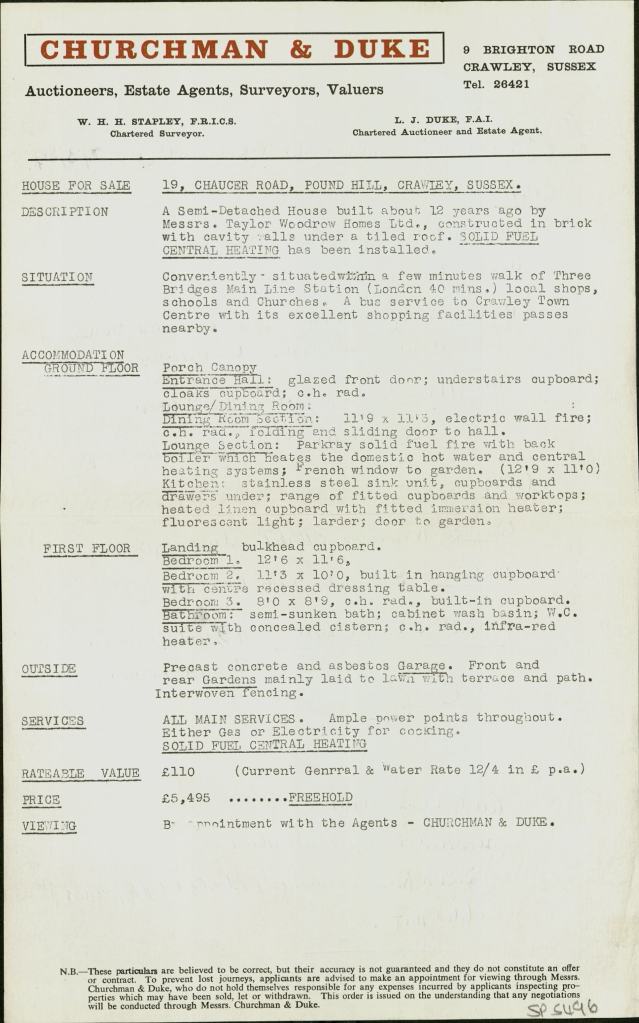
The physical format of these sale particulars follows a standardised pattern comprising of a foolscap document/s with details of each property sold. This includes the address of the property, building features, location, numbers of rooms, measurements, price, rateable value, services and situation. These documents were mass produced, typed using the same typeface and incorporating a standard letterhead for Churchman & Duke. Sometimes a sale particular came with supporting documentation, such as valuation reports, handwritten notes by the agents, correspondence between buyers/sellers, builders’ publicity leaflets, and photographs of the property being marketed. However, these photographs tend to appear from the late 1960s onwards.
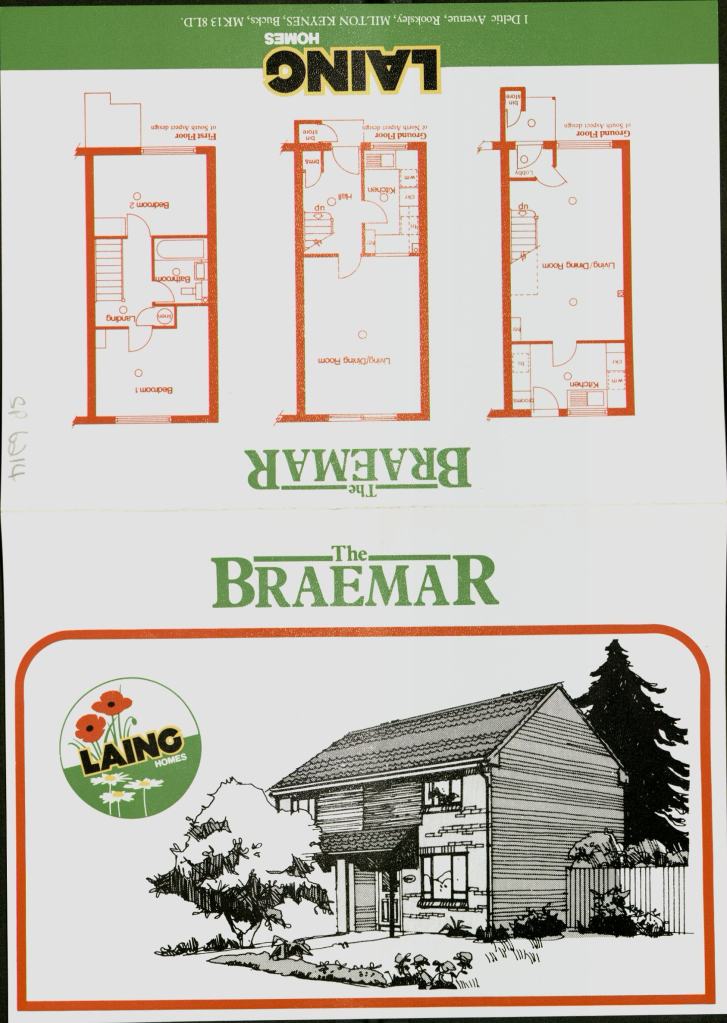
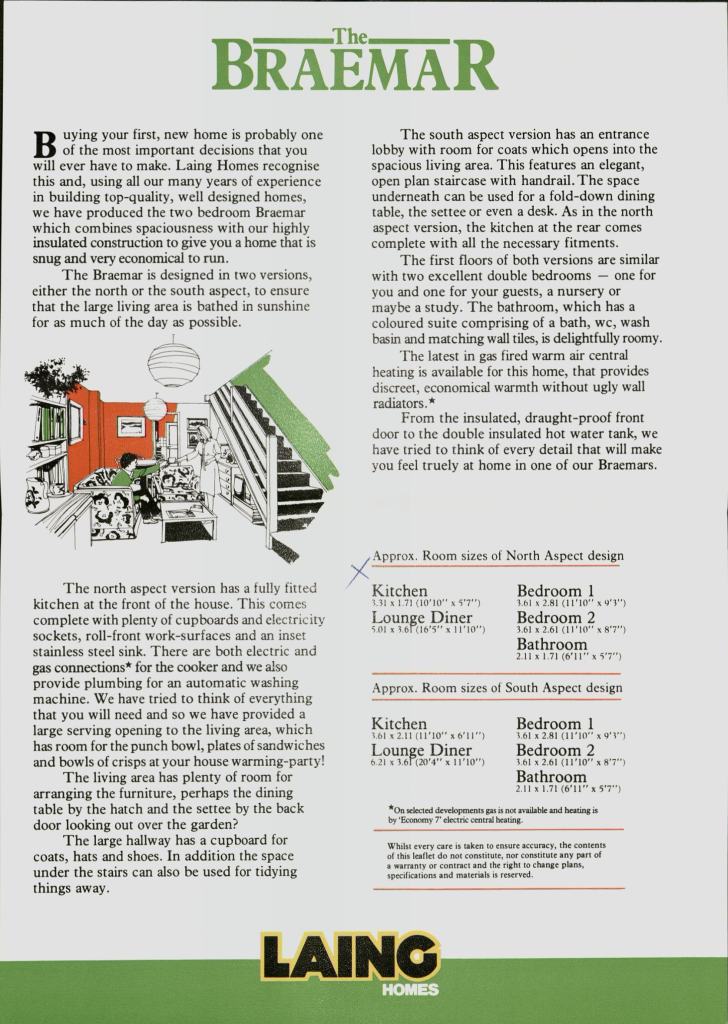
Once sorted, a volunteer began the process to list them, noting the address of the property concerned, date range the papers covered and their extent (numbers of documents, photographs etc). Each sale particular was then given a unique catalogue number starting with the prefix SP (Sale Particular), packaged and stored for access by researchers. So far, over one thousand of these sales particulars have been listed and are now available to order to view at WSRO.
For the researcher, the importance of the Churchman & Duke sale particulars is that they provide a snapshot of a rapidly expanding town at a time of optimistic economic growth during the 1960s to the 1980s. Especially interesting is their ability to describe in detail the residential building types being built, such as flats, semi-detached and detached houses. The particulars also reflect the pace of building of each area within Crawley under the supervision of the CDC, with older sales particulars grouped by area. The quality and type of property varied to fit the requirements of purchasers who might want to live in those areas.
To facilitate this, the sale particulars list within them options such as private garages, driveways or parking bays for a family car; front and rear gardens to relax in; standardised doors, windows and other fixtures for ease of repair, all in meticulous detail. Other information found includes the property value, the cost of servicing (bills) and local rates (taxation). All appeal to a purchaser, offering a choice of residences to match different levels of income. Above all, these sale particulars encouraged people to purchase a slice of an affordable, convenient future living in a new area. The property marketed by Churchman & Duke, erected by builders Laing and Wimpey, amongst others, appealed equally to the London commuter and to the factory worker. Simply, these sales particulars were selling the dream.
For those wishing to know more, WSRO has extensive catalogued records showcasing the history of the development of Crawley New Town, do take a look at the following collections now available to view: Crawley New Towns (CNT) and APV Baker Limited (APV).
Stay up to date with WSRO – follow us on Facebook, Instagram, Threads and YouTube

 West Sussex Record Office
I am interested to know who Churchman was. Churchman & Sons was founded in Rudgwick by John Churchman, a farmer at Mill Farm, The Haven, in the 19th century. It became a big agency and auctioneers in Horsham, Billingshurst, etc. Eventually it became Churchman & Burt, now just Burt. So is there any connection, same family or what? I have researched the Rudgwick family extensively for a book I wrote. I was unaware of the Crawley agency!
LikeLike